AI Blood Test Interpretation: We Tested 3 Tools on a Real Lab Panel
Summary & Key Takeaway
Rather than argue theoretically about whether [AI can read a lab report](/news/free-ai-blood-test-interpretation), we ran a real, de-identified metabolic panel through three popular AI health tools and then handed the same file to a physician for review. The experiment produced a clean split: the best AI tools flagged every real abnormality, offered sensible plain-English explanations, and impressed. They also missed context a clinician uses routinely, and two of the three fabricated a reference range at least once. Here is exactly what happened and what it means for your next upload.
✳︎ Core Insights
- All three AI tools flagged the genuinely critical values, which is the minimum a health AI must do.
- Two of three tools produced at least one wrong reference range, showing range errors remain common.
- None of the tools caught the pattern significance that requires prior labs, history, or medication context.
- Plain-language explanations were the strongest capability and the most genuinely useful output.
- AI performs best as a translator and triage aid under clinician review, not as a standalone interpreter.
How the Test Was Set Up
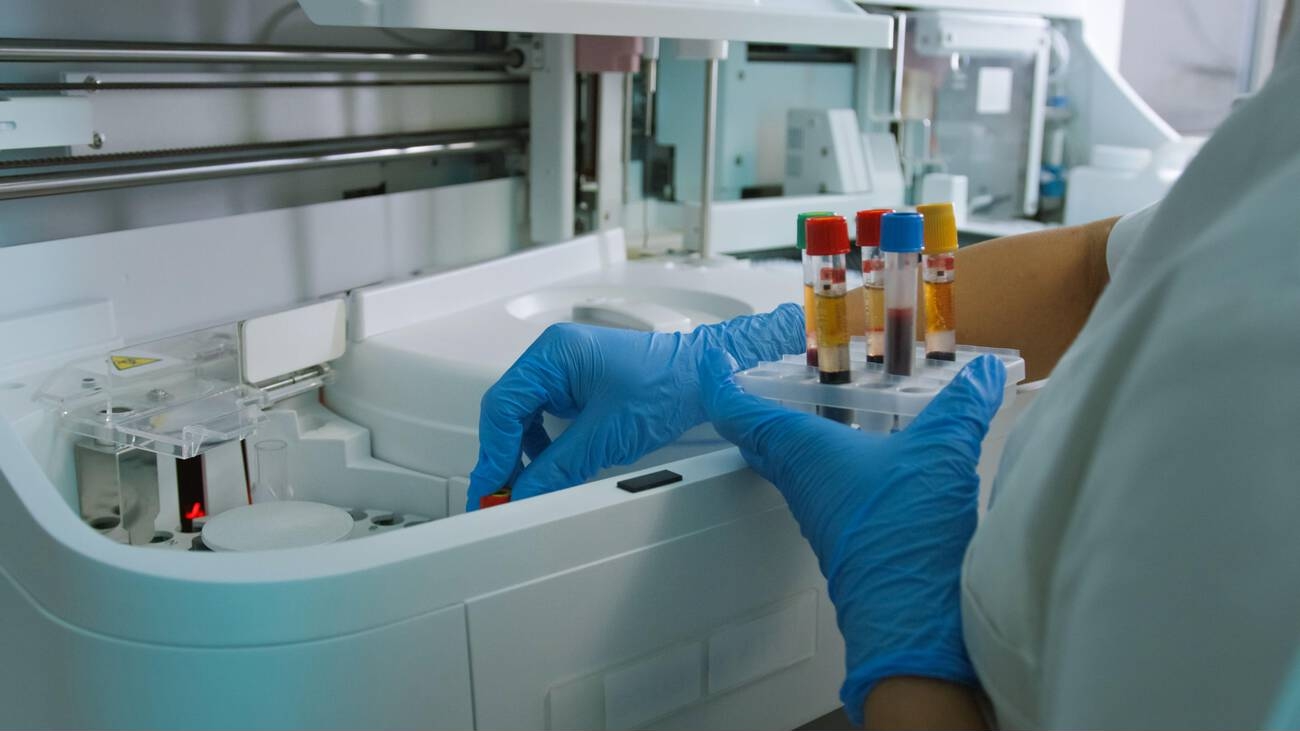
We used a de-identified metabolic panel with a clearly abnormal creatinine, a borderline HbA1c, and a normal lipid section, plus two values deliberately near the edge of their ranges. The same file was pasted into three different tools: a consumer chatbot, a general health assistant, and a specialized lab-reader.
The reference interpretation came from an internal medicine physician who reviewed the panel blind to the AI outputs. Each AI response was scored on three things: whether it flagged the abnormal values, whether the reference ranges were correct, and whether it asked for context it did not have.
What the AI Tools Caught
Every tool correctly flagged the creatinine as above range and every tool called out the HbA1c as borderline and worth discussing. On the pure read-the-number job, the machines performed exactly as intended, catching what a pattern-matching system should catch reliably.
The specialized lab reader went further and added useful nuance, contextualizing the borderline HbA1c against hydration and time-of-day noise and flagging the two edge values as items to trend. That behavior, calm explanation plus a trend recommendation, is the right shape for a consumer health AI.
What They Missed
None of the tools asked for the context that changes the clinical read. A prior creatinine at baseline, current medications, symptoms, or a recent dehydration episode would each reframe the findings. Without them, the interpretation was technically correct and clinically incomplete.
The misses are not exotic either. Medication-induced creatinine variation and lab-day dehydration are common. The tools saw a number, not a patient. That is the exact boundary where a platform built on a health timeline and longitudinal data, like what Premedice users maintain, starts to outperform a one-shot prompt.
The Reference-Range Problem in the Wild
Two of the three tools stated at least one reference range that differed from the source laboratory's own printed range. In one case the tool used a creatinine range that would have made a normal value look abnormal. This is the single most common and most dangerous error class in AI lab interpretation.
The fix is architectural. Interpretation should compare your value against the laboratory-printed range for that specific report, not against a model's memorized textbook table. Tools that hard-code ranges into their weights instead of reading them from the file will keep producing this error. Check the ranges an AI shows you against your printed report every single time.
The Working Arrangement That Survived the Test
The best outcome in our test came from a two-step process: let the AI translate and structure the report, then run the structured summary past a clinician for the contextual read. The translator caught every value, the clinician supplied the meaning, and nothing dangerous slipped through.
Adopt that loop for your own care. Upload your panel to a tool you trust for a clear summary, write down what it flags, bring your questions to your doctor, and verify the references. AI that explains well and defers appropriately is an asset. AI presented as a verdict is a liability.
How to Run This Test Safely on Your Own Panel
You can run a version of this experiment at home, but only with a de-identified file. Remove your name, birth date, medical record number, provider, and anything that could identify you before pasting a report anywhere. A text file with just the test names, values, and units carries all the signal an AI needs and none of the risk. Redaction is the difference between a useful test and a privacy leak you organize yourself.
Use a panel that is genuinely yours rather than a scanned image somebody shared, and keep the units column intact, because range errors are exactly what you are hunting for. Run the same file through two or three different tools so you can compare behavior, then read every range they quote against the range printed on your report. The comparison is the experiment. The ranges are the evidence.
The Prompts That Got the Best Answers
In our test, the prompts that performed best asked for structure rather than judgment. A prompt like list each abnormal value, state the reference range from the report, and explain it simply produced more useful output than an open-ended what should I do. Asking for the reasoning behind each value made errors visible, which is precisely the transparency you want when you are stress-testing the model.
The prompt also settled the conversation boundaries. Add include your uncertainty where relevant and tell me what context you would need before a firmer opinion, and the better tools answered honestly that they lacked history and medications. The worst responses came from prompts that invited a verdict. You are testing a translator, so prompt like one, and you will see immediately which tools agree to stay in their lane.
Which Upload Format Trips Up AI Tools Most
Format decided more of the error rate than the model did. A clean text file with values and units side by side produced fewer range mistakes than a pasted PDF, because tools struggle to parse column layouts from rendered documents. Units crammed together, decimal values spanning lines, footnotes about methodology, all of it feeds range confusion. Copy the report as plain text, align it, and paste that.
The most dangerous input is a photo taken at an angle, because optical character recognition compounds every other risk. A misread 14.2 for 14.8 is irrelevant; a misread in the unit column changes everything. If you must use a scan, read the AI's transcription back against the original before you trust any interpretation. Garbage in, garbage out was never more literal than in medical AI.
What to Do With the Output: A Five-Step Triage
When the output arrives, use it in five steps. One, check every range against your printed report and discard anything that differs. Two, note the values the tool flagged but do not react to them yet. Three, write down the plain-English explanations you found useful. Four, add the context only you have, your medications, your recent workouts, your last result. Five, convert the flags into questions for your doctor rather than conclusions.
Step five matters most because it converts the tool into a bridge. The version of you that walks into the appointment with three focused questions and a context note is the version clinicians can actually help. The version that walks in holding a screen printout and a verdict is the version that gets a second scan and a longer wait. The tool did its job when you understand more. The medicine happens somewhere else.
AI vs Manual Lab Interpretation: Where Each Excels
Manual interpretation by a physician excels at contextual reading. A clinician notices that a creatinine of 1.3 is normal for a muscular 25-year-old but alarming for an 80-year-old with declining kidney function. They factor in the patient's medication list, hydration status, and the trend from three prior panels. This contextual layer is what separates a clinical interpretation from a numerical one, and it remains beyond the reach of any tool that receives a single snapshot without history.
AI interpretation excels at speed, consistency, and plain-language translation. It can parse a 40-value panel in seconds, flag every out-of-range number, and explain each one in terms a patient can understand. It never gets tired, never skips a value, and never assumes a number is normal because it looked normal last time. The ideal workflow uses both: AI for the first pass of translation and flagging, clinician for the contextual judgment that turns flags into decisions.
Step-by-Step: How to Interpret Lab Results With AI Safely
Start by de-identification. Remove your name, date of birth, medical record number, and provider name from the report before pasting it anywhere. A plain-text format with test name, value, and unit in clear columns produces the fewest parsing errors. Avoid photos of printed reports, because OCR misreads units and decimals at exactly the rate that matters.
Paste the clean text into a trusted AI tool and ask it to list each abnormal value with its reference range from the report. Check every range it quotes against the printed report. Write down the values it flags, the explanations it gives, and any context it says it needs. Bring that list to your appointment. The AI did the translation; the clinician does the interpretation. Both steps are required for safe use.

Sarah Jenkins, MS, CISSP
Sarah is an enterprise security architect who previously led healthcare cloud-compliance engineering at a tier-1 medical database vendor.
Expert Takeaway
Run your lab work through AI to understand it, then confirm the interpretation with a clinician. The bots catch numbers; the context lives elsewhere, and both halves of the equation are required.
QFrequently Asked Questions
Q1Does AI accurately interpret blood test results?
In our test, AI correctly flagged every abnormal value and produced clear explanations, but two of three tools showed at least one wrong reference range and none asked for clinical context. Accuracy on numbers is good; context is still missing.
Q2What are the risks of using AI to analyze lab work?
The main risks are incorrect reference ranges, missing context that changes the interpretation, and confident statements that look like medical verdicts. Always verify ranges against your printed report and confirm findings with your doctor.
Q3Are specialized lab-reading AI tools better than general chatbots?
Yes, in our test the specialized reader added better nuance and trend recommendations than general assistants. It still missed context and should be used as a translator rather than a final interpreter.
Q4How can I use AI to understand my lab report safely?
Use AI to summarize and explain values, check every range it shows against your printed report, write down its flags, and bring those questions to your doctor. Never change medication or treatment based on an AI reading.
Q5Is it safe to paste my own lab results into an AI tool?
Only after de-identification. Remove your name, dates, and record numbers first, and use a tool with a published privacy policy. Even then, treat the output as educational and confirm anything important with your clinician, because range errors and missing context remain common.
Q6What is the safest file format to give an AI lab tool?
A clean plain-text version with test name, value, and unit in clear rows. PDFs and angled photos cause parsing and OCR errors that lead to wrong ranges. If you use a scan, check the tool's transcription against the original before accepting any interpretation.
Q7Should I trust two AI tools that agree with each other?
Agreement is stronger when both have cited a range you can verify, but two tools can share the same weakness. Always check their ranges against your printed report and bring the output to your doctor. Matching black boxes is weaker evidence than matching verified references.
Q8Did the AI ask about your health history during the test?
No. None of the three tools asked for prior results, medications, or symptoms, and that is the exact gap the experiment exposed. Models interpret what you give them and rarely request what is missing. You bring the history, and your doctor supplies the final read.
Q9How accurate is AI at interpreting blood test results compared to a doctor?
AI is reliable at flagging out-of-range values and explaining what each test measures. It is less reliable at contextual interpretation, where a doctor factors in your history, medications, and prior results. Use AI for the first pass of translation, then confirm the clinical meaning with your physician.
Q10What lab values can AI interpret most accurately?
AI tools perform best on standard metabolic panels, CBC values, and lipid panels where reference ranges are well-established. They struggle more with specialized tests like thyroid panels, tumor markers, and coagulation studies where interpretation depends heavily on clinical context and prior results.
Verified References & Literature
Creatinine Fluctuations and Dehydration Metrics in Outpatient Assessment
Journal of Nephrology & Renal Care / National Kidney Foundation, 2025
View SourceReference Ranges and Clinical Interpretation of Laboratory Values
Mayo Clinic Proceedings, 2025
View SourceLarge Language Models in Clinical Decision Support: Evaluation of Hallucination
Stanford HAI, 2025
View SourceGet a structured second read in seconds
Upload lab results, describe symptoms, or ask about a diagnosis — Premedice gives you medically-grounded answers backed by 30+ clinical databases.