Can't Afford a Doctor? 7 Ways to Get Care for Free or Cheap
Summary & Key Takeaway
If you are reading this because you need medical care and cannot afford it, you are not alone, and you are not out of options. In 2025, 26% of American adults went without some form of medical care because of cost, and three-quarters of uninsured adults under 65 said the same (Federal Reserve; KFF). Yet roughly 1,400 free and charitable clinics, a national network of Federally Qualified Health Centers, and legal protections that guarantee emergency treatment regardless of ability to pay exist precisely for this situation. This guide walks through every realistic path, from free clinics to $20 doctor visits to free AI tools that help you understand your situation before you spend a cent.
✳︎ Core Insights
- Free and charitable clinics nationwide served 6 million patient visits in 2024, with 84% of patients uninsured and visits often completely free on a sliding scale.
- Federally Qualified Health Centers must offer sliding-scale fees; uninsured patients below 200% of the poverty level commonly pay $20-50 per visit.
- Under EMTALA (federal law), hospitals must screen and stabilize anyone who arrives with an emergency condition, regardless of insurance or ability to pay.
- Prescription costs without insurance drop dramatically through GoodRx-class coupons, generics, and manufacturer assistance programs, sometimes from hundreds to under $20.
- Free AI tools can decode lab reports and help you prepare questions before a low-cost visit, making the money you do spend count far more.
The Real Scale of Skipping Care Over Cost
The numbers matter because they tell you this is a structural problem, not a personal failure. According to the Federal Reserve's 2025 Report on the Economic Well-Being of U.S. Households, 26% of adults went without some medical treatment due to cost, down slightly from 28% in 2024. The skipped care is not trivial either: dental visits led, followed by doctor visits, follow-up care, mental health visits, and prescription medicines.
Cost drives these decisions unevenly. Among people making under $25,000 a year, 38% went without care, versus 13% of those earning $100,000 or more. Uninsured adults skipped care at nearly double the rate of insured adults (45% vs 24%). What that means practically is that millions of working people are one invoice away from deferring a checkup, a blood test, or a prescription. The rest of this article replaces that deferral with a decision tree you can act on today.
Free and Charitable Clinics: The First Stop
The National Association of Free & Charitable Clinics (NAFC) network includes more than 1,400 clinics and charitable pharmacies that serve anyone, with no insurance requirement and no minimum income to qualify. In 2024 they handled over 6 million patient visits, and 84% of the patients they served were uninsured. Clinics operate on volunteer clinicians and donations, so services range from primary care to dental and mental health, and many include an on-site pharmacy where prescriptions cost little or nothing.
You do not need ID or financial paperwork to be seen, though bringing what you have (ID, a medication list, any records) speeds things up. Because demand rose 81% year over year and some clinics now have waitlists, call ahead and ask about walk-in hours. The NAFC runs a clinic locator at nafcclinics.org/get-care that matches by ZIP code, and every visit is an opportunity to establish a relationship with a clinician who can refer you onward.
Community Health Centers With Sliding-Scale Fees
Federally Qualified Health Centers (FQHCs) receive federal funding on the condition that they serve everyone regardless of ability to pay. Under the HRSA-mandated Uniform Sliding Fee Scale, patients between 100% and 200% of the federal poverty level typically pay $20-50 per office visit, and patients below 100% of the poverty line often receive free or near-free care. These are not second-class clinics: FQHCs provide primary care, prenatal care, behavioral health, and many offer on-site labs and pharmacies.
Find your nearest center through the HRSA Health Center Finder at findahealthcenter.hrsa.gov. Bring income documentation if you have it, because the sliding scale asks for it, but accept that you will not be turned away without it. For many uninsured patients an FQHC appointment is the most reliable way to get an actual physical exam, a clinician who knows your history, and a referral pathway when something needs a specialist.
Emergency Care You Cannot Be Turned Away From
Federal law protects you in an emergency even if your wallet is empty. The Emergency Medical Treatment and Labor Act (EMTALA) requires any hospital with an emergency department to perform a medical screening exam and stabilize anyone who presents with an emergency medical condition, treating your insurance status and ability to pay as irrelevant to that obligation. This is a genuine legal right, enforced by CMS with civil penalties against hospitals that refuse.
The boundary matters clinically: EMTALA covers screening and stabilization, not routine care. Once you are stable, a hospital can discharge or transfer you, and you remain responsible for the bill for services rendered, which is why EMTALA is a safety net, not a free-care card. Go to an ER for real emergencies (chest pain, severe bleeding, trouble breathing, sudden weakness), and use the free clinic and FQHC paths for everything that can wait a day. Our full explainer on [your rights in the emergency room without insurance](https://premedice.com/news/your-rights-emergency-room-no-insurance) covers exactly what to do and what to expect.
Low-Cost Virtual Care When a Clinic Isn't Close
If geography, work hours, or anxiety about a waiting room is the barrier, low-cost telehealth and asynchronous care close the gap. Pharmacy-based clinics at CVS MinuteClinic and Walgreens do walk-in care for $40-80 per visit without insurance, including basic labs and prescriptions. Online asynchronous services such as Curai Health let you submit your symptoms and get a board-certified clinician's care plan within about 60 minutes, with no insurance and no upfront visit fee, paying only for any medications filled.
Retail clinics like these are excellent for straightforward infections, allergies, skin concerns, and cold-and-flu complaints. For chronic, complex, or worsening symptoms, route back to an FQHC or free clinic where a consistent clinician can follow you over time. The point is to stop treating remote or retail care as lesser: for a defined problem, a $40 visit beats a $1,000 ER bill for a problem that is not an emergency, and it gets you treated the same day.
Cheap Prescriptions Without Insurance
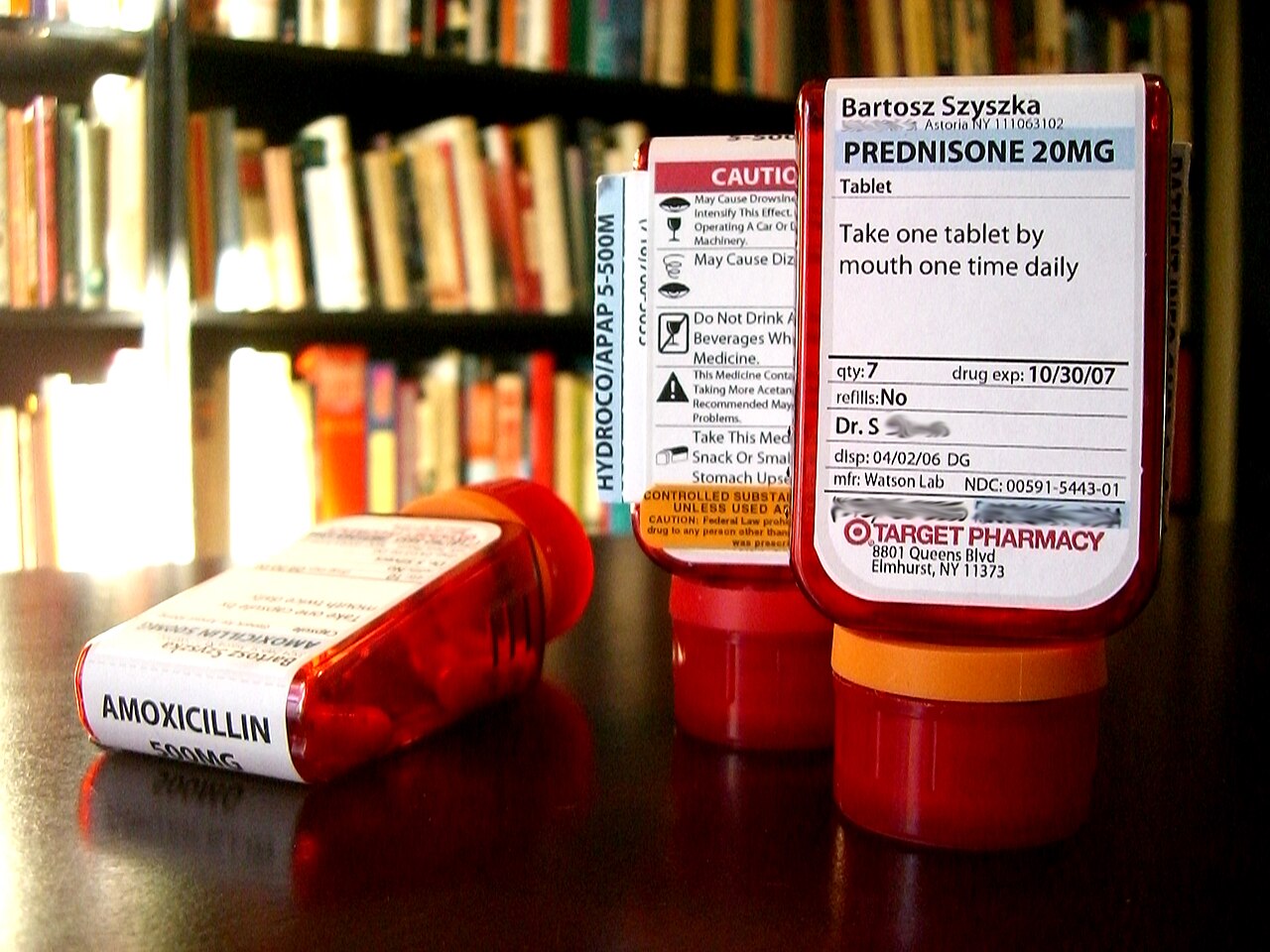
Prescriptions are a place where people overpay by an order of magnitude when they skip price shopping. Coupon programs like GoodRx and SingleCare negotiate cash prices with pharmacies and routinely cut common generics from $100+ to under $20. Big-box and warehouse pharmacies sell a core list of generics at fixed low prices, and manufacturer patient-assistance programs provide many brand-name drugs free or at deep discounts to people below income thresholds.
Two rules make this safe rather than stressful. First, always ask the pharmacist whether a cheaper therapeutic equivalent exists before paying. Second, if a medicine was started by a clinician, do not switch brands or doses on your own based on a price difference. Our full guide on [cheap prescriptions without insurance](https://premedice.com/news/cheap-prescriptions-without-insurance-goodrx-prices) walks through coupon mechanics, generic substitution, and manufacturer programs with real price ranges.
What You Can Do Today for Free
While you work through the provider paths above, free AI tools can remove the two things that keep people from acting: not understanding the problem and not knowing what to ask. Upload a lab report to a free AI interpreter and get the plain-English version of every number before your appointment. Our guide to [free AI blood test interpretation](https://premedice.com/news/free-ai-blood-test-interpretation) shows the exact workflow, and [understanding lab results without a doctor](https://premedice.com/news/understand-lab-results-without-a-doctor) explains how to read panels safely on your own.
The strategy is to use the free layer to arrive informed: AI drafts your concerns into a tight question list, an FQHC or free clinic visit turns that into a care plan, and price comparison turns the plan into prescriptions you can afford. Done in that order, the whole cycle costs less than a single specialist co-pay at many hospitals, and none of it requires waiting for an emergency to make you act.
How to Avoid Turning an Emergency Visit Into a Bill You Can't Pay
If you do end up in an ER, act before the bill arrives. The No Surprises Act requires providers to give you a good-faith estimate of expected charges when you request one, and many hospitals operate charity-care and financial-assistance programs that reduce or waive bills for patients under income thresholds. Ask in the billing office, in writing, as early as possible, and take notes on who you spoke with and what they told you.
Set up a payment plan rather than ignoring a bill, because medical debt can shadow your credit and grow with interest. A few states and many health systems explicitly forgive or discount charges for uninsured patients who asked for help, and the hospitals that advertise this generosity expect you to initiate the conversation. Pair this with the preventive paths earlier in this article, and the emergency room becomes what it should be: a last resort with protections, not your default doctor.
Building a Care Plan That Costs Almost Nothing Per Month
The long-term move is to make preventive care boring and cheap so emergencies never happen. Routines that cost nothing include daily blood-pressure checks at a pharmacy kiosk, annual free screenings at retail clinics and FQHCs, quitting anything that taxes your health, and using an [AI symptom checker](https://premedice.com/news/ai-symptom-checker-medical) as a first reviewer when something new appears. An annual FQHC physical runs $20-50 on the sliding scale versus $200+ at a hospital-based practice.
Combine that with the [cheap lab tests without insurance](https://premedice.com/news/cheap-lab-tests-without-insurance) playbook for routine panels and you have a chronic-disease surveillance loop that costs three figures a year rather than one hospital visit. The medical system is expensive, but it is not uniformly expensive, and the people who do best financially and medically are the ones who learned which doors are cheap, which are free, and which they should never open without a good reason.
Myths About Free Care Worth Dropping
Myth one: free clinics are only for the homeless or the destitute. NAFC data shows 59% of free-clinic patients are employed, and the network exists for anyone insurance fails, which includes seasonal workers, gig workers, and people between jobs. Myth two: sliding-scale clinics judge you. The scale is a formula based on documented income, applied the same way every day, and asking for it is normal.
Myth three: if you cannot pay, the ER is your only option. EMTALA stabilizes you, but it does not give you follow-up care, which is where outcomes actually get decided. Myth four: free AI interpretation is a gimmick. Peer-reviewed comparisons now show AI answers rated equal to or better than physicians' on written patient questions (JAMA Internal Medicine, 2023), making them a legitimate complement, not a replacement, for the clinician you eventually see. Drop these four and the real question becomes which of the cheap doors fits your situation, not whether one exists.

Dr. Elena Rostova, MD, PhD
Dr. Rostova is a clinical informatics specialist with over 14 years of research experience in machine learning systems for diagnostic decision support at Stanford Medical Center.
Expert Takeaway
Delaying care because of cost is the single worst financial decision in healthcare, because untreated problems become more expensive emergencies. Use the free and low-cost pathways in this article to establish a care relationship early, and use free AI interpretation to understand your situation between visits. The cheapest care is the care that gets completed, not the care that looks cheapest on a bill.
QFrequently Asked Questions
Q1What do I do if I can't afford a doctor and have no insurance?
Start with a free or charitable clinic (find one via nafcclinics.org), or a Federally Qualified Health Center with sliding-scale fees (findahealthcenter.hrsa.gov). Both must serve you regardless of ability to pay. For real emergencies, EMTALA guarantees screening and stabilization at any hospital ER no matter what you can pay. For routine needs that can wait a day, choose the FQHC or clinic over the ER.
Q2Are free clinics really free?
Many services at NAFC free and charitable clinics are entirely free, and others use a sliding scale based on income, with some charging nothing and others charging small fees toward the low end. NAFC clinics served 6 million visits in 2024, and 84% of their patients were uninsured, so this is a functioning, nationwide system rather than a rare exception.
Q3Can a hospital turn me away if I can't pay?
If you arrive at an emergency department with an emergency medical condition, federal law (EMTALA) forbids the hospital from refusing to screen and stabilize you, and insurance status is legally irrelevant to that obligation. Once you are stable, the hospital may discharge you and bill you. For non-emergency care, hospitals and clinics can decline service, which is why the sliding-scale and free-clinic paths exist.
Q4How much does an FQHC visit cost without insurance?
Under the HRSA sliding fee scale, patients between 100% and 200% of the federal poverty level typically pay $20-50 per office visit, and patients below 100% FPL often receive free or near-free care. Bring income documentation to get the right tier, but centers are required to serve you even if you cannot document income.
Q5Is it cheaper to use an AI symptom checker than a doctor?
For initial understanding and question preparation, yes: quality AI medical tools are free or a few dollars a month, versus a $150-300+ uninsured office visit or $1,000+ ER bill. AI does not replace a clinician, especially for physical exams, personal history, and ongoing care. The inexpensive pattern is AI to interpret and prepare, an FQHC or free clinic for the exam, and coupons for the prescription.
Verified References & Literature
Report on the Economic Well-Being of U.S. Households in 2025
Board of Governors of the Federal Reserve System, 2026
View SourceHow to Get the Healthcare You Need Without Insurance
National Association of Free & Charitable Clinics (NAFC), 2025
View SourceWhere to Receive Low Cost Health Care in Your Community
HealthCare.gov, U.S. Centers for Medicare & Medicaid Services, 2025
View SourceComparing Physician and AI Chatbot Responses to Patient Questions
JAMA Internal Medicine, 2023
View SourceGet a structured second read in seconds
Upload lab results, describe symptoms, or ask about a diagnosis — Premedice gives you medically-grounded answers backed by 30+ clinical databases.