Hospital Predictive Scoring Software: How It Works (2026)
Summary & Key Takeaway
Somewhere in nearly every large hospital, a score is being calculated for a patient neither the software nor the clinician fully explained. Predictive scoring systems analyze the patient's vital signs, lab values, and history to estimate what happens next: deterioration in the next hour, readmission in the next month, or the need for a scarce ICU bed. The scores shape real decisions, and yet they are rarely explained to the patients they describe. A short plain-language tour of the systems, what the numbers mean, and where they fail is overdue.
?? Core Insights
- Predictive scoring (like early warning scores and readmission models) forecasts a future event from current data, and hospitals act on those probabilities daily.
- Early warning scores monitor deterioration in real time; sepsis and readmission models predict longer-horizon outcomes from historical patterns.
- A score is a probability, not a verdict: it says this patient looks like others with this outcome, not that this patient will have it.
- The models inherit every bias in their training data, including race-, age-, and access-related distortions, unless explicitly measured and corrected.
- The safest deployment pairs models with human review and a clear action: no score should silently order a transfer or a discharge.
Try it yourself — free
Experience the medical AI that powers this article. Ask questions, check symptoms, or analyze lab results.
Not sure which tool fits? Compare what Premedice does.
The Scores Hospitals Run Every Day
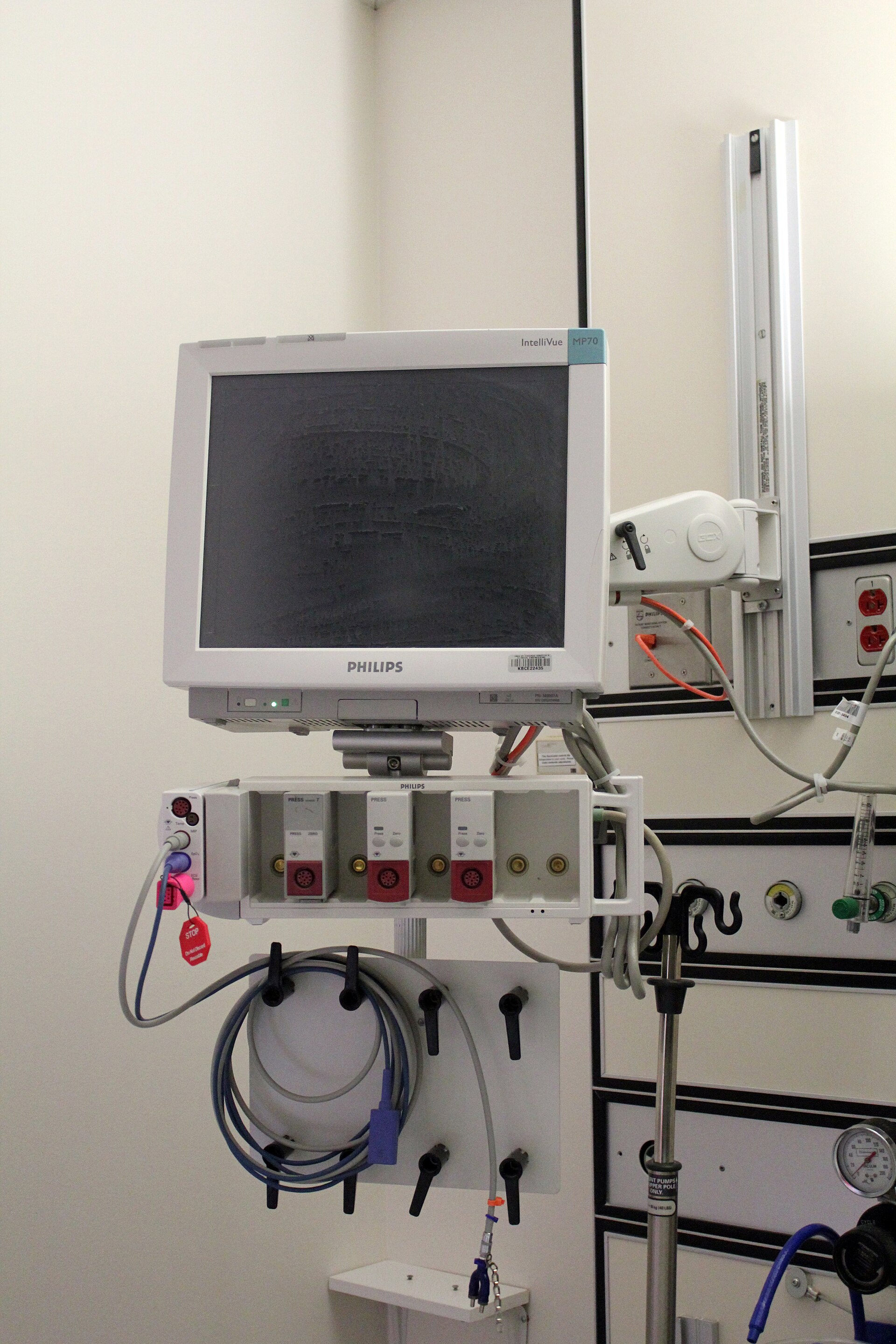
The best-known system is the early warning score, which combines vital signs, heart rate, blood pressure, respiratory rate, oxygen saturation, and conscious state into a single number that rises as a patient's condition worsens. The number triggers a nursing review at preset thresholds, and it exists to catch deterioration before it becomes a code blue. It is cheap, fast, and universally deployed because it is genuinely predictive.
Beyond the bedside, hospitals run predictive models for readmission risk, sepsis onset, length of stay, and discharge destination. Unlike early warning scores, these are trained models: software learns patterns from historical records and assigns each new patient a probability. Readmission models, for example, claim to identify Medicare patients most likely to return within 30 days, which changes after-care planning and, in value-based contracts, the money at stake.
What a Prediction Actually Means
A patient-facing translation of predictive scoring sounds strange because the score is statistical, not personal. A 72% readmission risk does not mean this patient is 72% likely to return in any future that actually happens. It means this patient's record clusters with the records of past patients, 72% of whom were readmitted. The number describes the cohort, and the assumption is that the future will resemble the past.
That assumption is the model's single most important weakness. When treatments change, when the population shifts, or when the hospital changes how it documents, the relationship between records and outcomes drifts, and the model quietly becomes less accurate. Monitoring a model's calibration over time, not just trusting its output, is the professional obligation of the hospital that deploys it.
Where Predictive Scoring Fails Silently
The criticisms of hospital scoring are not speculative. Studies have documented racial bias in algorithms that steer clinical resources, including a widely cited finding that a leading commercial risk model under-flagged Black patients because it spent healthcare dollars as a proxy for illness, and a 2024 government report reached strong conclusions about commercial sepsis prediction tools. The mechanisms are structural: models trained on data that already contained unequal care learn to reproduce the inequality.
A second failure mode is gaming. When a score determines payment or audit placement, documentation patterns change to move the number, and the score stops measuring the patient and starts measuring paperwork. Teams that hit readmission targets by editing documentation have improved the metric while touching no real outcome. A score that is not grounded to actual patient events gradually becomes noise wearing a number.
How to Make the Scores Serve Patients
The corrections are practical and within reach of any deploying institution. First, name the score's purpose and action: a deterioration score should specify what happens at threshold, who reviews, and within what time. Second, measure fairness: stratify the model's errors by race, age, and insurance status, and retrain when bias appears. Third, audit calibration quarterly against observed outcomes so drift is caught before it harms.
Finally, keep the human in the decision. A patient who looks fine to every score but is deteriorating to the nurse's eyes deserves the nurse's judgment to win. Predictive scoring is at its strongest when the system asks the clinician a good question, and at its most dangerous when it makes the clinician feel the question was already answered.
What Your Chart Might Be Scoring Right Now
Unbeknownst to most patients, a running score may already be attached to their chart. On many units a nurse charts the vital signs and the software silently converts them into an early warning number in the background. No one necessarily mentions it, because the score is a staff tool. It lives on the ward's whiteboard and in the monitor queue, guiding who gets checked next.
That invisibility is mostly by design. A score meant for rapid nursing triage is not written for patient conversation, and many clinicians worry that showing it would spark more questions than it answers. The trade-off is real. When scores quietly shape transfers and monitoring, patients have a legitimate interest in knowing that a number exists, what it is watching, and who will act on it.
Three Myths About Hospital Scores
Myth one: a low score means the patient is safe. A score reflects the data it was given, and a deteriorating patient can still have a low number if the chart lags or the vitals were missed. Nurses are trained to trust the trend and the person over the single digit, and so should you. The score is one input, never an insurance policy against something going wrong.
Myth two: a high score is a diagnosis. A score only clusters a patient with similar past cases; it does not say what is actually wrong. The same number can come from an infection, a cardiac problem, or dehydration, and the treating team still has to find the cause. Myth three: the computer is objective. Models inherit bias from the records they learn from, which is precisely why fairness checks and human review matter.
The Question Patients Should Ask About Any Score
There is a clean two-question script for anyone who discovers they have a score attached to their care. First, what is this number watching, and what would make it change? Second, who reviews it, and what happens when it crosses the threshold? Getting even plain answers to those two makes the score a shared tool instead of a hidden one.
A score that comes with a readable answer is a good sign about the institution. It means the hospital has done the hard work of connecting a number to a policy: which staff respond, in what time, and with what escalation. The best predictive systems are the ones that vanish into the workflow, question-ready at the bedside rather than mysterious in a dashboard.
Ready to try Premedice?
Get instant, AI-powered explanations of your lab results and symptoms — powered by 300+ medical databases.
Continue Reading



Most Popular
Best AI Medical Models in 2026: MedQA Scores Compared
ResearchMedGemma: Open-Source Medical AI That Runs on Your Hardware
TechnologyMed-PaLM 2: 86.5% MedQA Score, Zero Doctors Using It (2026)
ResearchAI Symptom Checker Architecture: How Premedice Cuts Hallucinations 3.8x
TechnologyMedical AI Privacy: AES-256 + Zero-Knowledge Architecture
SecurityDr. Marcus Vance, MD
Dr. Vance is a board-certified internal medicine physician and clinical informatics expert with a focus on preventative medicine and patient-directed health literacy.
Expert Takeaway
Treat predictive scores as a second pair of eyes, never a voice of authority. Ask the same two questions of any score: what would this number change, and what accounts for the score's blind spots. If the answer to either is uncertain, the score is a prompt for more information, not a decision in itself.
Browse by Topic
QFrequently Asked Questions
Q1What is hospital predictive scoring software?
It is software that analyzes patient data, like vitals, labs, and history, to forecast events such as imminent deterioration, 30-day readmission, or sepsis onset. Hospitals use the outputs to prioritize monitoring and after-care.
Q2What does an early warning score do?
It converts vital signs into a single number that rises as the patient's condition worsens, triggering a nursing review at preset thresholds. It is designed to catch deterioration early, before it escalates to an emergency.
Q3Can predictive scores be biased against certain patients?
Yes. Models learn from historical data, which can contain unequal care. Research has documented race-based distortion in clinical algorithms, so responsible deployments measure error rates by patient group and correct for bias explicitly.
Q4Are hospital predictive scores always right?
No. They are probability estimates that inherit training-data bias and drift as treatment and documentation change. That is why safe deployment requires score-action links, human review, and ongoing calibration audits rather than blind trust.
Q5Can I find out what my early warning score is?
Usually yes, by asking the nursing team. Early warning scores are calculated from vitals already on your chart, and most staff will share the number or its meaning. What matters more than the digit is the pattern over time, and whether staff act on changes, which are the questions worth asking anyway.
Q6Does a high score mean an automatic transfer or procedure?
No single score orders anything by itself. A threshold typically triggers a review, a monitoring change, or a conversation among the team, not an automatic action. Institutional policy decides what happens next, and a good policy keeps a clinician in charge of every decision the number suggests.
Q7Why would two patients with the same score be treated differently?
Because the score is one input among many. Comorbidities, medications, baseline function, and the patient's own reports change how a team reads the same number. Two identical digits can mean different things for different people, which is exactly why the score supports the clinician rather than replacing them.
Q8If I ask about my score, will staff think I am difficult?
No responsible care team would. Asking how a number is being used, who reviews it, and what would change it shows engagement, not resistance. The clearest users of predictive tools are usually the ones who understand precisely what those tools can and cannot do.
Verified References & Literature
Dissecting Racial Bias in an Algorithm Used to Manage the Health of Populations
Science, 2019
View SourceEarly Warning Score Systems and Their Impact on In-Hospital Deterioration: A Systematic Review
Critical Care Medicine, 2023
View SourceEvaluation of Machine Learning Models for Early Sepsis Prediction in Community Hospitals
JAMA Network Open, 2024
View SourceGet a structured second read in seconds
Upload lab results, describe symptoms, or ask about a diagnosis — Premedice gives you medically-grounded answers backed by 30+ clinical databases.