Clinical Suspicion: How Doctors Think Before Tests Confirm (2026)
Summary & Key Takeaway
A patient reports a mild headache, and most physicians do not reach for a brain scan. The same patient mentions weakness on one side of the body, and the physician changes course immediately. The difference between those two reactions is clinical suspicion. It is the calibrated sense that a specific condition is plausible enough to act on, long before any test returns a definitive answer. Understanding how suspicion forms explains how medicine actually works, and it exposes exactly why general-purpose AI tools struggle to recreate it.
?? Core Insights
- Clinical suspicion is a working probability estimate, not a guess or an instinct; it combines prevalence, symptoms, risk factors, and past experience.
- Pretest probability determines how much a single test can change a diagnosis, which is why doctors stop ordering tests once suspicion settles.
- Suspicion is updated iteratively with each new finding, a process formalized in medicine as Bayesian reasoning.
- Most missed or delayed diagnoses trace back to a suspicion that was never formed, not to a test that was read incorrectly.
- AI models can memorize disease knowledge but cannot yet form calibrated suspicion from a messy, incomplete patient story the way a clinician can.
Try it yourself — free
Experience the medical AI that powers this article. Ask questions, check symptoms, or analyze lab results.
Not sure which tool fits? Compare what Premedice does.
Clinical Suspicion Is a Probability, Not a Personality Trait
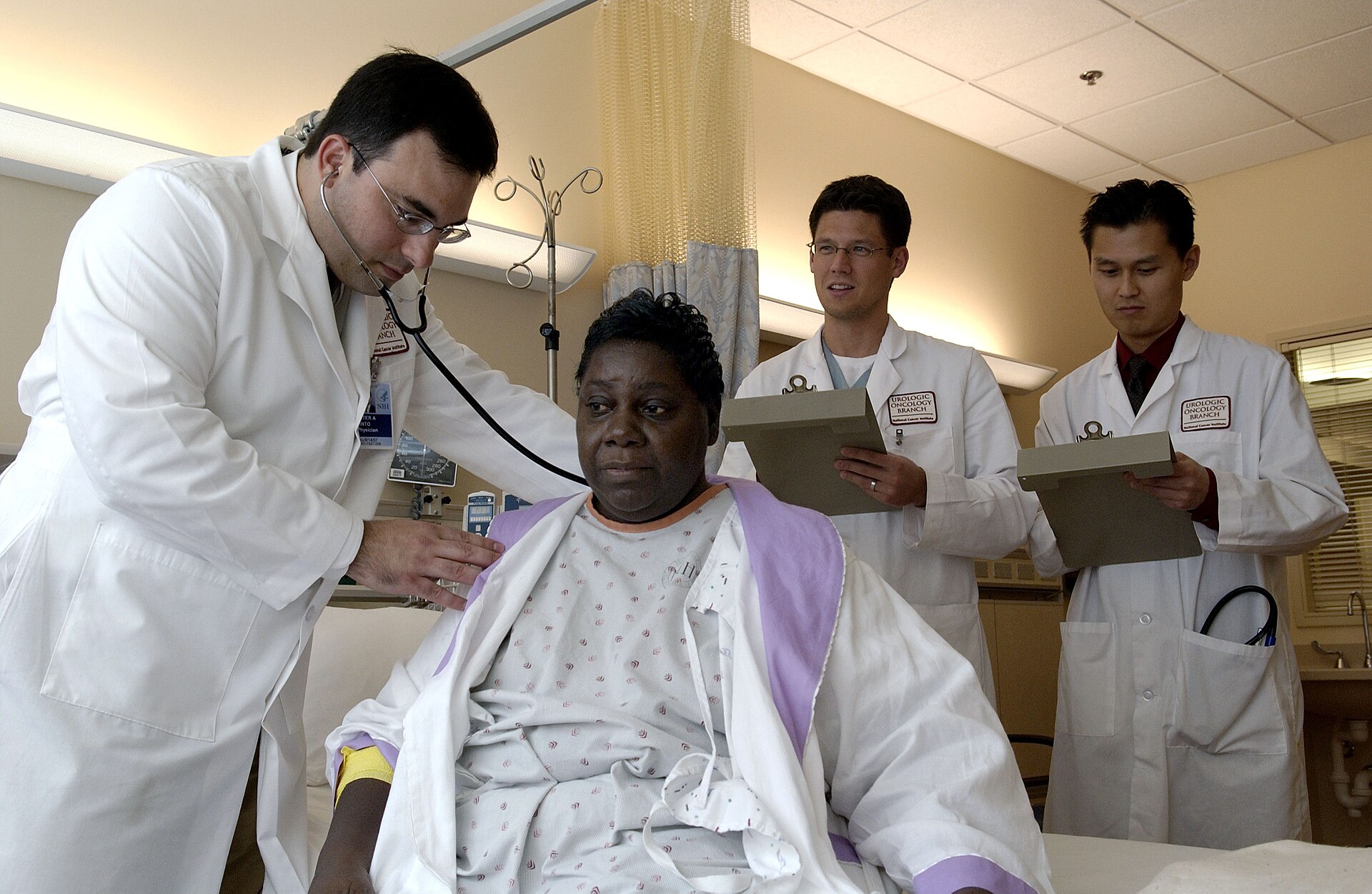
New learners often imagine that seasoned clinicians rely on a mysterious sixth sense. The reality is more mechanical. Clinical suspicion is an estimate of how likely a condition is, given everything known so far: the base rate of the disease, the patient's symptoms, their risk factors, and the pattern of the story. A physician who suspects bacterial pneumonia in a patient with fever, productive cough, and lobar dullness is making a reasoned probability judgment, not guessing.
The words matter because they change behavior. A low suspicion sends the patient home with reassurance. A moderate suspicion prompts a targeted test. A high suspicion begins treatment immediately. Each action follows logically from the probability, which is why teaching clinicians to articulate their suspicion is a core competency in modern medical education.
Pretest Probability Sets the Value of Every Test
No laboratory test is 100% accurate, so the meaning of a result depends on what the physician suspected beforehand. This is pretest probability, the suspicion held before testing. A positive COVID test means different things at the height of a wave than in a quiet month. The same test performs differently depending on the population, the season, and the clinical picture.
This explains a behavior patients often find puzzling: doctors stop ordering tests. Once suspicion is high enough, a test adds little and sometimes confuses. Conversely, when suspicion is near zero, testing creates false positives that cascade into more tests. Clinicians who manage pretest probability well order fewer tests and get better answers.
Suspicion Updates With Every New Finding
Medicine is iterative. A physician does not form one suspicion and freeze it. Each new piece of history, exam finding, or lab value raises or lowers the estimate. Fever plus cough raises pneumonia suspicion; a clear chest X-ray lowers it. The formal version of this updating is Bayesian reasoning, and modern AI systems actually use the same mathematical foundations when they compute probabilities.
The difference is that a clinician updates on context a model cannot see: how the patient looks, the tone of their voice, what they leave unsaid, and how their story changed between visits. These soft signals are real information, and they shape suspicion in ways that do not appear in any dataset a model was trained on.
Why AI Struggles to Form Clinical Suspicion
Large medical models are remarkably good at recalling disease knowledge. Ask them for the workup of a pulmonary embolism and they will enumerate it correctly. But forming suspicion requires weighing a specific, incomplete patient story against prior probabilities, knowing which details are missing, and sensing when the pattern is strange. Models trained on clean, structured data rarely learn how messy real presentations are.
There is also the calibration problem. A model that lists four possibilities does not tell you it holds suspicion at 3% or 60%. Clinical AI that fails to communicate its confidence becomes dangerous in the same way an uncertain physician who cannot say 'I am not sure' becomes dangerous. The gap is not knowledge; it is calibrated judgment about when to act.
From Suspicion to Action: Where the Threshold Sits
Every suspicion eventually crosses a line. Below that line the physician reassures and watches. Above it, they order the test, start the treatment, or make the referral. The line is not printed in any textbook, and it moves with the situation. A mild chest pressure in a fit 30-year-old lands below it, while the same symptom in someone with a family history of early heart disease sits above it. Context decides the threshold, and so does urgency.
This is why experienced clinicians describe suspicion as the engine of the entire visit. The patient's story, the physical exam, and every lab result steer an invisible dial toward a threshold, and the real skill is knowing when that dial has moved enough to act. There is no formula for the moment. A physician who can say this might be X, and if so it needs Y, has already turned an anxious hunch into a plan a patient can follow.
What Happens When the Alarm Never Sounds
Medicine's quiet failures usually begin with a suspicion that never formed. The symptom was mild, the patient seemed healthy, and the story pointed somewhere common, so nothing raised. Patients come in twice with fatigue that sounds ordinary, and the third visit reveals what the first two never hinted at. The diagnosis was not missed because a test was read wrongly. It was missed because no test was ever seriously considered in the first place.
The lesson runs in reverse as well. Over-testing is usually a failure of suspicion management too. When suspicion is low, a wide battery of tests produces false positives, repeat draws, and a worried patient with a chart full of noise. Each extra test adds a chance of a wrong alarm. Knowing when not to test is the same skill as knowing when to act, and it saves the energy a genuine catch needs later.
How Patients Help Clinicians Form Suspicion Faster
Suspicion is built from the story a patient tells, and the shape of that story matters more than its length. A timeline helps more than adjectives: when it started, what makes it better or worse, and what has already been tried all feed the probability estimate. The patients who get the fastest answers are not the ones who list every complaint. They are the ones who describe how this episode is different from their usual.
A short list of current medications, past diagnoses, and recent changes, a new job, a new drug, or a recent trip, gives the physician the context suspicion runs on. You do not need to sound medical to provide it. Keep the dates straight, mention what changed, and the clinical reasoning does the rest. Your job is to carry the details; the clinician's is to weigh them.
Clinical Suspicion Examples by Specialty
In emergency medicine, clinical suspicion for pulmonary embolism triggers a Wells score calculation before any imaging is ordered. The physician weighs leg swelling, heart rate, recent surgery, and whether an alternative diagnosis is equally likely. A high Wells score justifies a CT pulmonary angiogram; a low score may warrant a D-dimer first. The suspicion drives the sequence, not the other way around.
In cardiology, suspicion of heart failure begins with a history of progressive shortness of breath, bilateral ankle swelling, and orthopnea. A BNP level confirms or refutes, but the clinician already holds moderate suspicion before any blood draw. In oncology, an unexplained weight loss of more than ten percent over six months raises suspicion for malignancy even before imaging, because the base rate of serious pathology in that presentation is high enough to warrant investigation.
How AI Tools Attempt to Simulate Clinical Suspicion
Modern clinical decision support systems try to mimic suspicion by computing risk scores from structured data. Sepsis screening tools aggregate vital signs, lab values, and nursing notes to produce a probability score that triggers an alert when it crosses a threshold. These systems work well when the data is complete, formatted consistently, and free of the noise that real clinical documentation carries.
The gap appears in ambiguous cases. A physician reading that a patient looks unwell, sounds different on the phone, or has a spouse who says something is off integrates signals that no structured field captures. AI symptom checkers and differential diagnosis generators can list possibilities, but they cannot weight them against the texture of a specific patient encounter. The best clinical AI tools acknowledge this explicitly, presenting possibilities with confidence ranges rather than single answers, and flagging when more context would change the ranking.
Documenting Clinical Suspicion: What Clinicians Write Down
Clinical documentation records suspicion as a working statement, not a conclusion. Phrases like high clinical suspicion for deep vein thrombosis, low suspicion for pneumonia given clear lung fields, and working diagnosis of migraine pending neurology review all communicate the current probability estimate and the reasoning behind it. This language is deliberate: it tells the next clinician what was considered, what was ruled out, and where the uncertainty sits.
Good documentation of suspicion also protects patients. When a physician writes high suspicion for appendicitis, CT abdomen ordered, and the scan comes back negative, the note explains why the test was appropriate even though the result was negative. Without that documented suspicion, a negative scan looks like an unnecessary test rather than a reasonable clinical decision. For AI systems learning from clinical notes, understanding this documentation pattern is essential: the note records a probability, not a verdict, and the distinction matters for both patient care and medicolegal record.
Ready to try Premedice?
Get instant, AI-powered explanations of your lab results and symptoms — powered by 300+ medical databases.
Continue Reading


Most Popular
Best AI Medical Models in 2026: MedQA Scores Compared
ResearchMedGemma: Open-Source Medical AI That Runs on Your Hardware
TechnologyMed-PaLM 2: 86.5% MedQA Score, Zero Doctors Using It (2026)
ResearchAI Symptom Checker Architecture: How Premedice Cuts Hallucinations 3.8x
TechnologyMedical AI Privacy: AES-256 + Zero-Knowledge Architecture
SecurityDr. Elena Rostova, MD, PhD
Dr. Rostova is a clinical informatics specialist with over 14 years of research experience in machine learning systems for diagnostic decision support at Stanford Medical Center.
Expert Takeaway
Clinical suspicion is the bridge between a patient's story and the laboratory. Learn to state your working suspicion in one sentence, then name what would raise or lower it; that single habit improves test selection more than any tool added to the clinic.
Browse by Topic
QFrequently Asked Questions
Q1What is clinical suspicion in simple terms?
Clinical suspicion is the physician's working estimate of how likely a specific condition is, based on symptoms, risk factors, and how common the disease is. It guides whether to test, treat, or reassure, and it updates as new information arrives.
Q2How is clinical suspicion different from a diagnosis?
A diagnosis is a concluded answer. Clinical suspicion is the evolving probability estimate that leads toward an answer. A physician can hold strong suspicion of appendicitis, but the formal diagnosis comes after imaging or surgery confirms it.
Q3Why do doctors order tests if they already have a strong suspicion?
Tests confirm, stage severity, rule out complications, and document the case. But once suspicion is very high, clinicians often start treatment and order only the tests that would change management, which is why test counts drop as confidence grows.
Q4Can AI form clinical suspicion better than a doctor?
AI models can weigh textbook probabilities accurately, but they struggle to calibrate suspicion against a messy, incomplete patient story and to know which missing details matter. The safest role for AI is supporting suspicion with structured knowledge, while the clinician holds the final judgment.
Q5Can patients develop their own clinical suspicion?
Patients absolutely form impressions about what is wrong with them, and those impressions are useful information for a clinician. The gap is calibration. Most people lack the base-rate knowledge and breadth of experience needed to weigh probabilities the way a physician does. That is why your signals belong in the conversation, while the final weighing stays with the clinician.
Q6Is clinical suspicion the same as a differential diagnosis?
They are close cousins, not twins. The differential diagnosis is the ranked list of conditions still under consideration. Clinical suspicion is the probability weight sitting on one of them at a given moment. A physician can list ten possibilities and still hold strong suspicion for exactly one, and that single weighting is what drives the decision.
Q7How can a patient tell when suspicion is running high?
Mostly by watching what happens next. Strong suspicion produces action: a targeted test, a direct referral, or treatment started now rather than later. Weak suspicion produces reassurance and watchful observation, with instructions to return if things change. Asking what finding would change the plan usually makes the invisible estimate visible.
Q8What is an example of clinical suspicion in the emergency room?
A patient arrives with chest pain, sweating, and nausea. The emergency physician holds high suspicion for myocardial infarction based on the symptom cluster, age, and risk factors. An ECG and troponin are ordered immediately. If the ECG shows ST elevation, suspicion converts to a diagnosis and treatment begins within minutes. The suspicion drove the speed and sequence of testing.
Q9How does clinical suspicion differ from a differential diagnosis?
The differential diagnosis is the list of all conditions being considered. Clinical suspicion is the probability weight assigned to each item on that list. A physician might list ten possible causes of abdominal pain but hold 70% suspicion for appendicitis. The differential is the menu; suspicion is the pointer.
Q10Can AI tools like ChatGPT form clinical suspicion?
AI chatbots can recall disease presentations and suggest differentials, but they form suspicion differently than clinicians. They rely on pattern matching against training data rather than calibrating probability against a specific patient's story, risk factors, and physical exam. The result is a list of possibilities without a reliable probability weight, which is why AI-generated differentials need clinician interpretation.
Verified References & Literature
Diagnostic Error in Medicine: How Poor Clinical Suspicion Contributes to Missed Diagnoses
BMJ Quality & Safety, 2024
View SourceThe Role of Pretest Probability in Diagnostic Test Interpretation
Journal of the American Medical Association (JAMA), 2025
View SourceClinical Reasoning: Theories of Practice and the Development of Diagnostic Expertise
Academic Medicine, 2023
View SourceBayesian Reasoning in Clinical Practice: Updating Prior Probabilities
The Lancet Digital Health, 2025
View SourceGet a structured second read in seconds
Upload lab results, describe symptoms, or ask about a diagnosis — Premedice gives you medically-grounded answers backed by 30+ clinical databases.