AI Autoimmune Panel Interpretation: ANA, RF, Anti-CCP
Summary & Key Takeaway
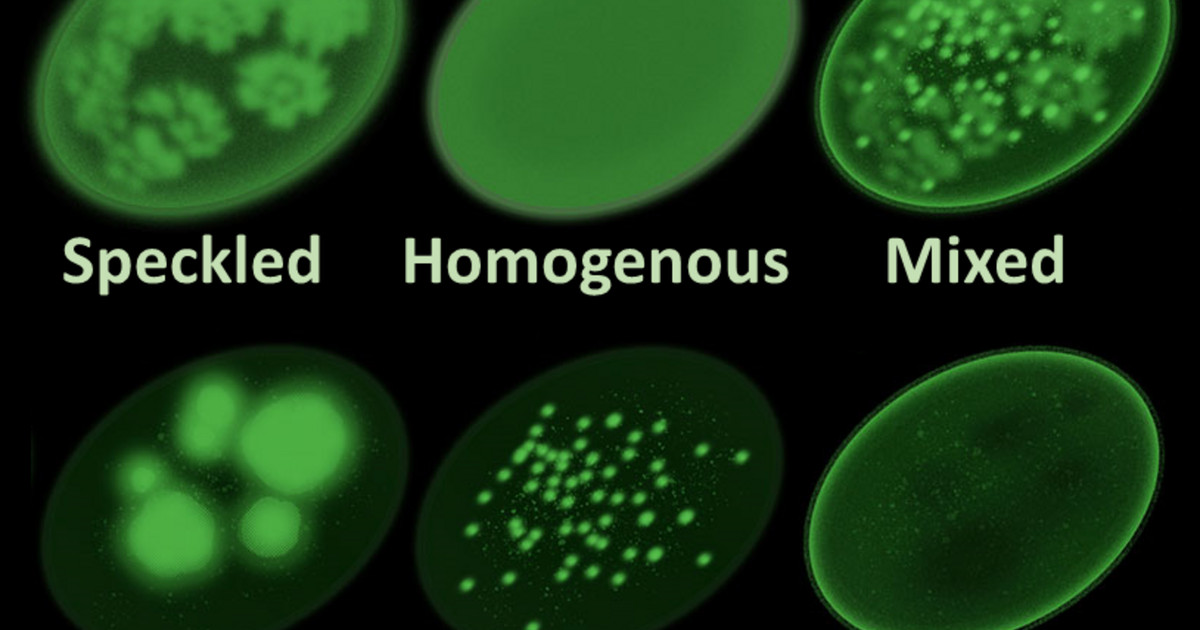
A positive ANA can mean lupus, another autoimmune condition, a medication effect, or nothing at all. That is the problem with autoimmune testing: the tests are sensitive, the diseases are uncommon, and the result is easy to over-read. AI can explain the titer, the pattern, and the caveats, but it cannot diagnose lupus from a lab report. This guide covers ANA, rheumatoid factor, anti-CCP, and the questions that turn a positive result into a useful next step. Cover image: Main antinuclear antibody patterns by Al-Mughales JA, CC BY 4.0, via Wikimedia Commons, cropped.
?? Core Insights
- A positive ANA is common in healthy people, especially at low titers.
- The pattern and titer matter, but they do not diagnose a specific disease alone.
- Rheumatoid factor can be positive in infections and other conditions; anti-CCP is more specific for rheumatoid arthritis.
- Symptoms, exam, and additional antibodies decide the diagnosis.
- AI can explain the tests and prepare questions, but a rheumatologist makes the call.
Try it yourself — free
Experience the medical AI that powers this article. Ask questions, check symptoms, or analyze lab results.
Want to know what a tool does with a panel like yours? See how the lab interpreter reads a blood panel.
Related Lab Tests
What Does an ANA Test Measure?
Antinuclear antibodies are proteins that bind to the nucleus of a cell. A positive ANA means the test detected these antibodies. It does not mean you have an autoimmune disease. Low titers are common in healthy people, especially women and older adults.
The immunofluorescence pattern gives a clue: homogeneous, speckled, nucleolar, centromere, and others. Some patterns are more associated with certain conditions, but the pattern is not a diagnosis. The titer and the clinical picture matter.
What Does a Positive ANA Mean?
It depends on the pretest probability. A young woman with a butterfly rash, joint pain, and proteinuria has a different likelihood than a healthy person with a mild positive result and no symptoms. The test performs differently depending on who is tested.
That is why a positive ANA in a low-risk person can lead to unnecessary worry and repeat testing. A negative ANA in a high-risk person does not fully exclude lupus, although it makes it less likely.
What About Rheumatoid Factor and Anti-CCP?
Rheumatoid factor is an antibody that can be positive in rheumatoid arthritis, but also in infections, liver disease, and other autoimmune conditions. It is sensitive but not specific.
Anti-CCP is more specific for rheumatoid arthritis. A positive anti-CCP with inflammatory joint pain and swelling is a stronger clue than a positive RF alone. The diagnosis still needs a clinical assessment.
Why Are Autoimmune Panels So Easy to Misread?
The first reason is prevalence. The diseases are uncommon, so even a good test produces false positives when used in a broad population. The second is a panel problem: ordering 12 antibodies at once increases the chance of a random abnormal result.
The third is context. A positive antibody can precede symptoms by years, or never cause disease. A result without the right symptoms can create a label that follows a patient without helping them.
How Can AI Help With an Autoimmune Panel?
AI can explain what each antibody is associated with, why a positive result is not a diagnosis, and which questions a rheumatologist will ask: rash, joint swelling, dryness, Raynaud phenomenon, kidney symptoms, and family history.
It should not tell you that you have lupus or rheumatoid arthritis. It should not recommend steroids or immunosuppressants. Those decisions need a clinician who can examine you and interpret the whole panel.
Premedice is our product. It can explain a lab report and cite sources, but it does not diagnose autoimmune disease or prescribe treatment.
When Should You See a Rheumatologist?
See a clinician for persistent joint swelling, a new rash, unexplained fever, kidney symptoms, dry eyes and mouth, or a positive result with symptoms. Bring the actual titer, pattern, and date, not just “positive.”
Seek urgent care for severe weakness, breathing difficulty, a sudden severe headache, or signs of a serious flare. Do not wait for an AI explanation. Related reading: Best AI for blood test interpretation, how to read a lab report, AI CBC interpretation, AI inflammation panel interpretation, is an AI doctor safe, and AI medical statistics.
The pretest probability is the part most patients never hear. A test performs differently depending on who is tested. A positive ANA in a person with a classic lupus rash means something very different from a positive ANA in a person with no symptoms. That is not a reason to withhold the test; it is a reason to interpret it with the story.
If you are preparing for a rheumatology visit, make a symptom timeline. Note joint pain and swelling, morning stiffness, rashes, sun sensitivity, mouth ulcers, hair loss, dry eyes, and Raynaud attacks. Bring the actual lab report, not a screenshot of the headline number.
Do not eliminate foods or start supplements to “fix” an antibody. There is no reliable lifestyle protocol that turns a positive ANA negative, and restrictive diets can cause harm. Focus on the symptoms and the clinical evaluation.
The most useful AI output is a set of questions and a realistic explanation. A tool that labels you with lupus from a single antibody is not helping. A tool that helps you describe the rash, the joints, and the timeline is.
Autoimmune disease is treatable, but the diagnosis is clinical. The lab is a clue. The story is the case.
A positive result can also be a medication effect. Drug-induced lupus is a known pattern, and the treatment is often to stop the offending drug with medical supervision. Do not stop a medication on your own because an antibody is positive.
If you have a family history of autoimmune disease, tell the clinician. It changes the pretest probability, but it does not diagnose you. Family history is context, not fate.
If you are pregnant or planning pregnancy, tell the clinician before any new medication or imaging. Some autoimmune conditions and treatments need special planning. That is a clinical conversation, not a chatbot answer.
The most useful thing an AI can do is help you describe the symptoms clearly and understand why the clinician is ordering the next test. The least useful thing it can do is give you a disease label from a single antibody.
A positive ANA is a question. A diagnosis is an answer built from the history, the exam, and the tests. Do not skip the middle. If the result came from a wellness panel with no symptoms, ask whether the test was indicated before you build a diagnosis around it. A test ordered without a question often creates more anxiety than clarity, and the next step may be a conversation rather than another antibody. Bring the actual report and the date; a titer without a date is hard to interpret. Ask what the pattern means in your case, and what symptom would make it clinically significant. A positive antibody is a starting point for a conversation, not a label for a lifetime. Do not start an immune-suppressing supplement or steroid on your own. Those treatments can mask an infection and cause harm without a diagnosis. Ask for a rheumatology review before trying anything else, especially if you have joint swelling that is new or getting worse. Do not wait for a second antibody test before you seek help today.
| Test | Associated with | Main caveat |
|---|---|---|
| ANA | Lupus and other autoimmune conditions | Common in healthy people at low titers |
| Anti-dsDNA | Lupus | Not positive in every case |
| Anti-CCP | Rheumatoid arthritis | More specific than rheumatoid factor |
| Rheumatoid factor | Rheumatoid arthritis | Positive in infections and other conditions |
Ready to try Premedice?
Get instant, AI-powered explanations of your lab results and symptoms — powered by 300+ medical databases.
Continue Reading

Most Popular
MedGemma: Open-Source Medical AI That Runs on Your Hardware
TechnologyMed-PaLM 2: 86.5% MedQA Score, Zero Doctors Using It (2026)
ResearchAI Symptom Checker Architecture: How Premedice Cuts Hallucinations 3.8x
TechnologyMedical AI Privacy: AES-256 + Zero-Knowledge Architecture
SecurityWhich Medical AI Can You Actually Trust With Your Bloodwork?
ResearchDr. Elena Rostova, MD, PhD
Dr. Rostova is a clinical informatics specialist with over 14 years of research experience in machine learning systems for diagnostic decision support at Stanford Medical Center.
Expert Takeaway
Autoimmune tests are clues in a clinical story. A positive result without symptoms is often a false alarm. A negative result in a symptomatic patient does not close the case. The story and the exam lead.
Browse by Topic
QFrequently Asked Questions
Q1Does a positive ANA mean I have lupus?
No. A positive ANA is common in healthy people, especially at low titers. Lupus is diagnosed from symptoms, exam, and additional tests, not from ANA alone.
Q2What is a high ANA titer?
Titers such as 1:160 or 1:320 are more significant than 1:40, but the meaning depends on symptoms and pretest probability. The number alone is not a diagnosis.
Q3Can rheumatoid factor be positive without rheumatoid arthritis?
Yes. Infections, liver disease, and other autoimmune conditions can raise rheumatoid factor. Anti-CCP is more specific.
Q4Can AI diagnose an autoimmune disease?
No. Autoimmune diagnosis requires a clinical history, exam, and often additional antibodies or imaging. AI can explain the tests but cannot make the diagnosis.
Q5Should I get a broad autoimmune panel if I feel tired?
Not usually without a clinical reason. Broad panels increase false positives. A clinician can decide which tests are useful after taking a history.
Q6What does an ANA pattern mean?
Patterns such as homogeneous or speckled give clues, but they are not diagnoses. The pattern is interpreted with the titer and the clinical picture.
Q7Can medications cause a positive ANA?
Yes. Some medications can cause a drug-induced lupus-like picture. A medication review is part of the evaluation.
Q8When should I see a rheumatologist?
See one for persistent joint swelling, a new rash, unexplained fever, kidney symptoms, or a positive test with symptoms. Bring the full report.
Verified References & Literature
Get a structured second read in seconds
Upload lab results, describe symptoms, or ask about a diagnosis — Premedice gives you medically-grounded answers backed by 30+ clinical databases.