AI Cardiac Blood Test Interpretation: Troponin & BNP
Summary & Key Takeaway
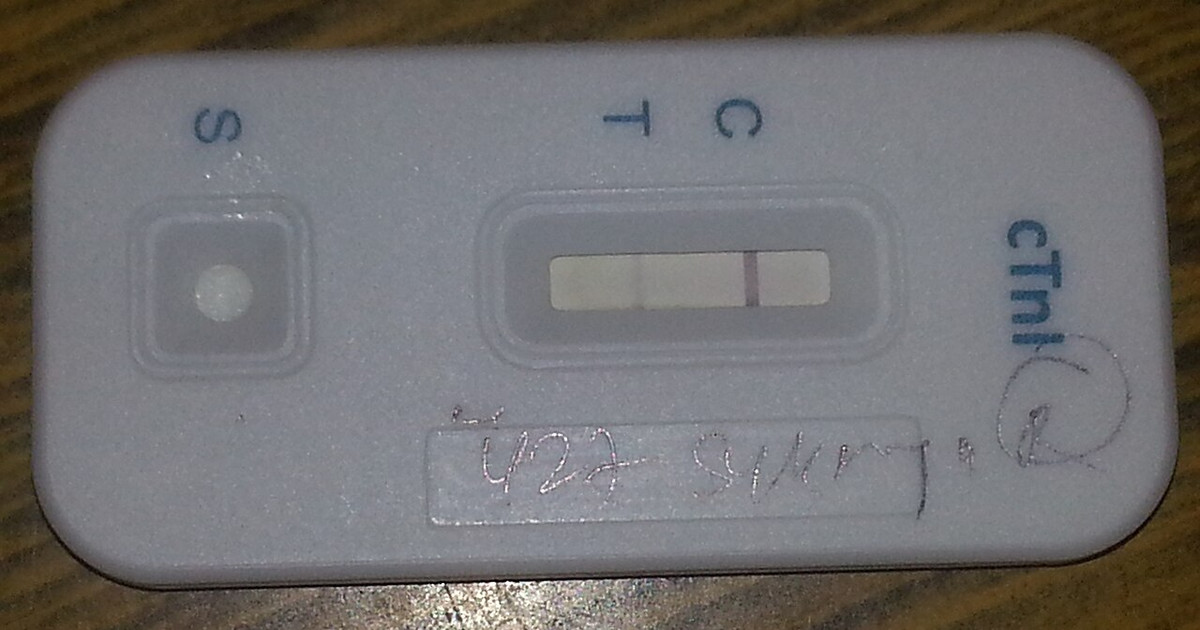
A troponin result can be reassuring or terrifying, and the number alone does not tell you which. Troponin rises with heart muscle injury, but the timing, the trend, the assay, and your symptoms decide what it means. BNP points toward heart strain, not a heart attack. AI can explain the difference, but it must never talk you out of emergency care. This guide covers what the markers mean and where the handoff to a clinician begins. Cover image: Troponin Test Positive by Ajay Kumar Chaurasiya, CC BY-SA 4.0, via Wikimedia Commons, cropped.
?? Core Insights
- Troponin is a marker of heart muscle injury, not a diagnosis of heart attack by itself.
- A single normal troponin does not rule out a heart attack, especially early after symptoms start.
- BNP and NT-proBNP suggest heart strain or heart failure; they are not heart-attack tests.
- Kidney disease, age, and other conditions can raise these markers without an acute cardiac event.
- Chest pain, breathlessness, fainting, or a feeling of doom needs emergency care, not a chatbot.
Try it yourself — free
Experience the medical AI that powers this article. Ask questions, check symptoms, or analyze lab results.
Want to know what a tool does with a panel like yours? See how the lab interpreter reads a blood panel.
Related Lab Tests
What Does Troponin Measure?
Troponin is a protein in heart muscle. When heart muscle is injured, troponin leaks into the blood. A high-sensitivity troponin test can detect small amounts, which makes it useful for evaluating chest pain in an emergency department.
But troponin is not specific to a blocked artery. Severe infection, kidney disease, heart failure, pulmonary embolism, and intense endurance exercise can raise it. The pattern over time and the clinical picture separate a heart attack from other causes.
Can a Normal Troponin Rule Out a Heart Attack?
No, not by itself. Troponin can take hours to rise after symptoms begin. A normal result very early does not exclude an event. Emergency clinicians use serial tests, an ECG, and the history to decide.
This is the most dangerous place for an AI to sound reassuring. A chatbot that says “your troponin is normal, so you are fine” is not reading the ECG, the timing, or the trend. It is guessing.
What Does BNP or NT-proBNP Mean?
BNP is released when the heart is stretched or under strain. It is useful for evaluating heart failure and breathlessness, especially when the diagnosis is unclear. A high value supports further cardiac evaluation; a low value makes heart failure less likely in the right setting.
BNP is not a heart-attack marker. It can also rise with age, kidney disease, and other conditions. A number without the echo, the exam, and the symptoms is incomplete.
What About CK and CK-MB?
Creatine kinase is found in skeletal muscle as well as heart muscle. It rises after exercise, muscle injury, and some medications. CK-MB is more cardiac-specific than total CK, but troponin has largely replaced it for heart-attack evaluation.
If you see a high CK after a hard workout, the number may reflect muscle breakdown, not heart injury. If you see it with chest pain and a high troponin, the context is different. AI should not flatten that distinction.
Why Do Cardiac Markers Get Misread?
The first reason is timing. A marker that is normal at hour two may be high at hour six. The second is the assay. Different hospitals use different thresholds, and a value that is normal in one lab may be flagged in another.
The third is comorbidity. Kidney disease, age, and heart failure can raise baseline values. The fourth is anchoring: once a patient hears “heart,” every number looks like a heart attack. A good explanation separates the marker from the diagnosis.
How Can AI Help With Cardiac Markers?
AI can explain what troponin and BNP measure, why the trend matters, and why a normal early result is not a rule-out. It can help you prepare questions for a clinician and understand the discharge instructions.
It should not triage chest pain. If you have chest pressure, pain radiating to the arm or jaw, shortness of breath, sweating, nausea, or fainting, call emergency services. Do not wait for an AI to finish a differential.
Premedice is our product. It can explain a report and cite sources, but it is not an emergency service and does not diagnose heart attacks.
When Is a Cardiac Symptom an Emergency?
Chest pain or pressure, especially with sweating, nausea, shortness of breath, or pain radiating to the arm, jaw, or back, needs emergency evaluation. A sudden severe headache, fainting, or a racing heart with dizziness also needs urgent care.
If you are unsure, call emergency services and describe the symptoms. It is better to be evaluated and sent home than to wait for a chatbot. Related reading: Best AI for blood test interpretation, how to read a lab report, AI CMP interpretation, is an AI doctor safe, AI symptom checker vs AI doctor, and AI medical statistics.
If you have already been evaluated and sent home, the discharge instructions matter more than the number. Ask what to do if the pain returns, which symptoms should trigger a return, and when to follow up. A normal troponin in the emergency department is a snapshot, not a lifetime guarantee.
For BNP, the useful follow-up is often an echocardiogram and a review of blood pressure, kidney function, and medications. A BNP value without the heart imaging and the exam is a clue, not a diagnosis. The same is true for a high troponin found during a routine blood test: the next step is a clinical review, not a panic search.
If you are preparing for a cardiology visit, bring the dates and times of the draws, the actual values, the ECG report if you have it, and a list of medications. The trend is often more informative than a single peak. Tell the clinician about recent exercise, kidney disease, infections, and any chest symptoms, because those details change the interpretation.
The bottom line is uncomfortable but useful: cardiac markers are powerful in the right setting and misleading in the wrong one. They help a clinician decide what to do next. They do not decide for you, and they should never talk you out of emergency care.
If you are at home reading a result, do not try to calculate a trend from two numbers drawn at different times. The assay, the timing, and the clinical context are not in the portal. Call the clinician who ordered the test if you have questions, especially if you have symptoms.
If you are a clinician reviewing a mildly elevated troponin, look for the common confounders before the rare diagnosis: kidney function, heart failure, infection, pulmonary embolism, and recent intense exercise. The value is a clue, not a verdict. The ECG and the story decide the pathway.
If you are building a product that displays cardiac markers, put the emergency guidance above the explanation. A patient with chest pain should not have to scroll past a definition of troponin to find the instruction to call emergency services. That is a design safety issue, not a content preference.
The safest patient education on cardiac markers is boring: what the test measures, why the trend matters, what symptoms are emergencies, and who to call. The dramatic version, where a chatbot plays cardiologist, is the one that gets someone hurt.
| Marker | What it suggests | Important caveat |
|---|---|---|
| Troponin | Heart muscle injury | Can rise from kidney disease, infection, or heart failure |
| BNP / NT-proBNP | Heart strain or heart failure | Not a heart-attack test |
| CK | Muscle injury, including heart muscle | Also rises after exercise |
| CK-MB | Cardiac muscle injury | Largely replaced by troponin |
Ready to try Premedice?
Get instant, AI-powered explanations of your lab results and symptoms — powered by 300+ medical databases.
Continue Reading


Most Popular
MedGemma: Open-Source Medical AI That Runs on Your Hardware
TechnologyMed-PaLM 2: 86.5% MedQA Score, Zero Doctors Using It (2026)
ResearchAI Symptom Checker Architecture: How Premedice Cuts Hallucinations 3.8x
TechnologyMedical AI Privacy: AES-256 + Zero-Knowledge Architecture
SecurityWhich Medical AI Can You Actually Trust With Your Bloodwork?
ResearchDr. Elena Rostova, MD, PhD
Dr. Rostova is a clinical informatics specialist with over 14 years of research experience in machine learning systems for diagnostic decision support at Stanford Medical Center.
Expert Takeaway
Cardiac markers are interpreted with symptoms, ECG, timing, and trends. If you might be having a heart attack, call emergency services. An AI explanation can wait.
Browse by Topic
QFrequently Asked Questions
Q1What does a high troponin mean?
It means heart muscle injury. It does not automatically mean a heart attack. The ECG, symptoms, timing, trend, and other tests determine the cause.
Q2Can a normal troponin rule out a heart attack?
No. Troponin can take hours to rise. A single early normal result does not exclude a heart attack. Emergency clinicians use serial tests and an ECG.
Q3What is a BNP test for?
BNP or NT-proBNP helps evaluate heart strain and heart failure, especially in breathlessness. It is not a heart-attack test.
Q4Can AI diagnose a heart attack from a lab report?
No. A heart attack is diagnosed from symptoms, ECG, troponin trends, and clinical evaluation. An AI report explanation is not an emergency evaluation.
Q5Why is my troponin high but my ECG normal?
Troponin can rise from many causes, and a normal ECG does not exclude every cardiac event. A clinician needs the full picture and repeat testing.
Q6Can exercise raise troponin?
Intense endurance exercise can raise troponin in some people. That does not make every high troponin benign; context and repeat testing matter.
Q7What should I do if I have chest pain?
Call emergency services. Do not drive yourself, and do not wait for an AI answer. Chest pain with sweating, breathlessness, nausea, or fainting is an emergency.
Q8Is BNP high in heart failure?
It often is, but BNP can also rise with age, kidney disease, and other conditions. The diagnosis needs an exam, history, and often an echocardiogram.
Verified References & Literature
Get a structured second read in seconds
Upload lab results, describe symptoms, or ask about a diagnosis — Premedice gives you medically-grounded answers backed by 30+ clinical databases.