An AI Reads Your MRI in 20 Seconds. It Still Needs You.
Summary & Key Takeaway
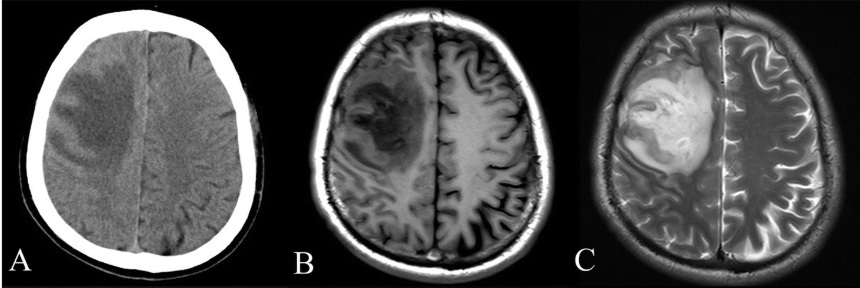
Give a modern vision model an MRI volume and it can flag a lesion in the time it takes you to finish this sentence. That speed is real and it will grow. What is equally real is that no responsible hospital deploys that speed without a radiologist in the loop. The useful question for 2026 is not whether AI replaces radiologists. It is which parts of the reading room the machine should own and which parts no software should touch.
✳︎ Core Insights
- AI triage can cut the list of scans a radiologist must prioritize, returning seconds on urgent findings.
- Models excel at volume screening and consistency; humans excel at ambiguous cases and clinical judgment.
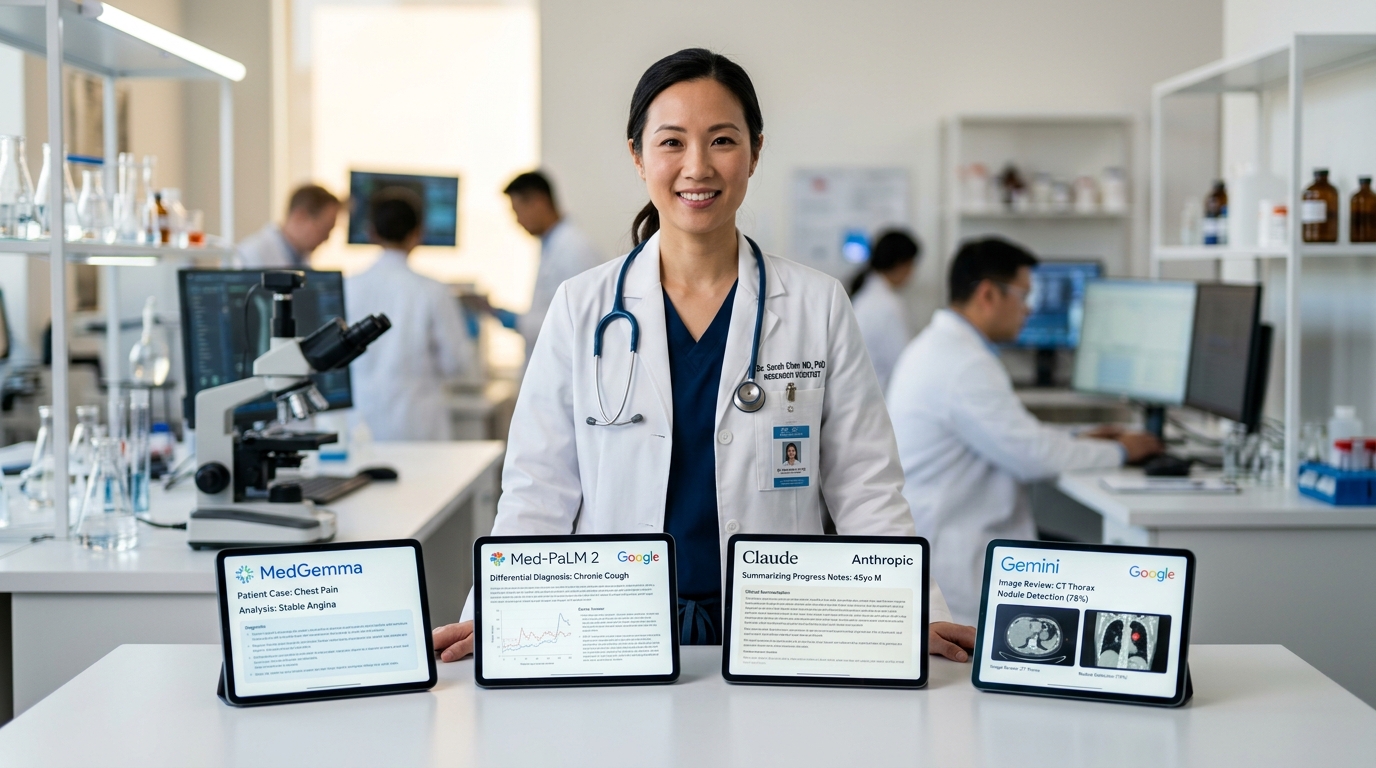
- MedGemma-style multimodal models add 3D volumetric analysis, but outputs still require expert review.
- Regulatory and safety frameworks require a qualified human to confirm AI findings.
- The winning workflow routes the easy 80% to AI assist and reserves human attention for the hard 20%.
Where AI Really Is Fast (and Where It Is Not)
Modern vision-language models genuinely excel at pattern tasks: flagging a pulmonary nodule on a CT, triaging an abnormal MRI from a normal one, estimating interval change between scans. MedGemma 1.5, with native 3D volumetric processing, can read full scan volumes rather than slice-by-slice fragments, which was previously a severe limitation of open models.
Where models still stumble is the unusual. Anatomy variants, artifacts, implant artifacts, pediatric appearances, and clinical history that changes the interpretation all break the pattern rule. A fast correct read of the common case and a slower careful read of the strange case is exactly the division where a human partner outperforms automation run solo.
Triage Is the Killer App, Not Autopilot
The highest-value radiology deployment today is worklist triage. The AI runs every scan in the queue, flags the ones with concerning findings, and lets radiologists open the urgent studies first. Emergency departments see the benefit immediately: the model catches the subtle intracranial hemorrhage a fatigued reader might defer until lunch.
This is why incident reports about AI radiology errors rarely mention the models that improved throughput. When the machine does the legwork and the specialist does the judgment, patient outcomes improve on both speed and accuracy, and no one asks whether the machine will eventually take over.
Why the Final Read Still Belongs to a Radiologist
A scan is never interpreted in a vacuum. The deciding context, prior films, comorbidities, medications, surgical history, lives inside the clinical record and conversations. Foundation models reason over the image; real diagnostic decisions reason over the patient.
Malpractice and regulatory frameworks reinforce the same boundary. AI findings must be confirmed by a qualified human before affecting treatment. That is not friction for its own sake. It is the mechanism that keeps a model with a 1% failure rate from causing harm in the 1% of cases where it fails hardest.
The 80-20 Workflow That Actually Works
Hospitals that report the most success route the predictable majority of cases through AI assist and keep human attention on the exceptions. Screening mammograms, high-volume follow-ups, and normal timepoint studies are exactly the kind of repetitive load machines handle consistently, without the fatigue curve that hits humans by hour six.
The 20% that stays human includes first presentations with vague symptoms, incidental findings, pediatric cases, and anything a patient or primary doctor is worried about. Over time, the model also learns from where the radiologist overrides it, and those overrides become the next training signal, closing the loop the whole department relies on.
What Patients Should Ask Their Radiologist
Any patient can now ask whether AI assisted their scan, because more and more reports disclose it. If a report says findings were identified with AI assistance, that is a sign the department is using triage tools responsibly, not a reason for alarm.
The deeper question patients can ask is about workflow, for example whether urgent findings get prioritized automatically and whether a human confirmed every positive result. A system that answers clearly on both is a department moving in the right direction, with software doing what software should and clinicians doing what clinicians must.
How a Vision Model Actually Sees Your Scan
Behind the 20-second claim is a pipeline no patient ever watches. The scan arrives as a stack of images, each plane sliced into tiny elements called voxels, the three-dimensional version of a pixel. A foundation model converts those voxels into mathematical representations and compares them against patterns learned from millions of prior scans. That embedding step is why the same model family can flag a lung nodule or an interval change without being told which anatomy to inspect.
Speed misleads people into imagining the machine sees like a radiologist. It does not. It sees like a very fast pattern matcher whose success depends on how similar your scan is to the thousands it has memorized. The model has no opinion about whether you feel unwell, no memory of your previous result, and no context beyond the images in the folder. Use it that way, as a tireless pair of eyes, and it earns its place.
The Failure Cases That Keep a Human in the Room
Every honest AI deployment has a story about the case the model would have gotten wrong alone. Implant artifacts scatter and reflect signals in patterns no training set fully covers. Pediatric anatomy looks nothing like adult slices. A scan taken in motion finds its way into the queue anyway. None of these cases is rare enough to ignore, which is exactly why the strongest programs measure their model's misses on their own population before trusting it on real patients.
The useful discipline is to log the overrides. When a radiologist corrects a machine's read, that disagreement is data about where the model is weak in your department. Review those cases monthly, feed the pattern back into workflow design, and the system gets safer precisely because a human stayed accountable for the outliers. Calibrated confidence is not a feature a vendor ships. It is the outcome of a hospital that watches its own failure modes.
Privacy, Storage, and the Imaging Data Pipeline
An MRI volume is among the largest files in health care, and the moment AI touches it the governance questions multiply. Where does the scan go? Which vendor sees it? How long is it retained, and who can regenerate the derived maps the model creates? The comfortable posture in 2026 is local inference, with models like MedGemma running inside the network so that a diagnostic image never leaves the building it was scanned in.
That choice has a cost beyond hardware. Your own team now owns log review, access control, and the audit trail that regulators expect, and that is labor hospitals persistently underestimate. The alternative, sending volumes to a cloud API, trades infrastructure work for data-residency review. Either way, imaging AI forces an explicit decision about who holds every pixel, and a no-answer decision is itself a governance failure.
What to Ask Before a Department Buys Radiology AI
Before a vendor demo becomes a purchase order, sit the software next to a week of your real worklist and ask four questions. What is the false-positive rate on our scanners and our protocols? Where does the model need human confirmation, and does it say so? What happened in the vendor's own validation study on populations like ours? And what is the exit plan if the tool degrades after a scanner upgrade or a software patch? Departments that answer these on paper first rarely regret it.
The brightest trap is buying throughput you cannot staff. A tool that clears the queue faster but leaves every override unlogged is a tool that teaches you nothing. Pair the software with a reading-room practice that records disagreements, feeds findings back to the vendor or the tuning process, and audits outcomes at set intervals. The machine reads in twenty seconds. The department that learns from each of those twenty seconds is the one that genuinely improves.

Dr. Marcus Vance, MD
Dr. Vance is a board-certified internal medicine physician and clinical informatics expert with a focus on preventative medicine and patient-directed health literacy.
Expert Takeaway
Speed is a tool, not a verdict. The radiologist who supervises AI reads more patients and misses less, because the machine clears the backlog and the specialist owns the judgment.
QFrequently Asked Questions
Q1Can AI read MRI scans accurately?
Yes, for pattern tasks like flagging nodules, triaging abnormal studies, and measuring interval change. AI is less reliable on unusual anatomy, artifacts, and cases requiring clinical history. That is why a human radiologist confirms final reads.
Q2Will AI replace radiologists?
No credible deployment in 2026 removes the radiologist. AI is used to triage worklists and assist reads, while radiologists make final diagnostic decisions, especially on ambiguous and high-risk cases.
Q3How does MedGemma help with imaging?
MedGemma 1.5 processes full 3D volumes such as CT and MRI natively, supporting triage and interval-change analysis. Its outputs still require independent verification by a qualified clinician, per Google's own safety guidance.
Q4Should I worry if AI assisted my MRI report?
No. AI assistance in imaging usually means worklist triage and flagging support, with a human radiologist confirming results. Ask your provider how urgent findings are prioritized if you want full transparency.
Q5Does faster AI triage mean fewer radiologists are needed?
Not in any deployment that works well. AI clears the backlog and flags urgent cases, which changes what radiologists spend time on, but hospitals still staff the reading room for the ambiguous cases where judgment decides. The staffing ratio shifts; the human role does not disappear.
Q6How can I tell if a department is using imaging AI responsibly?
Ask whether it discloses AI assistance on reports, whether urgent findings are prioritized automatically, and whether a radiologist confirms every positive result. A department that answers those questions plainly is using AI as triage rather than as a final reader. Transparency is a good signal.
Q7Is it safe for AI to read my MRI without a radiologist looking at it?
No responsible hospital operates that way today. Models flag patterns, but interpretation depends on your history, prior films, and clinical context. Regulatory frameworks require qualified human review of findings that affect treatment, and patients should expect that confirmation to happen.
Q8Do AI-assisted reads cost patients more?
There is no standard patient-facing charge for AI triage, and most facilities absorb the software cost into their imaging operations. What matters to you is the workflow, not the technology bill. Ask how an AI-assisted finding is handled rather than whether technology was involved.
Verified References & Literature
Worklist Triage with Deep Learning in Emergency Radiology
Journal of the American College of Radiology, 2025
View SourceGet a structured second read in seconds
Upload lab results, describe symptoms, or ask about a diagnosis — Premedice gives you medically-grounded answers backed by 30+ clinical databases.