Google's MedGemma Is Free - But Should You Use It on Patients?
Summary & Key Takeaway
Free weights and zero API fees make MedGemma look like the obvious choice for every cash-strapped clinic. The reality is more careful. Google distributes MedGemma as a developer foundation, not a clinical product, and its model card states outputs require independent verification before diagnosis or treatment decisions. Running it on your own hardware solves privacy and cost. It does not solve the harder problem of turning an open model into a validated, safe clinical workflow.
?? Core Insights
- MedGemma 27B scores 87.7% on MedQA, but benchmark parity is not clinical clearance.
- Google's safe-use policy prohibits using MedGemma to diagnose from medical images without qualified human review.
- Self-hosting solves data residency but shifts the burden of validation entirely onto your institution.
- A production deployment needs verification, escalation, and drift monitoring layers around the model.
- Open weights are a starting point, never a finished clinical endpoint.
Try it yourself — free
Experience the medical AI that powers this article. Ask questions, check symptoms, or analyze lab results.
Not sure which tool fits? Compare what Premedice does.
What Google Actually Says About MedGemma
The model card is not a legal disclaimer you can skip. Google states that MedGemma outputs require independent verification and should not directly inform diagnosis or treatment. The safe-use policy goes further and prohibits diagnosing patients on the basis of medical images without qualified human review.
That is the correct posture for a 27B open model trained on broad medical data. It is also easy to miss when the download page emphasizes performance numbers. Reading the card before deployment is not compliance theater. It is the specification for the system you are about to build.
The Private Infrastructure Advantage, Honestly Weighed
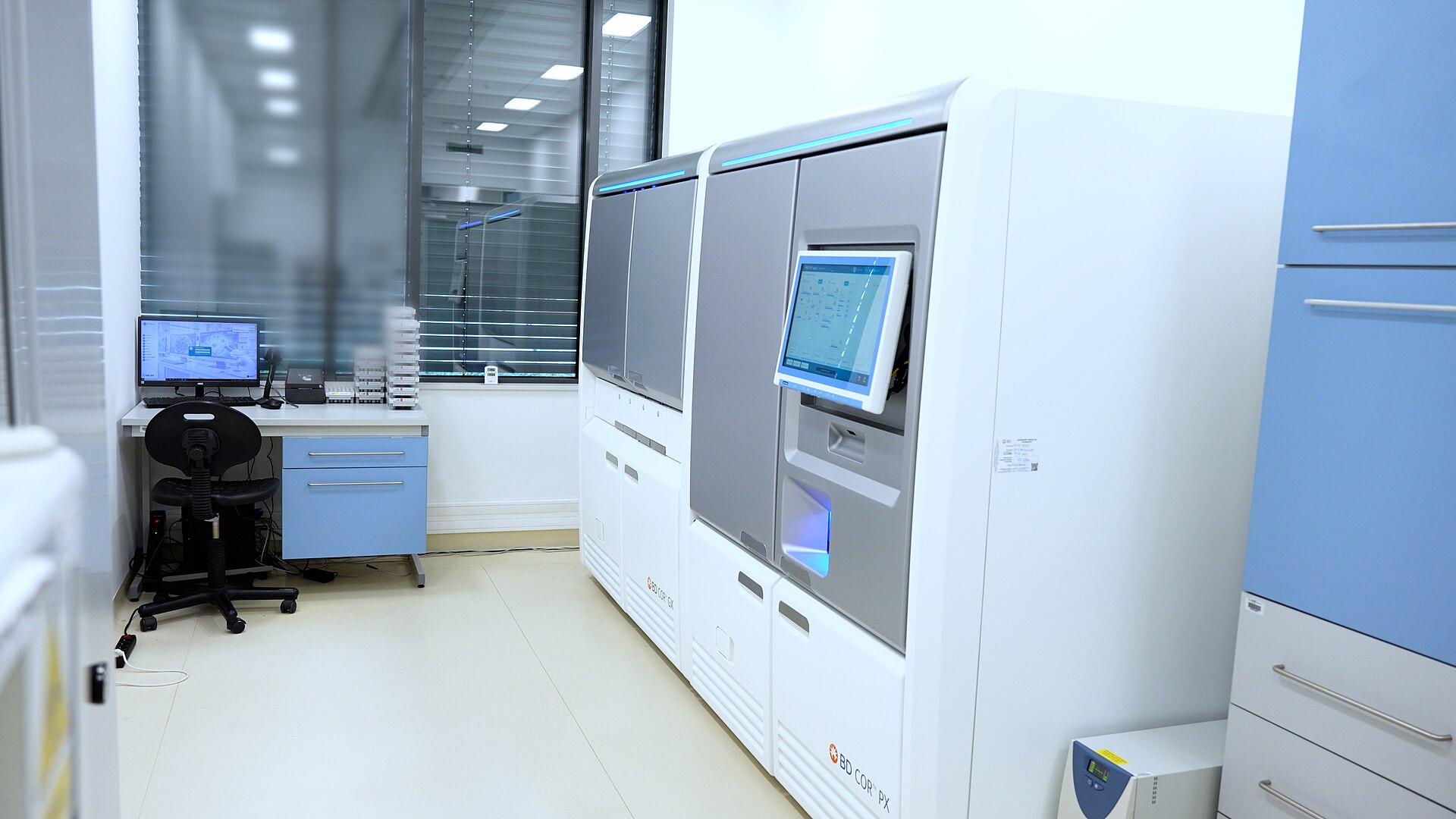
Self-hosting MedGemma genuinely changes the privacy conversation. With the 4B variant running in as little as 8GB of VRAM and the 27B on server-class GPUs, no patient data leaves your network, which satisfies HIPAA data-residency constraints by architecture rather than by promise.
The trade is that your team now owns the pipeline. There is no vendor SLA, no monitored endpoint, no automatic safety patch. The moment you self-host, uptime, security patching, logging, and incident response all become your responsibility. Clinics that underestimate that shift tend to have second thoughts in month two.
Why Benchmark Scores Do Not Constitute Clinical Validation
MedGemma 27B reaches 87.7% on MedQA, close to Med-PaLM 2 and above most consumer models. But exam-style multiple choice rewards recall, while clinical safety rewards calibrated uncertainty. A model can ace MedQA and still fail on an unusual presentation your local population produces.
Validation means testing on data that reflects your actual patients, your imaging equipment, your report format, and your referral patterns. Every deployment guide says this. Almost no open-source project asks you to prove you have done it, which is exactly why so many teams skip the step.
The Safety Layers You Must Build Yourself
A safe MedGemma deployment needs three layers the model does not provide. First, an independent verification layer that flags low-confidence outputs. Second, a human escalation path that routes uncertain results to a licensed clinician. Third, ongoing drift monitoring that catches when the model's behavior changes after a fine-tune or data shift.
Each layer is engineering, not paperwork. The verification layer can be as simple as a calibrated threshold plus a second opinion model. The escalation path must be real, meaning a named person with a response time. Drift monitoring only works if you log outputs and compare distributions over time. Skip any one and you have a research model wearing a clinical coat.
The Realistic Decision Framework for a Clinic
For a clinic with a decent engineering team, a full in-house pipeline, and the discipline to validate on its own population, MedGemma is a legitimate foundation. Public-sector deployments in Malaysia and Taiwan are proof the approach scales when institutions take responsibility for the whole system.
For a clinic without those resources, the safer path is a managed service where the vendor legally owns the clinical-safety burden. The honest question is not whether MedGemma is free. It is whether your institution can afford the ten hidden layers of cost that come after the weights.
The Pre-Flight Checklist Before a Real Patient Touches It
Before a single real patient's data flows through the model, a responsible team runs a specific checklist. Pin down the narrow use case first: one task, one population, one output format. Then assemble a validation set of past cases with known outcomes, run the model, and tabulate exactly where it is confident and where it is wrong before anyone is affected.
Then build the human loop. Define who reviews the outputs, at what confidence threshold, and within what time. Log everything, from input through model version to final decision, because you cannot monitor drift you never measured. This checklist is unglamorous, and it is the entire distance between a pilot and a liability.
Who MedGemma Is a Fit For Today
The honest fit list is narrower than the hype. Research groups that need to process large volumes of de-identified imaging data fit well; they control the hardware, and the data was not protected to begin with. Health systems with mature engineering teams and existing GPU infrastructure fit too, because they can absorb the operational burden without spinning up a new department.
Clinics without those resources should think twice. If there is no one who can patch a server, re-run a validation set, or respond to a model failure at two in the morning, open weights will quietly turn into a job nobody was hired to do. Fit is about operational capacity, not just interest or budget, and pretending otherwise is how free software becomes the most expensive decision a clinic makes.
The Operating Costs Nobody Quotes Up Front
Free weights hide the real budget. The list starts with hardware: 40GB-class GPUs for the 27B model, or long latency on consumer cards for the 4B. Then add deployment engineering, security patching, logging infrastructure, and the person-hours spent validating every fine-tune. None of that appears on the Hugging Face download page.
The accounting question is whether the total beats a managed API at your volume. For very high-volume, privacy-critical workloads, self-hosting wins on both cost and control. For modest usage, the managed route often ends up cheaper once you price the team's time. Compute the full total, not the download size, before you commit either way.
Validation Without a Research Department
You do not need a statistics team to run a useful validation. Pull fifty to a hundred past cases with confirmed outcomes, ideally the ones most common in your own clinic. Run the model on each one, then hand the outputs to a clinician who marks them right, wrong, or unclear. That single table tells you the real performance against your actual patient mix.
The next step is monitoring, not more testing. Track the rate of low-confidence outputs and the rate of clinician overrides every month, because a rising override rate is your first warning sign of drift. Simple, logged, reviewed on a schedule: this is validation that a two-person team can own, and it is the minimum a patient-facing deployment deserves.
The Patient-Facing Trust Problem Doesn't Vanish at Zero Cost
Software that helps clinicians still lands in front of patients as a note, a portal message, or a first impression. Patients rarely ask whether a model was open-weights, free, or state of the art. They ask whether anyone checked it, and what happens when it is wrong, and those two questions decide whether they trust the system or fear it.
Budget for the transparency work: disclosure language that explains how the model is used, a clear escalation path when a patient disagrees with an output, and a named human who owns each result. Cheap inference shifts your costs from compute to trust, and trust is not a per-token expense you can optimize away. It compounds or it corrodes, depending entirely on what you build around the model.
Managed Service or Self-Hosted: Choosing Honestly
Once the costs and your capacity are on the table, the choice largely resolves itself. Self-host when you have the operations team, the volume justifies the hardware, and data residency is non-negotiable. Choose a managed service when your team is lean, your volumes are modest, or you want a vendor to own the clinical-safety burden legally as well as technically.
Many organizations end up with a hybrid: open weights for the sensitive core, managed inference for the spiky rest. That approach sidesteps the either-or trap. Whichever path you take, document the decision and the reasoning, because the next budget cycle and the next auditor will both ask why. A written, honest rationale is half the governance battle won.
Ready to try Premedice?
Get instant, AI-powered explanations of your lab results and symptoms — powered by 300+ medical databases.
Continue Reading


Most Popular
Best AI Medical Models in 2026: MedQA Scores Compared
ResearchMedGemma: Open-Source Medical AI That Runs on Your Hardware
TechnologyMed-PaLM 2: 86.5% MedQA Score, Zero Doctors Using It (2026)
ResearchAI Symptom Checker Architecture: How Premedice Cuts Hallucinations 3.8x
TechnologyMedical AI Privacy: AES-256 + Zero-Knowledge Architecture
SecuritySarah Jenkins, MS, CISSP
Sarah is an enterprise security architect who previously led healthcare cloud-compliance engineering at a tier-1 medical database vendor.
Expert Takeaway
Use MedGemma because it fits your privacy and budget constraints, then build the clinical safety system it does not ship with. Validation on your own population, human escalation paths, and continuous monitoring are the actual product.
Browse by Topic
QFrequently Asked Questions
Q1Is MedGemma approved for clinical use?
No. Google distributes MedGemma as a developer foundation. Its model card says outputs require independent verification, and its safe-use policy prohibits diagnosing patients from medical images without qualified human review.
Q2How accurate is MedGemma compared to other medical AI?
The MedGemma 27B text model scores 87.7% on MedQA, between MedGemini at 91.1% and most consumer models. The 4B multimodal model scores lower on text but adds imaging capability that closed models often lack.
Q3Can I run MedGemma on hospital hardware?
Yes. The 4B variant runs on consumer GPUs with 8GB of VRAM, and the 27B needs server-class GPUs with roughly 40GB or more. Once downloaded, it requires no internet and no per-token fees.
Q4Does self-hosting MedGemma make it HIPAA compliant?
Self-hosting satisfies data-residency requirements because data never leaves your network. Compliance still requires you to operate the security controls, logging, access limits, and validation that HIPAA expects of covered entities.
Q5What GPU do I actually need to run MedGemma in production?
The 4B model runs on consumer GPUs with about 8GB of VRAM, but production throughput usually favors server-class hardware. The 27B needs roughly 40GB or more. Add redundancy and failover on top of the minimum spec, because the machine that hosts patient data needs a backup plan.
Q6How long does validation take before MedGemma can touch patients?
A pragmatic baseline is a validation set of fifty to a hundred confirmed cases from your own population, clinician review of every output, and a shadow period where the model's results are compared against existing workflows before any direct patient impact. Expect months, not weeks, for a careful deployment.
Verified References & Literature
Get a structured second read in seconds
Upload lab results, describe symptoms, or ask about a diagnosis — Premedice gives you medically-grounded answers backed by 30+ clinical databases.