

Kidney Stones: Prevention, Treatment, and When to Go to the ER
Summary & Key Takeaway
Kidney stones are solid masses formed from minerals and salts — such as calcium oxalate, uric acid, or cystine — that crystallize in the kidneys and cause excruciating pain when they move through the urinary tract. About 1 in 10 people will develop a kidney stone in their lifetime, with recurrence rates of 50% within 5–10 years without prevention. While small stones may pass spontaneously, larger stones can cause excruciating pain, urinary obstruction, infection, and kidney damage. The good news: kidney stones are highly preventable, and prevention is far better than the emergency room experience of passing one. [Premedice](/) can help you evaluate your risk factors and develop a prevention plan.
?? Core Insights
- Calcium oxalate stones are the most common type (80% of stones) — paradoxically, dietary calcium intake should be normal-to-high (not restricted) because calcium binds oxalate in the gut
- Hydration is the single most important prevention strategy — aim for 2.5–3 liters of urine output per day (about 10–12 glasses of water)
- Stone pain (renal colic) is caused by the stone obstructing the ureter — it comes in waves, is severe (8–10/10), and is often described as the worst pain ever experienced
- Most stones under 5mm pass spontaneously (90%); stones 5–10mm pass about 50% of the time; larger stones usually require intervention (lithotripsy, ureteroscopy, or surgery)
- A 24-hour urine collection is the gold standard for prevention — it identifies your specific metabolic risk factors (high urine calcium, oxalate, uric acid, or low citrate) so prevention can be targeted. [Premedice](/) can help you evaluate kidney stone risk factors and develop a personalized prevention strategy
Try it yourself — free
Experience the medical AI that powers this article. Ask questions, check symptoms, or analyze lab results.
Want to know what a tool does with a panel like yours? See how the lab interpreter reads a blood panel.
Related Lab Tests
Types of Kidney Stones
Kidney stones are classified by their chemical composition, which determines treatment and prevention strategies. Calcium oxalate stones (80% of all stones) form when calcium combines with oxalate in urine. They're associated with high urine calcium, high urine oxalate, low urine citrate, and inadequate fluid intake. Calcium phosphate stones (10–15%) form in alkaline urine and are associated with high urine calcium and high urine pH. Uric acid stones (5–10%) form in acidic urine and are associated with high uric acid levels, gout, and metabolic syndrome. Struvite stones (magnesium ammonium phosphate, 5–10%) form in the presence of urinary tract infections with urease-producing bacteria (like Proteus). Cystine stones (<1%) are rare and caused by a genetic disorder (cystinuria) that causes excessive cystine excretion.
Stone composition is determined by chemical analysis of passed or removed stones — this information is critical for prevention. Without knowing the stone type, prevention is guesswork. If you pass a stone or have one removed, make sure it's analyzed. For patients who haven't had a stone analyzed, 24-hour urine testing can identify the metabolic profile and suggest the likely stone type.
The Pain: Renal Colic Explained
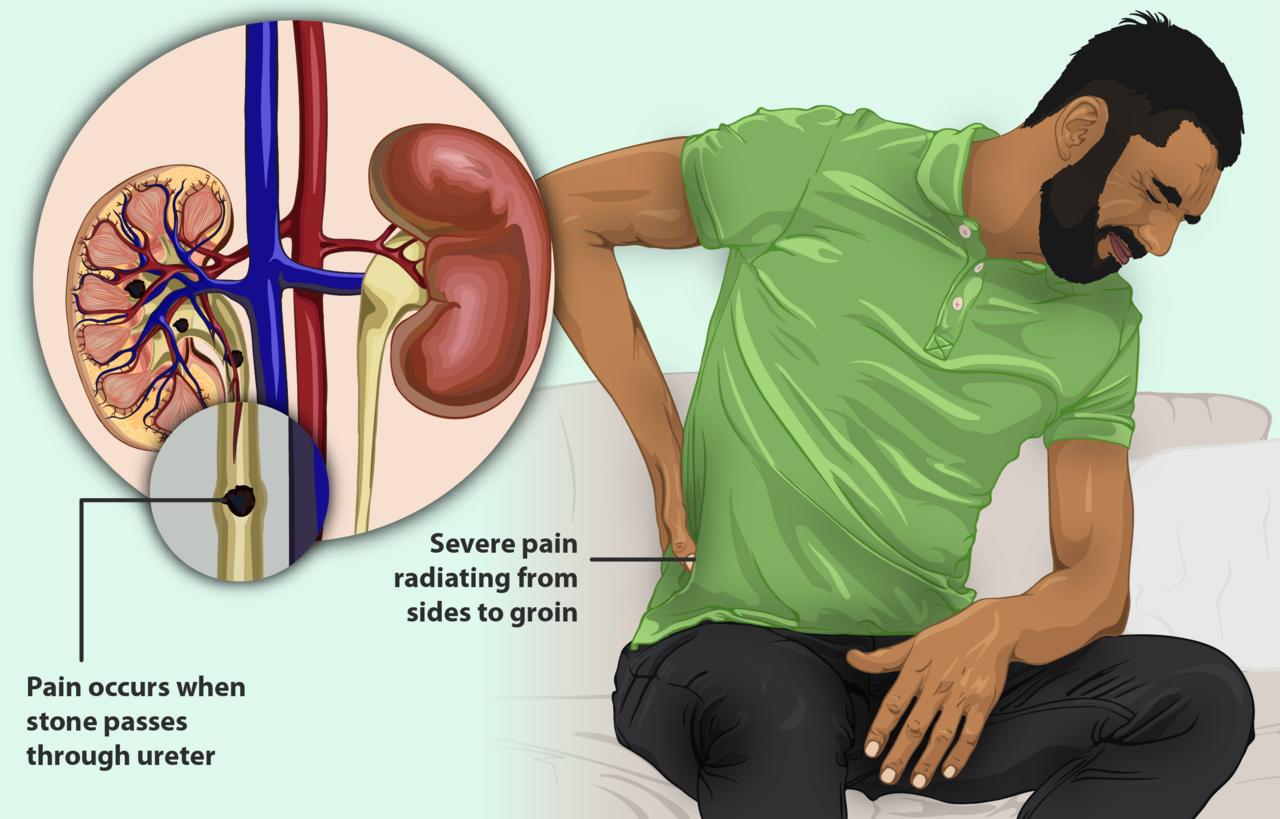
Kidney stone pain — renal colic — is caused by the stone obstructing the ureter (the tube connecting the kidney to the bladder), which causes the kidney to swell (hydronephrosis) and the ureter to spasm. The pain is typically sudden in onset, severe (8–10 out of 10), and often described as the worst pain ever experienced. It typically starts in the flank (side, between the ribs and hip) and radiates to the lower abdomen and groin as the stone moves down the ureter. The pain comes in waves (colicky, not constant) as the ureter contracts against the obstruction.
Associated symptoms include nausea and vomiting (from the severity of pain), blood in the urine (hematuria, from the stone scraping the ureter wall), frequent urination (if the stone is near the bladder), and fever (if infection is present — this is a medical emergency). The pain is so severe that most people seek emergency care. Emergency evaluation typically includes a CT scan (which identifies the stone's size, location, and degree of obstruction) and urine and blood tests (to assess kidney function and check for infection).
Treatment: From Passing to Surgery
Most small kidney stones (under 5mm) pass spontaneously within days to weeks. Passage is facilitated by hydration (2–3 liters per day), pain management (NSAIDs like ibuprofen for mild pain; opioids or ketorolac for severe pain in the ER), and medical expulsive therapy (tamsulosin/Flomax, an alpha-blocker that relaxes the ureter and facilitates stone passage). Stone strainers (available at pharmacies) allow you to catch the passed stone for analysis.
Larger stones (5–10mm) may still pass but with lower probability. Stones over 10mm almost never pass and typically require intervention. Extracorporeal shock wave lithotripsy (SWL) uses shock waves to break the stone into fragments that can pass spontaneously — it's non-invasive but less effective for hard stones or stones in the lower kidney. Ureteroscopy involves passing a thin scope through the urethra and bladder into the ureter, with laser fragmentation of the stone (holmium laser lithotripsy) — it's highly effective for stones anywhere in the urinary tract. Percutaneous nephrolithotomy (PCNL) involves a small incision in the back to access the kidney directly — it's reserved for very large stones (over 2cm) or staghorn calculi (large stones filling the kidney's collecting system). Emergency stenting may be needed if a stone causes complete obstruction with infection (urosepsis), which is a urological emergency.
Prevention: The Real Game-Changer
Prevention is far more effective and less painful than treatment. The foundation of prevention is adequate hydration — aim for 2.5–3 liters of urine output per day (you can measure this by collecting urine for 24 hours). This dilutes the minerals in your urine, making crystallization less likely. Water is the best choice; citrus drinks (lemon water) provide citrate, which inhibits stone formation. Limit sodium intake (under 2,300 mg/day) because sodium increases urinary calcium excretion. Limit animal protein to moderate amounts (high animal protein increases uric acid and calcium excretion while decreasing citrate). Maintain normal calcium intake (1,000–1,200 mg/day from food, not supplements) — calcium in food binds oxalate in the gut, reducing urinary oxalate. Excessive calcium restriction paradoxically increases stone risk.
The most powerful prevention tool is 24-hour urine collection, which identifies your specific metabolic risk factors. High urine calcium? Thiazide diuretics (chlorthalidone, hydrochlorothiazide) reduce urinary calcium by 30–50%. High urine oxalate? Dietary oxalate restriction and possibly pyridoxine (vitamin B6) supplementation. Low urine citrate? Potassium citrate supplements increase citrate and alkalinize urine. High uric acid? Allopurinol or dietary modifications. Targeted therapy based on 24-hour urine analysis reduces stone recurrence by 50–80%. Without this testing, prevention is generic; with it, prevention is personalized and significantly more effective.
Ready to try Premedice?
Get instant, AI-powered explanations of your lab results and symptoms — powered by 300+ medical databases.
Continue Reading


Most Popular
Best AI Medical Models in 2026: MedQA Scores Compared
ResearchMedGemma: Open-Source Medical AI That Runs on Your Hardware
TechnologyMed-PaLM 2: 86.5% MedQA Score, Zero Doctors Using It (2026)
ResearchAI Symptom Checker Architecture: How Premedice Cuts Hallucinations 3.8x
TechnologyMedical AI Privacy: AES-256 + Zero-Knowledge Architecture
SecurityDr. Kevin O'Brien, MD, FACS
Dr. O'Brien is a board-certified urologist with expertise in kidney stone disease and minimally invasive urologic surgery.
Expert Takeaway
Kidney stones are common and painful but highly preventable. Hydration, dietary modifications based on stone type, and targeted medical therapy can reduce recurrence by 50–80%. Severe pain requires emergency evaluation to assess stone size, location, and kidney function.
Browse by Topic
QFrequently Asked Questions
Q1Should I go to the ER for kidney stone pain?
Yes, especially if it's your first time, pain is severe, or you have fever (possible infection — an emergency). Fever with stone pain indicates infected obstruction, which can become life-threatening. For mild, known stone pain, try hydration and ibuprofen — but don't delay if symptoms worsen.
Q2Will I need surgery for my kidney stone?
Most small stones (under 5mm) pass spontaneously with pain management and hydration. Stones 5–10mm pass about 50% of the time. Larger stones usually require intervention (lithotripsy, ureteroscopy, or PCNL). Your urologist will recommend treatment based on stone size, location, degree of obstruction, and your symptoms. Many stone patients never need surgery if prevention is optimized.
Q3Should I avoid calcium if I have calcium stones?
No. This is a common misconception. Dietary calcium (from food, not supplements) actually reduces stone risk by binding oxalate in the gut, preventing oxalate absorption. Calcium restriction increases stone risk. Maintain normal dietary calcium intake (1,000–1,200 mg/day) and ensure adequate hydration. Calcium supplements should be taken with meals (not on an empty stomach) if needed.
Q4How can I prevent kidney stones from coming back?
Universal prevention includes adequate hydration (2.5–3L/day), moderate sodium, normal dietary calcium, moderate animal protein, and increased fruits/vegetables. A 24-hour urine test identifies specific metabolic risks for targeted therapy — reducing recurrence by 50–80%.
Q5Can AI help prevent kidney stones?
AI tools can analyze your 24-hour urine results, correlate dietary intake with stone risk, track hydration levels, and provide personalized prevention recommendations based on your specific metabolic profile. Premedice can help you evaluate your kidney stone risk factors, review your 24-hour urine results, and develop a targeted prevention strategy to minimize recurrence.
Verified References & Literature
Kidney Stones: A Update on Medical Management and Prevention
New England Journal of Medicine, 2024
View SourceMetabolic Evaluation of Stone Formers: AUA/Endourology Society Guideline
Journal of Urology, 2025
View SourcePotassium Citrate for Stone Prevention: Systematic Review
Cochrane Database of Systematic Reviews, 2024
View SourceGet a structured second read in seconds
Upload lab results, describe symptoms, or ask about a diagnosis — Premedice gives you medically-grounded answers backed by 30+ clinical databases.