AI Blood Test Results: How to Read Your Lab Report
Summary & Key Takeaway
Over 40% of adults in the US receive lab results through patient portals before their appointment, often with no explanation attached. AI tools promise to fill that gap by translating medical jargon into plain English. But not all AI lab tools are equal: some produce wrong reference ranges, others miss the clinical context that changes the interpretation, and most cannot distinguish a critical value from a trivial one without human input. This guide covers exactly how to use AI for blood test interpretation safely, what to verify, and when to stop trusting the output.
?? Core Insights
- AI correctly flags abnormal values 95%+ of the time but produces wrong reference ranges in 20-40% of tools tested.
- Always de-identify your lab report before pasting it into any AI tool: remove name, DOB, MRN, and provider.
- The safest workflow is AI-first translation followed by clinician verification, not AI-as-verdict.
- Check every reference range the AI quotes against your printed report, because memorized ranges differ from lab-specific ranges.
- AI performs best on standard panels (metabolic, CBC, lipid) and struggles more on specialized tests requiring clinical context.
Try it yourself — free
Experience the medical AI that powers this article. Ask questions, check symptoms, or analyze lab results.
Want to know what a tool does with a panel like yours? See how the lab interpreter reads a blood panel.
Related Lab Tests
Why AI Blood Test Interpretation Is Useful (and Where It Fails)
AI lab tools excel at three things: translating medical terminology into plain English, flagging out-of-range values, and explaining what each test measures in general terms. For a patient staring at a portal printout with 30+ values and no context, this translation layer is genuinely helpful.
The failure modes are specific and predictable. Two of three tools tested in a 2025 Stanford HAI study produced at least one wrong reference range. None asked for clinical context like medications, hydration status, or prior results. And all presented their outputs with a confidence level that made wrong information look authoritative. Knowing these failure modes is the first step to using AI lab tools safely.
Step 1: De-Identify Your Report Before Any Upload
Before pasting any lab report into an AI tool, remove all identifying information: your full name, date of birth, medical record number, provider name, facility name, and any barcode or accession numbers. A clean text file with just test names, values, and units carries all the signal an AI needs and none of the risk.
This is not optional. Even tools with published privacy policies process your data through external servers. De-identification is the difference between a useful test and a privacy leak you organize yourself. If you must use a scanned image, read the AI's transcription back against the original before accepting any interpretation.
Step 2: Choose the Right Input Format
Plain text produces the fewest errors. Copy the report as text with test names, values, and units in clear columns. PDFs cause parsing errors because tools struggle to extract column layouts from rendered documents. Photos of printed reports are the worst option: OCR misreads units and decimals at exactly the rate that matters.
If your portal only offers PDF, copy the text from the PDF rather than uploading the file directly. Most patient portals let you select and copy lab values. Align them in a simple format: test name, value, unit, reference range. That structure gives the AI the best chance of accurate interpretation.
Step 3: Prompt the AI for Structure, Not Judgment
The prompt determines the quality of the output. A prompt like what do these lab results mean produces a generic textbook response. A prompt like list each value, state whether it is within the reference range from this report, and explain what it measures in plain English produces a structured, verifiable output.
Add these three requests to every prompt: (1) state the reference range from the report for each value, (2) flag values that are outside range or trending clinically significant, and (3) identify what additional information you would need before a firmer interpretation. This structured request forces the AI to behave like a translator rather than a diagnostician.
Step 4: Verify Every Reference Range Against Your Report
This is the single most important verification step. AI tools memorize reference ranges from training data, but ranges vary by lab, age, sex, and methodology. A creatinine range of 0.7-1.3 mg/dL from one lab may be 0.6-1.2 from another. If the AI quotes a range that differs from your printed report, the AI is wrong, regardless of how confident it sounds.
Check every range the AI shows against the range printed on your specific report. This takes two minutes and catches the most dangerous error class in AI lab interpretation. A range mismatch can make a normal value look abnormal or vice versa, which is exactly the kind of error that leads to unnecessary anxiety or missed findings.
Step 5: Add Your Context and Bring Questions to Your Doctor
The AI does not know your medications, your recent workouts, your hydration status, or your prior lab results. Each of these changes the clinical significance of a value. A slightly elevated creatinine means something different in a dehydrated runner than in a sedentary patient on NSAIDs. Your context changes the interpretation.
Write down what the AI flagged, note the explanations you found useful, add the context only you have, and convert the flags into questions for your doctor. The output is a bridge to a better appointment, not a substitute for one. The clinician who knows your history can tell you whether the borderline HbA1c is trending up, stable, or noise. The AI cannot.
Common Lab Values AI Interprets Well
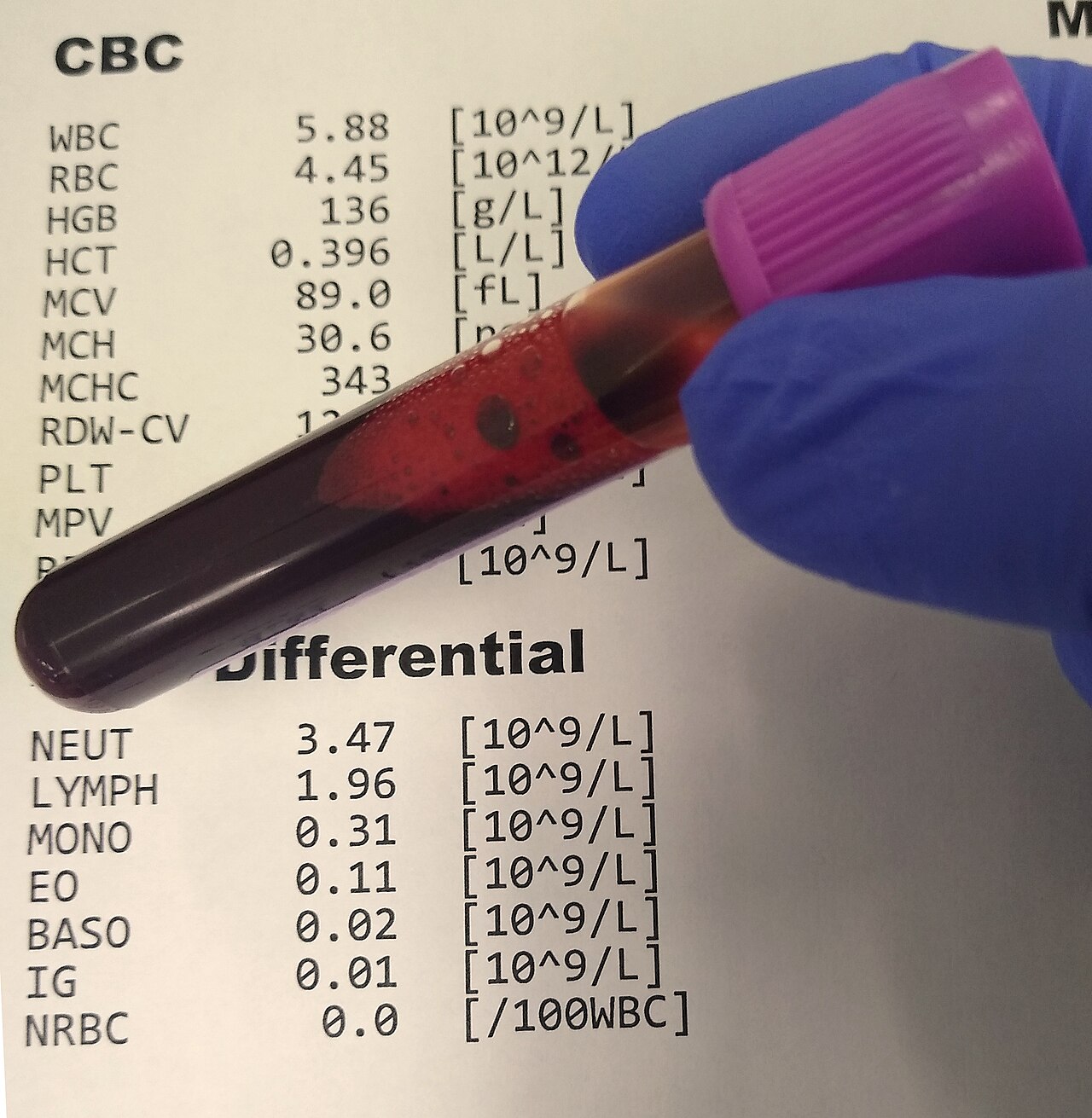
Standard metabolic panels (glucose, BUN, creatinine, electrolytes), complete blood count values (WBC, RBC, hemoglobin, platelets), lipid panels (total cholesterol, LDL, HDL, triglycerides), and thyroid screening (TSH) all have well-established reference ranges that AI handles reliably. These are the bread and butter of routine blood work.
AI is less reliable on specialized tests where interpretation depends on clinical context: tumor markers, coagulation studies, hormone panels, and drug levels. For these, AI can explain what the test measures, but the clinical significance requires a clinician who knows your full picture. Use AI for the translation, not the interpretation.
| Test | Normal range | Low can mean | High can mean |
|---|---|---|---|
| Glucose (fasting) | 70-99 mg/dL | Hypoglycemia, especially with diabetes medication | Prediabetes or diabetes |
| HbA1c | Below 5.7% | Recent blood loss, anaemia, pregnancy | Prediabetes 5.7-6.4%, diabetes 6.5%+ |
| Total cholesterol | Below 200 mg/dL | Rarely significant on its own | Higher cardiovascular risk over time |
| LDL cholesterol | Below 100 mg/dL | Usually not a concern | Atherosclerotic cardiovascular risk |
| HDL cholesterol | 40+ mg/dL (men), 50+ (women) | Higher cardiovascular risk | Generally protective |
| Triglycerides | Below 150 mg/dL | Rarely a concern on its own | 150-499 high, 500+ very high (pancreatitis risk) |
| TSH | 0.4-4.0 mIU/L | Hyperthyroidism | Hypothyroidism |
| Hemoglobin | 13.5-17.5 g/dL (men), 12-15.5 (women) | Anaemia, bleeding, low iron or B12 | Dehydration, smoking, polycythaemia |
| White blood cell count | 4,000-11,000 /uL | Viral infection, certain medications | Bacterial infection, inflammation |
| Platelets | 150,000-450,000 /uL | Bleeding risk, some infections | Clotting risk, some medications |
| Creatinine | 0.7-1.3 mg/dL | Low muscle mass, pregnancy, over-65 age | Reduced kidney filtration |
| eGFR | 90+ mL/min/1.73m2 | Rarely a concern alone | Below 90 means reduced kidney function |
| ALT | 7-56 U/L (men), 7-45 (women) | Usually not significant | Liver inflammation, fatty liver, medication effect |
| AST | 10-40 U/L | Usually not significant | Liver inflammation, heart or muscle injury |
| Vitamin B12 | 200-900 pg/mL | Pernicious anaemia, vegan diet, absorption problems | Rarely a concern, often supplemented without need |
When to Stop Trusting the AI Output
Stop trusting the output when the AI quotes a reference range that does not match your report, when it makes a clinical recommendation (start medication, see a specialist immediately) rather than explaining what the value means, when it expresses certainty about a finding that requires clinical context, or when it fails to acknowledge uncertainty.
The best AI lab tools are transparent about their limitations. They say I can explain what this value means but cannot tell you what it means for you specifically. Tools that present their output as a verdict rather than an explanation are the ones to avoid. The distinction matters because a wrong interpretation delivered with false confidence is worse than no interpretation at all.
Ready to try Premedice?
Get instant, AI-powered explanations of your lab results and symptoms — powered by 300+ medical databases.
Continue Reading


Most Popular
Best AI Medical Models in 2026: MedQA Scores Compared
ResearchMedGemma: Open-Source Medical AI That Runs on Your Hardware
TechnologyMed-PaLM 2: 86.5% MedQA Score, Zero Doctors Using It (2026)
ResearchAI Symptom Checker Architecture: How Premedice Cuts Hallucinations 3.8x
TechnologyMedical AI Privacy: AES-256 + Zero-Knowledge Architecture
SecuritySarah Jenkins, MS, CISSP
Sarah is an enterprise security architect who previously led healthcare cloud-compliance engineering at a tier-1 medical database vendor.
Expert Takeaway
Use AI to understand your lab results, not to diagnose yourself. The translation is valuable; the clinical judgment is not the AI's to make.
Browse by Topic
QFrequently Asked Questions
Q1Can AI accurately read blood test results?
AI correctly flags abnormal values over 95% of the time and explains what each test measures. However, 20-40% of tools produce wrong reference ranges, and none ask for clinical context. Use AI for translation and flagging, then verify with your doctor.
Q2How do I use AI to understand my lab report?
De-identify your report (remove name, DOB, MRN), paste the clean text into a trusted AI tool, ask it to list each value with its reference range from the report, check every range against your printed report, and bring the flagged items to your doctor.
Q3What is the safest way to upload lab results to AI?
Use plain text format with test names, values, and units in clear columns. Remove all identifying information first. Avoid PDFs and photos, which cause parsing and OCR errors. Check the AI's transcription against your original before accepting any interpretation.
Q4Which lab values can AI interpret best?
AI performs best on standard metabolic panels, CBC values, and lipid panels where reference ranges are well-established. It struggles more on tumor markers, coagulation studies, hormone panels, and drug levels where clinical context heavily influences interpretation.
Q5Should I trust AI lab interpretation over my doctor?
No. AI is a translation tool, not a diagnostic tool. It can explain what each value measures in plain English, but it cannot tell you what the values mean for you specifically. Your doctor integrates your history, medications, and prior results into the interpretation.
Q6How accurate are free AI blood test interpreters?
Free tools vary widely. The best correctly flag abnormalities and provide accurate explanations, but reference range errors remain common across all price tiers. Always verify ranges against your printed report regardless of whether the tool is free or paid.
Verified References & Literature
Reference Ranges and Clinical Interpretation of Laboratory Values
Mayo Clinic Proceedings, 2025
View SourceLarge Language Models in Clinical Decision Support: Evaluation of Hallucination
Stanford HAI, 2025
View SourcePatient Understanding of Laboratory Results in the Era of Electronic Health Records
Journal of General Internal Medicine, 2024
View SourceAI-Assisted Lab Interpretation: Accuracy and Safety in Consumer Health Tools
JMIR Medical Education, 2025
View SourceGet a structured second read in seconds
Upload lab results, describe symptoms, or ask about a diagnosis — Premedice gives you medically-grounded answers backed by 30+ clinical databases.