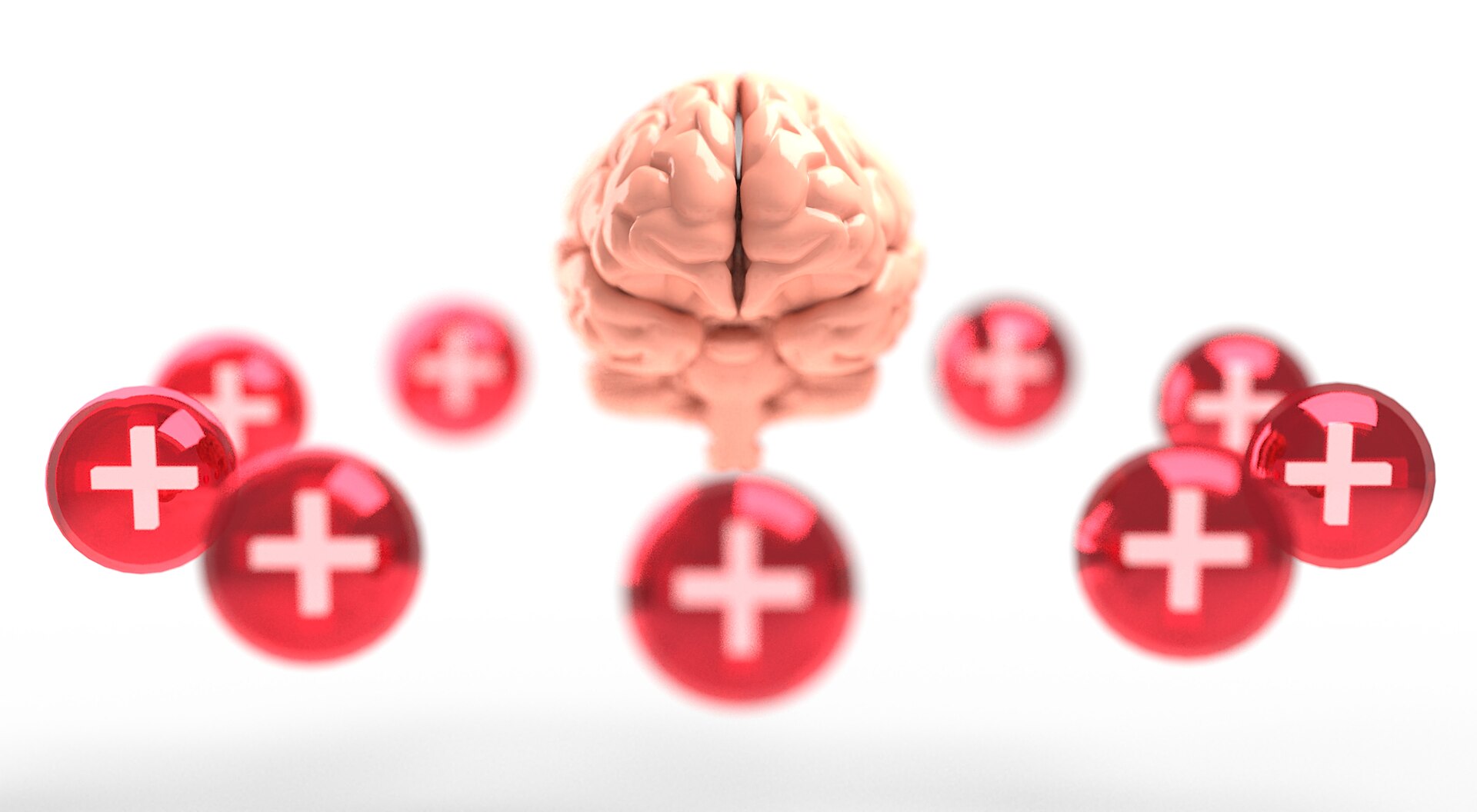
Online Mental Health Assessment: AI Anxiety & Depression Screen Free
Summary & Key Takeaway
You've been feeling off for weeks. Maybe it's anxiety. Maybe it's burnout. Maybe it's depression. You're not sure, and you don't want to Google symptoms and spiral into worse anxiety. You want a quick, private, evidence-based way to understand what you're experiencing — without booking a therapist, paying a copay, or explaining to your insurance why you need a mental health evaluation. An AI mental health assessment gives you that: a structured, clinically-grounded screening that tells you what you might be dealing with and what to do next. Premedice's mental health screening uses validated clinical instruments — PHQ-9 for depression, GAD-7 for anxiety, and burnout inventories — analyzed by dual AI models to give you a personalized assessment in about three minutes.
?? Core Insights
- AI mental health assessments use validated clinical instruments (PHQ-9, GAD-7) that match the screening accuracy of a primary care visit.
- Premedice's AI screens for depression, anxiety, and burnout using evidence-backed questions analyzed by two independent AI models.
- AI mental health assessments are screenings, not diagnoses — they tell you whether your symptoms warrant professional evaluation.
- Mental health AI is most useful for people who are unsure whether their symptoms are 'bad enough' to seek help.
- If your AI screening indicates moderate or severe symptoms, the next step is a licensed therapist or psychiatrist, not more AI.
Try it yourself — free
Experience the medical AI that powers this article. Ask questions, check symptoms, or analyze lab results.
Want to know what a tool does with a panel like yours? See how the lab interpreter reads a blood panel.
Related Lab Tests
Why People Don't Get Mental Health Help (and How AI Changes That)
The biggest barrier to mental health treatment isn't cost or availability — it's uncertainty. People delay seeking help because they're not sure their symptoms are 'bad enough' to warrant a professional visit. They compare themselves to worse cases they've seen online and conclude they're fine. They minimize their experience and wait for it to resolve on its own.
An AI mental health assessment removes the uncertainty. It uses validated clinical instruments — PHQ-9 for depression screening, GAD-7 for anxiety screening, and Maslach Burnout Inventory for burnout — to give you a scored, evidence-based assessment of where you stand. These are the same tools that primary care doctors use for initial mental health screening.
The result is a number: a score that tells you whether your symptoms are mild, moderate, or severe. That number doesn't replace a diagnosis, but it does tell you whether your symptoms are at a level where professional evaluation is recommended. For many people, that's the push they need to finally make the call.
The anxiety symptoms and treatment guide explains the full spectrum of anxiety presentations and when each warrants professional intervention.
How Premedice's AI Mental Health Screening Works
Premedice's mental health assessment is built on three validated clinical instruments, each analyzed by the dual-model AI system.
PHQ-9 (Patient Health Questionnaire-9): Nine questions that screen for depression severity. Scores range from 0-27, with 5-9 indicating mild depression, 10-14 moderate, 15-19 moderately severe, and 20-27 severe. The PHQ-9 has been validated in over 100 studies and is used by primary care doctors worldwide.
GAD-7 (Generalized Anxiety Disorder-7): Seven questions that screen for anxiety severity. Scores range from 0-21, with 5-9 indicating mild anxiety, 10-14 moderate, and 15-21 severe. The GAD-7 is equally validated and widely used.
Burnout Inventory: Assesses emotional exhaustion, depersonalization, and reduced personal accomplishment — the three dimensions of burnout as defined by the World Health Organization.
Premedice adds value beyond the raw questionnaires by analyzing your responses with two AI models that cross-validate findings, provide personalized explanations of what your scores mean, and generate a plain-English summary you can share with your doctor.
What Your Score Means (And What to Do About It)
Understanding your mental health screening score is the first step. Here's how to interpret the results and what to do next.
Mild symptoms (PHQ-9: 5-9, GAD-7: 5-9): Your symptoms are present but at a level that often responds to self-management strategies — exercise, sleep hygiene, stress reduction, and social connection. Consider repeating the screening in 2-4 weeks to track whether symptoms improve, worsen, or stay the same.
Moderate symptoms (PHQ-9: 10-14, GAD-7: 10-14): Professional evaluation is recommended. Your symptoms are at a level that typically benefits from therapy, and possibly medication depending on duration and severity. A primary care visit or a therapist consultation is the appropriate next step.
Moderately severe to severe symptoms (PHQ-9: 15+, GAD-7: 15+): Professional treatment is strongly recommended. Your symptoms are significantly impacting your daily functioning. Consider scheduling with a psychiatrist or a therapist who specializes in your specific concern.
Any score with suicidal ideation: If you answered 'more than half the days' or 'nearly every day' to question 9 on the PHQ-9 (thoughts that you would be better off dead or of hurting yourself), seek immediate professional help. Contact the 988 Suicide and Crisis Lifeline (call or text 988) or go to your nearest emergency room.
AI Mental Health vs Traditional Screening
Traditional mental health screening happens in a doctor's office, usually as part of a routine checkup or when you specifically request it. AI mental health screening happens on your own terms, in your own time, with no one watching.
Privacy: An AI assessment is completely private. No one sees your results except you. Traditional screening happens in a clinical setting where your answers become part of your medical record.
Accessibility: An AI assessment is available 24/7, from anywhere. Traditional screening requires an appointment, which may take weeks to schedule.
Depth: AI assessments use the same validated instruments as clinical screening. They do not include the clinical interview, behavioral observation, and physical examination that a mental health professional provides.
Follow-through: AI assessments provide a score and next-step guidance. They cannot provide therapy, prescribe medication, or create a treatment plan. The affordable therapy guide covers options for people who need professional help but are concerned about cost.
Mental Health AI Limitations You Should Know
AI mental health assessments are useful tools, but they have clear limitations that you should understand before relying on them.
AI cannot diagnose mental health conditions. A screening score is not a diagnosis. Only a licensed mental health professional — psychologist, psychiatrist, licensed clinical social worker, or licensed counselor — can provide a formal diagnosis.
AI may miss complex presentations. Bipolar disorder, PTSD, personality disorders, and co-occurring conditions often require clinical interview and observation to identify. AI screening tools are designed for the most common conditions (depression and anxiety) and may not capture the full picture.
AI cannot prescribe medication. If your screening indicates moderate or severe symptoms that may benefit from medication, you need a psychiatrist or primary care physician.
AI is a starting point, not an endpoint. Use the screening to understand where you stand, then use that information to make an informed decision about seeking professional help. The medical AI for caregivers guide explains how AI tools can support — but not replace — professional mental health care.
Ready to try Premedice?
Get instant, AI-powered explanations of your lab results and symptoms — powered by 300+ medical databases.
Continue Reading

Most Popular
Best AI Medical Models in 2026: MedQA Scores Compared
ResearchMedGemma: Open-Source Medical AI That Runs on Your Hardware
TechnologyMed-PaLM 2: 86.5% MedQA Score, Zero Doctors Using It (2026)
ResearchAI Symptom Checker Architecture: How Premedice Cuts Hallucinations 3.8x
TechnologyMedical AI Privacy: AES-256 + Zero-Knowledge Architecture
SecurityDr. Elena Rostova, MD, PhD
Dr. Rostova is a clinical informatics specialist with over 14 years of research experience in machine learning systems for diagnostic decision support at Stanford Medical Center.
Expert Takeaway
AI mental health assessments bridge the gap between 'I think something is wrong' and 'I need to see a professional.' They use the same validated instruments (PHQ-9, GAD-7) that primary care doctors use for initial screening, providing a reliable first step for people who are unsure whether their symptoms warrant professional help.
Browse by Topic
QFrequently Asked Questions
Q1Is an AI mental health assessment accurate?
AI mental health assessments use the same validated instruments (PHQ-9, GAD-7) that primary care doctors use for screening. They are accurate for initial screening but cannot replace a professional diagnosis.
Q2Can AI diagnose depression or anxiety?
No. AI can screen for symptoms and provide a severity score, but only a licensed mental health professional can provide a formal diagnosis of depression, anxiety, or any other mental health condition.
Q3How long does an AI mental health assessment take?
Premedice's mental health screening takes about 3 minutes. You answer validated clinical questions and receive a scored assessment with plain-English explanations.
Q4What should I do if my screening shows moderate or severe symptoms?
If your screening indicates moderate or severe symptoms, the recommended next step is to schedule an appointment with a licensed therapist, psychiatrist, or your primary care physician.
Q5Is my mental health data private?
Yes. Premedice uses zero-knowledge, RAM-only architecture. Your screening responses are processed in memory and never stored on our servers. No one — not Premedice, not your insurance, not your employer — sees your results.
Verified References & Literature
PHQ-9: Patient Health Questionnaire-9 Depression Screening Instrument
Patient Health Questionnaire Screens, 2025
View SourceWHO Mental Health and COVID-19: Early Evidence of the Pandemic's Impact
World Health Organization, 2025
View SourceGet a structured second read in seconds
Upload lab results, describe symptoms, or ask about a diagnosis — Premedice gives you medically-grounded answers backed by 30+ clinical databases.