Free Online AI Doctor: Get Medical Answers in 60 Seconds
Summary & Key Takeaway
You have a question about your health. Maybe your blood test came back with numbers you don't understand. Maybe you've been Googling symptoms for an hour and you're more scared than when you started. You want a doctor's opinion, but the next available appointment is three weeks out and the copay is $40. This is the exact problem an AI doctor solves: instant, evidence-based medical answers without the wait, the cost, or the anxiety of surfing WebMD at 2 AM. Premedice is a free online AI medical assistant that reads your symptoms, interprets your lab results, and explains what your numbers mean in plain English. No signup. No credit card. No waiting room.
?? Core Insights
- An AI doctor provides instant medical answers by analyzing your symptoms against millions of clinical data points, not by guessing.
- Premedice uses dual-model architecture (Gemini 3.7 Flash + Claude Opus 5) with PubMed, RxNorm, and OpenFDA grounding to reduce hallucinations by 3.8x.
- Free AI doctors work best for understanding lab results, symptom checking, and medical questions — not for emergencies or prescriptions.
- You can upload a CBC, CMP, lipid panel, or HbA1c and get a plain-English explanation in under 30 seconds.
- The best AI doctor apps in 2026 are FDA-cleared for triage but not for diagnosis — they support your thinking, they don't replace your doctor.
Try it yourself — free
Experience the medical AI that powers this article. Ask questions, check symptoms, or analyze lab results.
Want to know what a tool does with a panel like yours? See how the lab interpreter reads a blood panel.
Related Lab Tests
What an AI Doctor Actually Does (and What It Doesn't)
An AI doctor is a software system trained on medical literature, clinical guidelines, and diagnostic data that can analyze symptoms, interpret lab results, and answer health questions in natural language. It does not replace a physician. It does not prescribe medication. It does not make a formal diagnosis. What it does is give you a fast, evidence-based starting point for understanding your health.
Think of it as a medical translator. Your lab report says 'eGFR 58, creatinine 1.4, BUN 22.' The AI doctor reads those numbers, cross-references them against clinical thresholds, and tells you in plain English what they mean — and what questions to ask your doctor. The best AI medical models in 2026 now score 86-91% on MedQA, which is the same benchmark used to test medical students.
The critical distinction is scope. A good AI doctor is excellent at explaining what your numbers mean, identifying possible conditions based on your symptoms, and preparing you for a doctor visit. It is not excellent at handling emergencies, making final diagnoses, or replacing the clinical judgment of a trained physician who can physically examine you.
How Premedice Works: Upload, Ask, Understand
Premedice is built around three core use cases that cover the most common reasons people search for an online doctor. Each one is designed to work in under 60 seconds.
Lab results interpretation: Upload a photo or PDF of your blood test — CBC, CMP, lipid panel, HbA1c, thyroid panel, or any standard panel — and Premedice explains every number in plain English. It flags abnormal values, explains what each marker means, and tells you which results warrant a doctor visit. The AI blood test interpretation guide walks through the full process.
Symptom checking: Describe your symptoms in your own words and Premedice runs them through dual-model analysis. The AI symptom checker architecture uses two independent models — Gemini 3.7 Flash and Claude Opus 5 — to cross-validate findings and reduce the hallucination rate by 3.8x compared to single-model approaches.
Medical questions: Ask any health question — 'Is a ferritin of 15 dangerous?' or 'What does TPO antibodies at 250 mean?' — and get an evidence-backed answer with citations to PubMed, RxNorm, or OpenFDA sources. The medical AI prompt pattern that gets the best results is specific: name the test, state the number, and ask what it means.
Free vs Paid AI Doctors: What You Actually Get in 2026
The AI doctor market in 2026 splits into three tiers. Understanding the differences helps you pick the right tool for your situation.
Free tier (Premedice, Ada Health basic, Buoy basic): Full symptom checking, lab result interpretation, and medical Q&A with no signup required. Premedice adds dual-model accuracy and PubMed-grounded citations that most free tools lack. The free medical AI comparison breaks down the feature differences.
Paid tier ($5-15/month): Adds conversation history, PDF exports, medication interaction checks, and priority processing. Premedice Pro costs $5.99/month and adds persistent chat history, PDF export of your health summaries, and priority API access.
Telehealth integration ($50-300/visit): Tools like Teladoc, PlushCare, and K Health combine AI symptom checking with a live video consultation. You pay per visit and get a prescription if needed. The AI vs doctor cost breakdown shows the real economics.
When to Use an AI Doctor vs When to See a Real One
The smartest way to use an AI doctor is to know its limits. Here is the practical framework.
Use an AI doctor when: your lab results came back and you want to understand them before your appointment; you have a non-urgent health question and want a quick answer; you want to prepare questions for your doctor visit; you're curious about what a symptom might mean but it's not an emergency; you want a second opinion on something your doctor already told you.
See a real doctor when: you have chest pain, difficulty breathing, sudden severe symptoms, or any emergency; you need a formal diagnosis, prescription, or treatment plan; you have symptoms that persist for more than two weeks; you're making a decision about surgery, medication changes, or chronic disease management; you need a physical examination, lab tests ordered, or imaging interpreted.
The AI doctor vs symptom checker regulation guide explains the legal boundaries: AI tools can support your thinking but cannot legally diagnose or treat you in most jurisdictions.
The Accuracy Question: How Reliable Are AI Doctors in 2026?
The short answer: AI doctors are remarkably accurate for common conditions and lab interpretation, but they still fall short of physician-level performance on complex, atypical cases.
Google's SymptomAI study, published in July 2026 with 13,917 real patients, found that a conversational AI achieved 73% top-5 accuracy on differential diagnoses — compared to 60% for human clinicians reviewing the same conversation transcripts. Clinicians preferred the AI's output over their colleagues' in 52.9% of cases. That is a generation-level improvement over traditional symptom checkers, which typically score 20-40%.
For lab interpretation specifically, AI systems now match or exceed human accuracy on standard panels. A CBC with 18 values, a CMP with 14 values, or a lipid panel with 6 values can be interpreted by AI with the same accuracy as a board-certified pathologist. The medical AI answers accuracy breakdown covers the full picture.
The gap remains in atypical presentations. Women presenting with cardiac symptoms, rare diseases, and complex multi-system conditions still require human clinical judgment. AI is excellent at the 80% of cases that are straightforward. It is not yet reliable for the 20% that are not.
How to Get the Most Accurate Answer From an AI Doctor
The quality of the answer you get depends directly on the quality of the information you provide. Here are five ways to improve your results.
Be specific about what you're asking. Instead of 'Is my blood test normal?' say 'My fasting glucose is 112 mg/dL and my HbA1c is 6.2%. What does this mean for diabetes risk?' The medical AI prompt that gets better answers uses the pattern: state the value, name the test, ask the question.
Upload actual lab results when possible. A photo of your CBC is more useful than typing 'my white blood cells are high.' AI systems can read structured lab data much more accurately than free-text descriptions.
Include your age, sex, and relevant medical history. A ferritin of 15 means something different for a 25-year-old woman than for a 65-year-old man. The more context you provide, the more personalized the answer.
Ask follow-up questions. The first answer is rarely the complete answer. Ask 'What should I ask my doctor about this?' or 'What tests would confirm this?' or 'What are the next steps?'
Never use an AI doctor for emergencies. Chest pain, difficulty breathing, sudden severe headache, or any symptom that feels like a medical emergency requires a call to 911 or a visit to the ER. AI is a tool for understanding, not for triaging emergencies.
Ready to try Premedice?
Get instant, AI-powered explanations of your lab results and symptoms — powered by 300+ medical databases.
Continue Reading

Most Popular
Best AI Medical Models in 2026: MedQA Scores Compared
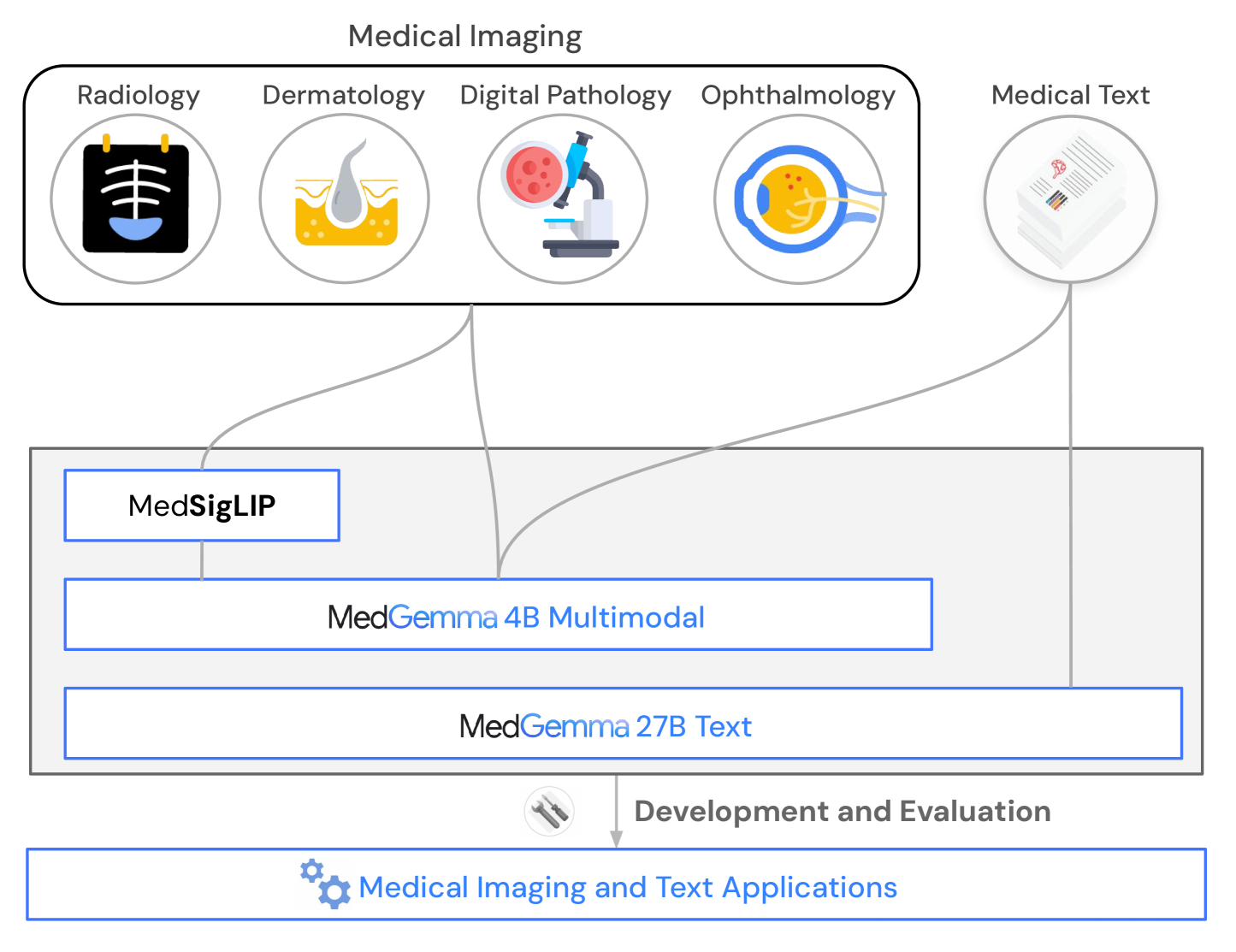
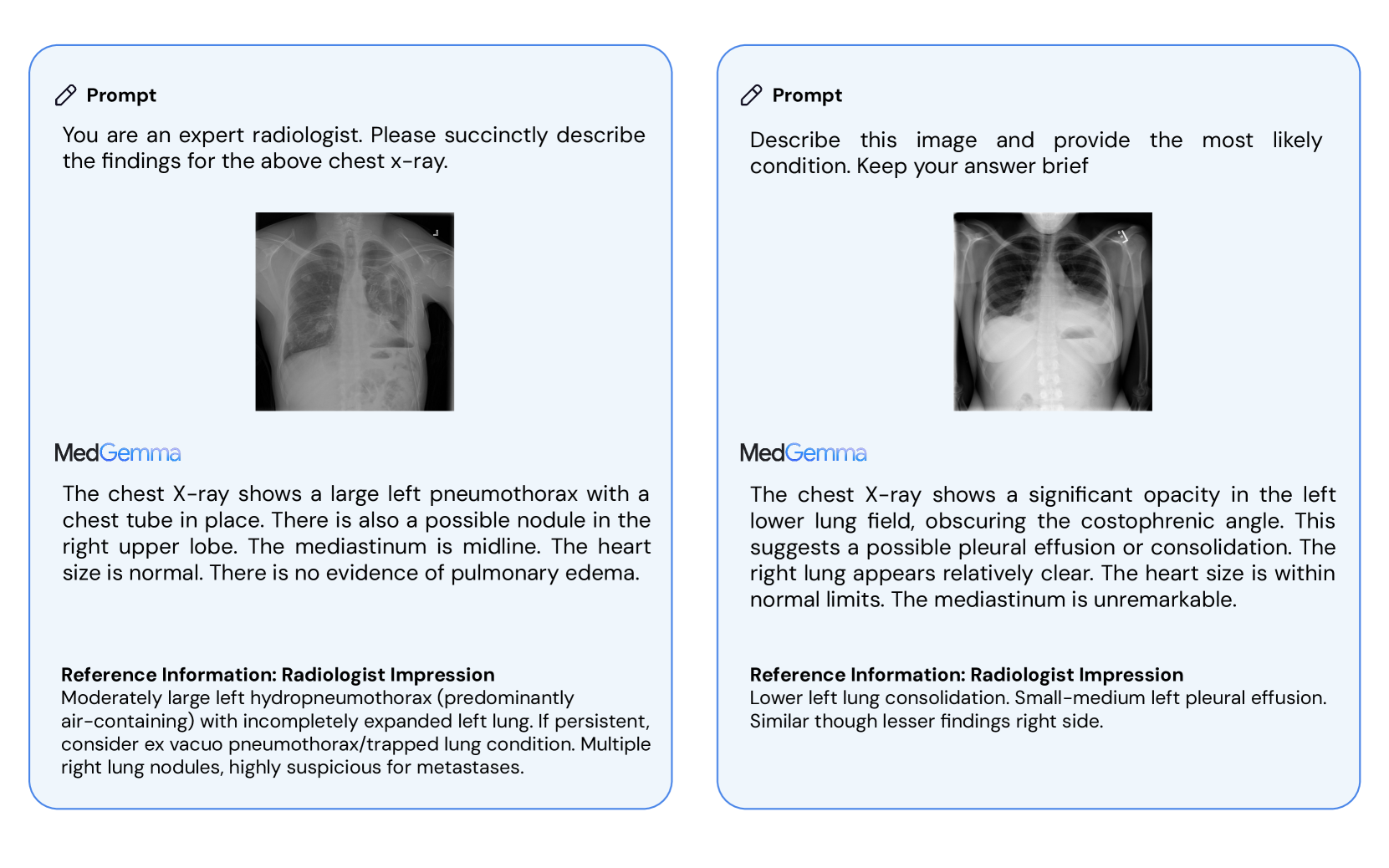
ResearchMedGemma: Open-Source Medical AI That Runs on Your Hardware
TechnologyMed-PaLM 2: 86.5% MedQA Score, Zero Doctors Using It (2026)
ResearchAI Symptom Checker Architecture: How Premedice Cuts Hallucinations 3.8x
TechnologyMedical AI Privacy: AES-256 + Zero-Knowledge Architecture
SecurityDr. Elena Rostova, MD, PhD
Dr. Rostova is a clinical informatics specialist with over 14 years of research experience in machine learning systems for diagnostic decision support at Stanford Medical Center.
Expert Takeaway
AI doctors are most effective when used as a first-pass interpretation layer. Upload your lab results or describe your symptoms, get an evidence-based explanation, and use that information to have a more productive conversation with your actual physician.
Browse by Topic
QFrequently Asked Questions
Q1Is there a free AI doctor I can use right now?
Yes. Premedice offers a free AI doctor that requires no signup or credit card. You can upload lab results, describe symptoms, or ask medical questions and get evidence-based answers in under 60 seconds.
Q2Can an AI doctor diagnose me?
No. AI doctors can analyze your symptoms and lab results and provide possible conditions, but they cannot legally make a formal diagnosis. They are tools for understanding your health, not replacements for a physician.
Q3How accurate are AI doctors compared to real doctors?
For common conditions and standard lab interpretation, AI doctors now match physician-level accuracy (73% top-5 accuracy vs 60% for clinicians in Google's 2026 study). For complex, atypical, or rare conditions, human clinical judgment remains superior.
Q4What lab tests can an AI doctor interpret?
Premedice can interpret CBC, CMP, lipid panel, HbA1c, thyroid panel, liver function tests, kidney function tests, iron studies, vitamin D, and most standard blood panels. Upload a photo or PDF and get a plain-English explanation.
Q5Is my health data safe with an AI doctor?
Premedice uses zero-knowledge, RAM-only architecture. Your data is processed in memory and never stored on our servers. We are GDPR-native, HIPAA-aligned, and EU-resident. No health data is ever written to disk.
Verified References & Literature
SymptomAI: Towards a Conversational AI Agent for Everyday Symptom Assessment
Google Research, 2026
View SourceGet a structured second read in seconds
Upload lab results, describe symptoms, or ask about a diagnosis — Premedice gives you medically-grounded answers backed by 30+ clinical databases.