
Cancer Screening by Age: Which Tests You Need and When
Summary & Key Takeaway
Cancer screening is the process of testing for cancer before symptoms appear — using tests like mammograms, colonoscopies, Pap smears, and low-dose CT scans — to detect disease at its most treatable stage. Early detection is one of the most powerful tools against cancer mortality. But the landscape of cancer screening is complex and evolving: new guidelines, evolving risk assessments, and emerging technologies (like AI-assisted imaging) are changing what tests you need and when. The goal of screening is to find cancer before it causes symptoms — when treatment is most effective and outcomes are best. Screening isn't one-size-fits-all: your age, sex, family history, genetic risk factors, and lifestyle determine your optimal screening schedule. Understanding the current evidence-based guidelines helps you make informed decisions with your doctor. [Premedice](/) can help you evaluate your personal cancer risk factors and determine which screening tests are appropriate for you.
?? Core Insights
- Cervical cancer screening (Pap smear + HPV testing) begins at age 21 and continues every 3 years (cytology alone) or every 5 years (co-testing with HPV) until age 65
- Colorectal cancer screening begins at age 45 (lowered from 50 in 2021) — colonoscopy every 10 years, stool-based testing (FIT) annually, or other approved alternatives
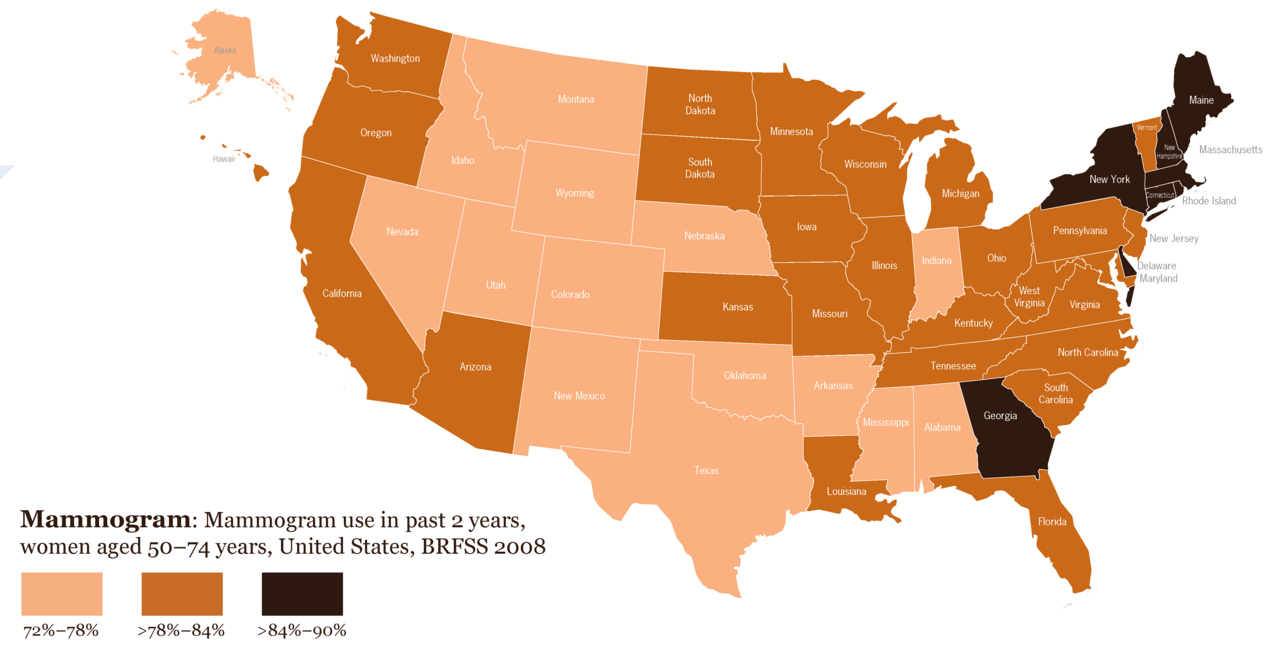
- Breast cancer screening (mammography) begins at age 40–50 depending on risk — average risk: every 2 years from 50–74; high risk: annual screening from 30–40
- Lung cancer screening (low-dose CT) is recommended for adults 50–80 with 20+ pack-year smoking history who currently smoke or quit within the past 15 years
- PSA testing for prostate cancer is an individualized decision — discuss benefits, harms, and personal risk with your doctor starting at age 50 (45 for high-risk groups, 40 for very high-risk). [Premedice](/) can help you evaluate your cancer risk factors and create a personalized screening schedule
Try it yourself — free
Experience the medical AI that powers this article. Ask questions, check symptoms, or analyze lab results.
Not sure which tool fits? Compare what Premedice does.
Cervical Cancer Screening: Ages 21–65
Cervical cancer screening has been one of cancer screening's greatest success stories — cervical cancer incidence and mortality have dropped by over 70% since the introduction of the Pap smear. Screening begins at age 21 with cytology (Pap smear) every 3 years. From age 30, co-testing (Pap smear + HPV testing) every 5 years is preferred because it's more sensitive than cytology alone and provides a longer screening interval. From age 65, screening can stop if you have adequate prior negative results (three consecutive negative cytology results or two consecutive negative co-tests within 10 years, with the most recent within 5 years).
HPV (human papillomavirus) is the cause of virtually all cervical cancers. HPV vaccination (given at ages 9–26, ideally before sexual debut) dramatically reduces cervical cancer risk — countries with high vaccination rates are seeing significant declines in cervical pre-cancers and cancers. However, vaccinated individuals still need screening because the vaccine doesn't cover all high-risk HPV types, and some people were vaccinated after potential HPV exposure. Abnormal results (ASC-US, LSIL, HSIL, or positive HPV) may require colposcopy (visual examination of the cervix with magnification) and potentially biopsy. Treatment of pre-cancerous lesions (LEEP, cone biopsy) prevents progression to invasive cancer.
Breast Cancer Screening: Mammography Guidelines
Mammography screening guidelines vary significantly by organization. The USPSTF (2024 update) recommends biennial screening every 2 years for women aged 40–74, with individualized decisions for women 75+. The American Cancer Society recommends annual screening starting at age 45, transitioning to biennial at 55, with the option to start at 40. For high-risk women (BRCA1/2 mutation carriers, family history of premenopausal breast cancer, prior chest radiation), annual mammography plus breast MRI is recommended starting at age 30.
Mammography reduces breast cancer mortality by 20–40% in screened populations. However, it has limitations: it misses about 15–20% of cancers (especially in dense breast tissue) and detects some cancers that would never have caused harm (overdiagnosis). Breast density (which reduces mammographic sensitivity) is increasingly being reported to patients, and supplemental screening with ultrasound or MRI is recommended for dense breast tissue. Digital breast tomosynthesis (3D mammography) improves cancer detection by 20–40% compared to standard 2D mammography, especially in dense breasts, and is becoming the standard of care.
Colorectal Cancer Screening: Starting at 45
In 2021, the recommended age to begin colorectal cancer screening was lowered from 50 to 45, reflecting rising colorectal cancer incidence in younger adults. Screening options include: colonoscopy every 10 years (visual examination of the entire colon with the ability to remove polyps during the procedure), stool-based tests (FIT test annually, which detects blood in stool; stool DNA test every 3 years, which detects both blood and DNA markers), flexible sigmoidoscopy every 5 years, or CT colonography every 5 years.
Colonoscopy is the gold standard because it both detects and removes pre-cancerous polyps during the same procedure — removing a polyp prevents it from becoming cancer. However, it requires bowel preparation, sedation, and time off work. Stool-based tests are less invasive and have high sensitivity for colorectal cancer (FIT detects 74% of cancers; stool DNA detects 92%), but they don't detect or remove polyps — an abnormal result requires follow-up colonoscopy. For people at average risk, any approved screening method is better than no screening. The best screening test is the one you'll actually do. Family history, inflammatory bowel disease, and certain genetic syndromes (Lynch syndrome, familial adenomatous polyposis) increase risk and may require earlier or more frequent screening.
Lung, Prostate, and Other Screenings
Lung cancer screening with low-dose CT (LDCT) is recommended for adults 50–80 with a 20-pack-year smoking history who currently smoke or quit within the past 15 years. LDCT reduces lung cancer mortality by 20% in high-risk populations. The recommendation reflects the fact that lung cancer is the leading cause of cancer death, and early detection through LDCT significantly improves survival (stage I lung cancer has a 5-year survival rate of 60–80% vs. 5–10% for stage IV).
Prostate cancer screening (PSA testing) is the most controversial screening test because the balance of benefit and harm is closer than for other cancers. PSA testing can detect prostate cancer early, but it also leads to overdiagnosis (detecting slow-growing cancers that would never have caused harm) and overtreatment (surgery and radiation with side effects including incontinence and erectile dysfunction). Current guidelines recommend shared decision-making: discussing the potential benefits and harms with your doctor and making an individualized choice. Men at higher risk (African American men, those with a father or brother diagnosed before age 65) may benefit from earlier screening. Skin cancer screening involves regular self-examination of moles and skin lesions, with professional dermatological evaluation for suspicious changes (asymmetry, border irregularity, color variation, diameter >6mm, evolution). AI-assisted skin lesion analysis is emerging as a useful tool for screening and triage.
Ready to try Premedice?
Get instant, AI-powered explanations of your lab results and symptoms — powered by 300+ medical databases.
Continue Reading

Most Popular
Best AI Medical Models in 2026: MedQA Scores Compared
ResearchMedGemma: Open-Source Medical AI That Runs on Your Hardware
TechnologyMed-PaLM 2: 86.5% MedQA Score, Zero Doctors Using It (2026)
ResearchAI Symptom Checker Architecture: How Premedice Cuts Hallucinations 3.8x
TechnologyMedical AI Privacy: AES-256 + Zero-Knowledge Architecture
SecurityDr. James Whitfield, MD, FACP
Dr. Whitfield is a board-certified oncologist with expertise in cancer screening and prevention.
Expert Takeaway
Cancer screening guidelines are age- and risk-based. Starting at appropriate ages and following recommended intervals significantly reduces cancer mortality. Discuss your personal risk factors with your doctor to determine the optimal screening plan for you.
Browse by Topic
QFrequently Asked Questions
Q1What if I have a family history of cancer?
A family history may increase your risk and require earlier or more frequent screening. Key factors: first-degree relative with cancer, younger age at diagnosis, multiple affected relatives, and known genetic mutations. Genetic counseling can assess your risk and guide testing.
Q2Are there cancer screening tests I can do at home?
Yes. Home-based screening options include stool-based tests for colorectal cancer (FIT test, stool DNA test — mailed to your home and returned by mail), breast self-examination (monthly awareness of breast changes), and skin self-examination (regular monitoring of moles and skin lesions). Home-based tests are convenient and effective, but abnormal results always require follow-up with a healthcare provider for confirmatory testing.
Q3How accurate are cancer screening tests?
Accuracy varies: mammography detects 75–90% of breast cancers, colonoscopy has >95% sensitivity, Pap smears detect 60–80% (HPV testing increases to >95%). No test is perfect — regular screening at recommended intervals is what matters.
Q4Should I get screened if I feel fine?
Yes. The purpose of screening is detecting cancer before symptoms appear — by the time symptoms arise, disease is often more advanced. Screening works when done regularly at recommended intervals, regardless of how you feel.
Q5Can AI help with cancer screening?
AI improves cancer screening: mammography reads (+10–20% detection), skin lesion analysis, colonoscopy polyp detection, and lung nodule interpretation. Premedice can help evaluate cancer risk factors and create a personalized screening schedule.
Verified References & Literature
USPSTF Breast Cancer Screening Recommendations (2024 Update)
JAMA (Journal of the American Medical Association), 2024
View SourceColorectal Cancer Screening: Updated Guidelines from ACS
CA: A Cancer Journal for Clinicians, 2024
View SourceCervical Cancer Screening: ASCCP Risk-Based Management Guidelines
Journal of Lower Genital Tract Disease, 2024
View SourceGet a structured second read in seconds
Upload lab results, describe symptoms, or ask about a diagnosis — Premedice gives you medically-grounded answers backed by 30+ clinical databases.