The Medical AI Prompt Pattern That Gets Better Answers
Summary & Key Takeaway
Most people interact with medical AI the same way they interact with an internet search: they type a few keywords and hope the result is smart. The model answers, but the answer is generic, and the generic answer is usually useless. The fix is not a better AI. It is a better framing. A single prompt pattern, built from role, context, and constraints, reliably converts a reciting model into a reasoning partner on the same request.
?? Core Insights
- A medical prompt with just a symptom invites a textbook answer; one with role, context, and constraints invites reasoning about your specific case.
- State the role for the model, list the facts a doctor would know, and add the constraint 'rank and justify' to force structured output.
- Adding the patient's age, duration, severity, and prior attempts changes the differential more than knowing the model.
- Prompting for what you are worried about, then asking what the model is worried about, generates two very different and more honest answers.
- A good prompt returns questions back: if the model has to ask, it knows your information is incomplete.
Try it yourself — free
Experience the medical AI that powers this article. Ask questions, check symptoms, or analyze lab results.
Want to know what a tool does with a panel like yours? See how the lab interpreter reads a blood panel.
Related Lab Tests
Why Vague Prompts Produce Vague Answers
A model answering 'I have a pain in my chest' has learned to respond to that exact phrase in thousands of training examples, so it produces the average of all those responses: a cautious list of possibilities that reads like an encyclopedia entry for chest pain. The text is correct, comprehensive, and perfectly matched to no human. Vague in, generic out is the rule, not the accident.
The remedy is information asymmetry. A doctor reaches a specific differential because they hold details no textbook example combines: this woman, this age, this medication list, this onset. Feed those same details to the model and the retrieval surface narrows from 'all chest pain' to 'chest pain in a 58-year-old woman on amlodipine, worse after exertion than at rest.' That narrowing is what makes the answer useful.
The Role Line That Changes the Model's Behavior
Opening a prompt with a role instruction re-tunes how the model frames the entire response. 'You are a pragmatic primary care physician reviewing a patient summary' produces warmer, more decision-oriented text than a stateless 'diagnose this.' Role does not add knowledge; it changes the default layer the model picks from, biasing toward guidance rather than a bare list.
Choose the role deliberately. For a worried patient, an empathic explainer framing beats an oncology subspecialist. For a clinical question, an evidence-scanning specialist beats a generalist echo. The framing tells the model what register, what depth, and what endpoint the expected answer should have, and that is a large fraction of answer quality.
Three Constraints That Force Reasoning
One: rank. Ending a prompt with 'rank the top three possibilities by likelihood, with reasons' forces the model to produce a differential instead of an unordered menu. Two: justify. Requiring a one-line reason per candidate makes the model expose its reasoning where a human can audit it. Three: uncertainty. Demanding 'list what data would change your ranking' converts a confident guess into an actionable request for the missing pieces.
These three constraints are cheap to add and disproportionately valuable. They convert the model's tendency to produce confident summaries into structured, falsifiable reasoning that a person can weight, argue with, and verify against clinical knowledge. The diagnostic value of the answer frequently doubles from a prompt that costs two sentences.
Ask the Model What It Worries About
The single most useful second question in medical prompting reverses the direction of worry. Instead of 'what is wrong with me,' ask 'given these symptoms, what are you worried about that I have not mentioned.' The first question invites the safest textbook answer. The second invites the model to surface the missed red flags: the condition that presents like something benign but kills quietly hours later.
Used consistently, the two-question loop creates a working differential in both directions. You state your concern, the model states its concern, and the intersection defines the tests worth doing. This pattern keeps the user in charge of the decision while forcing the model to spend its best capacity on the surprises, which is exactly the part of medicine where patients most need the help.
The Prompt Mistakes That Sabotage the Answer Before It Starts
The most common failure is adding irrelevant detail and calling it context. Listing every symptom you have felt in the past year, plus your grocery habits and your stress load, does not sharpen a differential. It buries the signal. Models weigh everything you give them, so a prompt stuffed with noise produces an answer averaged over the noise.
A second mistake is editorializing. Phrases like 'I think it might be X' steer the model toward agreeing with you, because models are trained to be agreeable. They will hand your hypothesis back with a bow on it. State what you observed, not what you conclude; let the model earn its own differential. Watch out for leading questions, they are the quiet killer of honest answers.
And do not fire a single one-shot and stop. The pattern earns its keep across a conversation. Ask the ranked differential, then follow with the worry question, then ask what would change the ranking. Each turn narrows the space the way a clinician's questions do, and the sequence is what separates a two-sentence parlor trick from a working consultation.
A Before-and-After Walkthrough of the Same Request
Start with a real-life bad prompt: 'I feel dizzy, is it serious?' A model answers this by generating the average of every dizziness complaint in its training data, which means a courteous list ranging from the benign to the alarming, with no ranking, no personalization, and nowhere to go. The user learns what a textbook already says. Nothing about them was used.
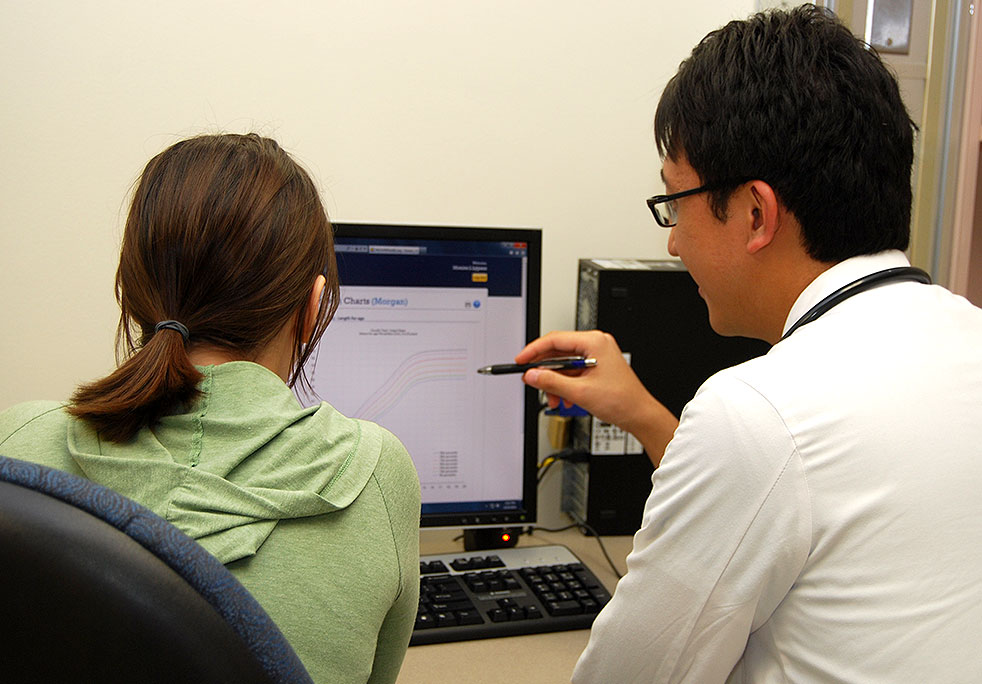
Now the same user runs the pattern: role, context, constraints, and a question back. 'You are a primary care triage nurse. I am 34, female, otherwise healthy, not on medication. For four days I have had brief dizzy spells only when standing up quickly, lasting seconds, no headache, no palpitations. Rank the top three causes by likelihood with a reason each, then tell me what would change the ranking.' The answer shifts from an encyclopedia to a consultation. It can be argued with, prioritized, and taken to a doctor.
When the Pattern Is the Wrong Tool, No Matter the Framing
A prompt pattern changes how a model reasons. It cannot change what the model is allowed to do, and it cannot make a research tool safe. If you have chest pain, shortness of breath at rest, sudden weakness, or any symptom that could be urgent, no amount of framing should replace an immediate medical assessment. The best prompt that evening is a phone call.
The pattern is also wasted on a tool that is not certified for your use. A polished differential from a consumer chatbot is still an unprompted estimate, especially when hallucinated detail would fit comfortably in the output. Use the pattern on tools whose label permits the task, treat the results as a preliminary read, and hand the printout to a clinician. Good prompting sharpens a tool; it does not certify one.
Privacy: What a Detailed Prompt Actually Tells the World
Here is the uncomfortable trade secret of prompting for detail: the model is not the only thing reading your prompt. Details like age, medications, and conditions are exactly the data a poorly configured health app could log, share, or sell. A detailed prompt is a detailed financial record of your body. The pattern amplifies the privacy stake as much as it amplifies the answer quality.
So pair the pattern with a privacy check before you type. Which company runs the model, where does your data live, does the tool's policy promise no training on your inputs, and can you delete the transcript? If those answers are fuzzy, trim the detail or use a tool with a certified privacy posture. Context improves answers; it only improves them if you control who else holds the context.
Ready to try Premedice?
Get instant, AI-powered explanations of your lab results and symptoms — powered by 300+ medical databases.
Continue Reading



Most Popular
Best AI Medical Models in 2026: MedQA Scores Compared
ResearchMedGemma: Open-Source Medical AI That Runs on Your Hardware
TechnologyMed-PaLM 2: 86.5% MedQA Score, Zero Doctors Using It (2026)
ResearchAI Symptom Checker Architecture: How Premedice Cuts Hallucinations 3.8x
TechnologyMedical AI Privacy: AES-256 + Zero-Knowledge Architecture
SecurityDr. Marcus Vance, MD
Dr. Vance is a board-certified internal medicine physician and clinical informatics expert with a focus on preventative medicine and patient-directed health literacy.
Expert Takeaway
Use the RISK pattern: Role, Information, Situation, and (K)nowledge check. Define the model's role, feed it full context, describe the constraints, and finish with 'state what you are uncertain about.' You will receive answers built for your patient, not for the internet's patients.
Browse by Topic
QFrequently Asked Questions
Q1What is the best medical AI prompt template?
Use this: 'You are a [role]. Here is the full picture: [age, sex, symptoms, duration, meds, prior tests]. Rank the top three explanations by likelihood with a reason for each, then list what additional information would change your ranking.'
Q2Why does the same symptom get very different answers from different prompts?
Because models answer the pattern in the prompt, not the dictionary meaning of the symptom. Context and constraints tell the model which layer to retrieve from, how deep to go, and what output structure to produce. That is why the prompt is a lever the user controls.
Q3Do longer medical prompts always give better answers?
No. Length is less important than structure. A focused prompt with role, full context, and constraints beats a long paragraph of extra symptoms. The goal is high-information framing, not a wall of text.
Q4Should I include my age and medications in AI prompts?
Yes, if the AI is certified for your use case and you are protected by its privacy policy. Those details materially change the differential and the risks the model weighs. With research-only tools, treat the answer as educational either way.
Q5Does this prompt pattern work with free consumer chatbots?
It works technically, and the structured answers are better than a bare question. But a free consumer model is usually not certified for clinical use, and its privacy terms may be weaker. Use the pattern to frame the discussion, verify the claims, and never treat the output as a diagnosis.
Q6What if the model asks me for information I do not have?
Say so plainly and keep the answer you got. A model that asks for the duration, onset, or medication list is doing its job; answer what you can and note the rest. An honest answer built on partial context is still more useful than a confident one built on none.
Q7Should I mention my medications in a prompt to a research-only tool?
Be careful. Medication lists are sensitive health data, and research-only tools rarely carry the protections of certified products. If you cannot confirm the privacy terms, generalize the category, 'a beta blocker' instead of the exact drug, until you are using a tool that documents how it handles inputs.
Q8Can the pattern help me understand a lab result rather than a symptom?
Yes. Feed the value, the reference range on your report, and what you already know about your baseline, then ask the model to rank what the deviation might mean and what would refine the read. Keep the same rules: ask for uncertainty, verify the answer, and run the output past your clinician.
Verified References & Literature
Prompt Engineering in Clinical Practice: A Structured Evaluation
Journal of Medical Internet Research, 2024
View SourceThe Effect of Prompt Framing on Large Language Model Diagnostic Output
npj Digital Medicine, 2025
View SourceStructured Prompting for Clinical Reasoning: Role, Context, and Constraint Effects
arXiv preprint, 2025
View SourceGet a structured second read in seconds
Upload lab results, describe symptoms, or ask about a diagnosis — Premedice gives you medically-grounded answers backed by 30+ clinical databases.