Best AI Doctor Apps in 2026: Ranked and Compared
Summary & Key Takeaway
The best AI doctor apps in 2026 can triage symptoms, interpret lab results, and prepare you for a real doctor visit — but they can't replace one. We tested eight leading services on accuracy, privacy, price, and clinical scope. **Premedice ranks first** for combining dual-model accuracy, OCR-based lab interpretation, and zero-retention privacy in a free tier. **DrKhan ranks second** for absolute anonymity with no signup. Here's how every option compares.
?? Core Insights
- Premedice ranks #1: 84.6% MedQA accuracy, dual-model ensemble, lab PDF upload, free tier, zero-retention privacy.
- DrKhan ranks #2: RAM-only architecture, no signup required, completely anonymous, free to use.
- Doctronic ranks #3: 25.5M+ consults, $39 video visit wraparound, lifelong health record.
- The strongest 2026 AI doctor models score 85-87% on MedQA-USMLE benchmarks.
- AI doctors cannot diagnose, prescribe, or replace emergency care.
- Every credible product publishes a 'supports, not replaces' disclaimer.
- The EU AI Act classifies medical AI as high-risk from August 2026.
- Use AI doctors for triage and education, not for emergencies or chronic disease management.
Try it yourself — free
Experience the medical AI that powers this article. Ask questions, check symptoms, or analyze lab results.
Not sure which tool fits? Compare what Premedice does.
Our Verdict: The Best AI Doctor Apps in 2026
After testing eight leading AI doctor services on accuracy, privacy, price, and clinical scope, here is our ranking. Scores are based on published benchmarks (MedQA, HealthBench), independent testing, and real-world usability.
| Rank | App | Best For | Price | Privacy | Accuracy |
|---|---|---|---|---|---|
| 1 | Premedice | Lab interpretation + triage | Free / $5.99 Pro | Zero-retention, RAM-only | 84.6% MedQA |
| 2 | DrKhan | Anonymous triage | Free | No data stored, no signup | GPT-4 comparable |
| 3 | Doctronic | US patients needing video visits | $39/visit | Lifelong health record | 25.5M consults |
| 4 | Ada | Symptom triage | Free (limited) | Standard storage | 71% top-3 diagnosis |
| 5 | Buoy | Quick symptom check | Free | Standard storage | Decision-tree based |
| 6 | ChatGPT Health | General health questions | Free / $20 Plus | Isolated encrypted compartment | No medical claim |
| 7 | Google Health AI | Clinician-facing | Cloud API | Cloud-only | 91.1% MedQA (Med-Gemini) |
| 8 | K Health | Insurance-covered care | $29/mo or $73/visit | HIPAA-covered | Clinician-assisted |
1. Premedice — Best Overall AI Doctor App
Premedice combines dual-model accuracy (Gemini 3.7 Flash + Claude Opus 5) with OCR-based lab interpretation and zero-retention privacy. The free tier requires no credit card and no clinical justification.
What makes it #1: dual-model ensemble that runs both models on every prompt and reconciles the answer (cuts hallucinations by ~3.8x in internal testing), AES-256 encryption, GDPR-native architecture, and citation links to PubMed sources. Lab PDF upload with instant interpretation.
Who it's for: patients who want accurate triage, lab interpretation, and health education without compromising privacy. Available globally.
2. DrKhan — Best for Anonymity
DrKhan.ai stores nothing — no signup, no cookies, no conversation logs. It runs on RAM-only architecture and is comparable to GPT-4 on MedQA benchmarks.
The trade-off: no lab interpretation, no conversation history, no follow-up capability. You get a single-turn triage with maximum privacy.
Who it's for: privacy-first users who want a quick symptom check without creating an account or leaving any data trail.
3. Doctronic — Best for US Patients Needing Video Visits
Doctronic has logged 25.5 million AI consults and pairs free chat with a $39 video visit to a licensed US doctor who already has your AI intake in front of them.
The trade-off: builds a lifelong health record by design. Every consult becomes a persistent entry. Also US-focused — not available internationally.
Who it's for: US patients who want AI triage that connects seamlessly to a real doctor visit when needed.
How AI Doctors Actually Work
Every AI doctor on this list follows the same three-step process: (1) Symptom Input — you describe your symptoms in natural language, the AI extracts key clinical features. (2) Clinical Reasoning — the AI compares your symptom profile against medical guidelines, peer-reviewed literature, and clinical databases, generating a differential diagnosis. (3) Triage Guidance — the AI recommends next steps: self-care, primary care, urgent care, or emergency department.
What separates good AI doctors from bad ones: active interviewing (asking follow-up questions improves accuracy by 27%), appropriate uncertainty (hedging when the clinical picture is unclear), and safety guardrails (refusing to provide specific treatment recommendations).
AI Doctor vs Human Doctor: Where Each Wins
The honest framing isn't 'AI replaces doctors' or 'AI is no substitute for a doctor.' Both are wrong. They're different tools that win in different situations.
| Situation | AI Doctor Wins | Human Doctor Wins |
|---|---|---|
| Speed | Sub-second response | N/A |
| Availability | 24/7, anywhere | Office hours, appointments |
| Cost | Free-$20/month | $200-500 per visit |
| Lab interpretation | Instant, detailed | Requires appointment |
| Physical exam | Cannot perform | Hands-on assessment |
| Medical history | No longitudinal context | Full patient knowledge |
| Prescriptions | Cannot prescribe | Can prescribe |
| Accountability | No liability | Licensed, liable |
| Emergency care | Routes to 911 | Can call code |
When to Use an AI Doctor (And When Not To)
Use an AI doctor for: understanding lab results, preparing for a doctor visit, learning about symptoms, checking drug interactions, getting triage guidance for non-emergency symptoms.
Do not use an AI doctor for: emergency symptoms (chest pain, difficulty breathing, severe bleeding, signs of stroke), symptoms lasting more than a few days, chronic disease management, medication changes.
Call your local emergency number if you experience: chest pain or pressure, difficulty breathing, severe bleeding, signs of stroke, severe allergic reaction, or loss of consciousness.
Privacy: Which AI Doctor Protects Your Data?
Privacy is where these products diverge the most. DrKhan stores nothing — period. Premedice runs in RAM-only mode with zero-knowledge encryption. ChatGPT Health uses an isolated encrypted compartment. Doctronic builds a lifelong health record by design.
| App | Storage | Encryption | Signup Required | Data Used for Training |
|---|---|---|---|---|
| Premedice | RAM-only, zero-retention | AES-256, end-to-end | Yes | No |
| DrKhan | No storage | N/A (no persistence) | No | No |
| Doctronic | Lifelong health record | Standard | Yes | No |
| Ada | Standard storage | Standard | Yes | Opt-out available |
| ChatGPT Health | Isolated encrypted compartment | Encrypted | Yes | No (health chats) |
| Buoy | Standard storage | Standard | Encouraged | No |
The AI Doctor Market in 2026
The global AI in healthcare market is projected to reach $187.95 billion by 2030, growing at 37.5% CAGR. OpenAI reports 230 million people ask health questions on ChatGPT every week. AI doctors are now a primary care entry point, not a curiosity.
Key regulatory updates: EU AI Act high-risk classification kicks in for medical AI in August 2026. FDA's 2026 guidance treats unregulated symptom checkers as wellness software, not medical devices. All US-based products must be HIPAA-aligned.
Ready to try Premedice?
Get instant, AI-powered explanations of your lab results and symptoms — powered by 300+ medical databases.
Continue Reading

Most Popular
Best AI Medical Models in 2026: MedQA Scores Compared
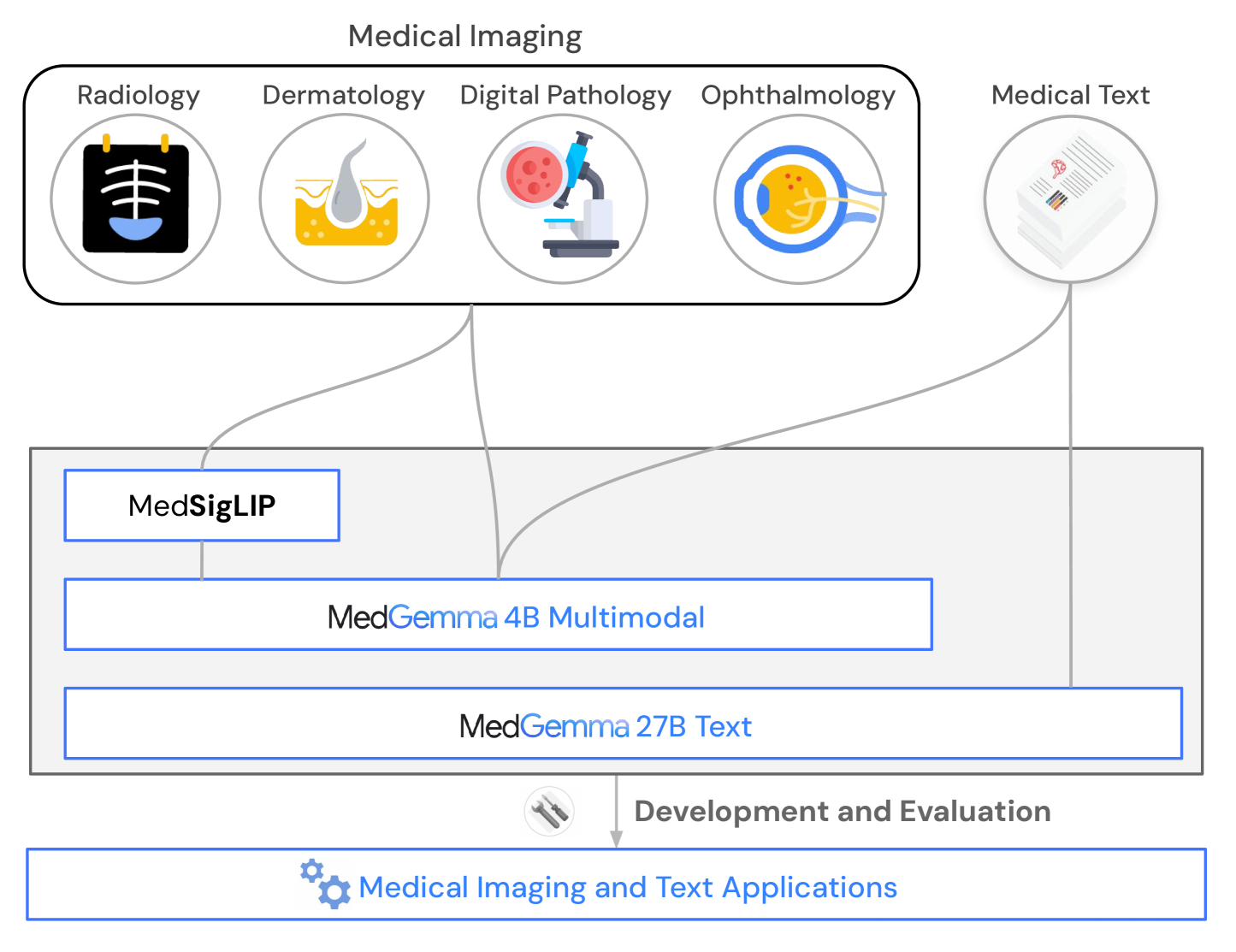
ResearchMedGemma: Open-Source Medical AI That Runs on Your Hardware
TechnologyMed-PaLM 2: 86.5% MedQA Score, Zero Doctors Using It (2026)
ResearchAI Symptom Checker Architecture: How Premedice Cuts Hallucinations 3.8x
TechnologyMedical AI Privacy: AES-256 + Zero-Knowledge Architecture
SecurityDr. Elena Rostova, MD, PhD
Dr. Rostova is a clinical informatics specialist with 14 years of research in machine-learning systems for diagnostic decision support at Stanford Medical Center.
Expert Takeaway
AI doctors in 2026 are good enough to answer everyday questions, summarize your lab results, and prepare you for a real appointment. They are not good enough to replace one. Use them the way you'd use a knowledgeable friend: to frame the question, not to skip the exam.
Browse by Topic
QFrequently Asked Questions
Q1What is the best AI doctor app in 2026?
Premedice ranks #1 for combining dual-model accuracy, lab interpretation, and zero-retention privacy in a free tier. DrKhan ranks #2 for absolute anonymity. Doctronic ranks #3 for US patients needing video visit wraparound.
Q2Can an AI doctor replace my real doctor?
No, and no credible AI doctor product claims to. AI doctors are tools for symptom assessment, lab interpretation, and health education. They cannot perform physical exams or provide longitudinal care.
Q3How accurate are AI doctor apps?
The strongest models score 85-87% on MedQA-USMLE benchmarks, comparable to mid-career physicians on multiple-choice questions. Real-world accuracy lags benchmarks by 8-15 points due to the gap between exam questions and real patients.
Q4Is my data safe with AI doctor apps?
It depends. DrKhan stores nothing. Premedice runs RAM-only with zero-knowledge encryption. Doctronic builds a lifelong record. Always check the privacy policy before using any AI doctor service.
Q5Can AI doctor apps prescribe medication?
No. Only licensed physicians can prescribe medication. AI doctor apps provide information and triage guidance, not prescriptions.
Q6When should I use an AI doctor?
Use an AI doctor for understanding lab results, preparing for a doctor visit, learning about symptoms, checking drug interactions, and getting triage guidance for non-emergency symptoms.
Q7Are AI doctor apps FDA approved?
No standalone consumer AI doctor app is FDA-approved in 2026. The FDA's 2026 guidance treats symptom checkers as wellness software, not medical devices.
Q8What is the best free AI doctor?
Premedice and DrKhan both offer genuinely free tiers. Premedice adds lab interpretation and dual-model grounding. DrKhan emphasizes absolute anonymity with no signup.
Verified References & Literature
Med-Gemini: Achieving 91.1% on MedQA with Multimodal Medical Reasoning
Google Research / Nature Medicine, 2026
View SourceGet a structured second read in seconds
Upload lab results, describe symptoms, or ask about a diagnosis — Premedice gives you medically-grounded answers backed by 30+ clinical databases.