Best Medical AI Models in 2026: Benchmarks, Apps & Comparisons
Summary & Key Takeaway
Medical AI in 2026 spans four layers: foundation models, wrapped products, clinician-facing tools, and patient-facing apps. **Med-Gemini leads MedQA at 91.1%**, but general-purpose models like GPT-5 score higher (96.3%) while failing hard on clinical judgment tests (73% on HealthBench). This guide compares every major medical AI model on accuracy, safety, deployment, and real-world performance — so you can pick the right one for your use case.
?? Core Insights
- Med-Gemini leads medical AI at 91.1% MedQA, but is API-only with no self-hosting.
- General-purpose models (GPT-5, Gemini 3.1) score higher on MedQA but fail on clinical judgment (HealthBench).
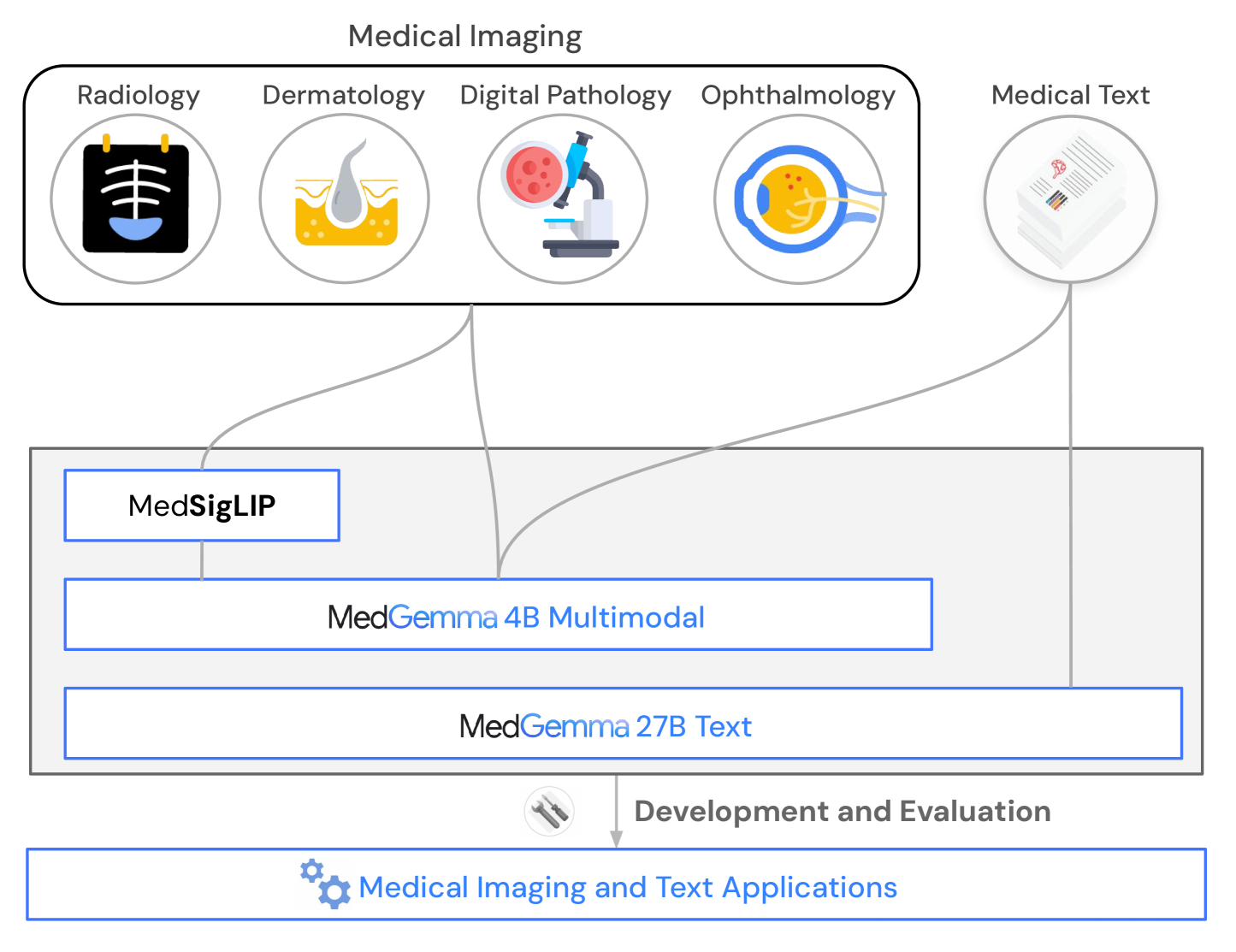
- MedGemma 27B is the only open-weight model supporting medical imaging (2D and 3D).
- Premedice combines dual-model ensemble with zero-retention privacy — best patient-facing option.
- The EU AI Act classifies medical AI as high-risk from August 2026.
- Clinical safety (HealthBench) matters more than exam accuracy (MedQA).
- On-premise deployment (MedGemma via vLLM) is the only path for hospitals requiring data residency.
- Every credible medical AI product publishes a 'supports, not replaces' disclaimer.
Try it yourself — free
Experience the medical AI that powers this article. Ask questions, check symptoms, or analyze lab results.
Want to know what a tool does with a panel like yours? See how the lab interpreter reads a blood panel.
Related Lab Tests
Our Verdict: The Best Medical AI Models in 2026
After evaluating every major medical AI model on accuracy, deployment flexibility, imaging capability, and clinical safety, here is our ranking. Scores combine published benchmarks (MedQA, HealthBench) with real-world deployment constraints.
| Rank | Model | MedQA Score | Imaging | Deployment | Best For |
|---|---|---|---|---|---|
| 1 | Med-Gemini (Google) | 91.1% | Yes (multimodal) | API-only (Vertex AI) | Research, highest accuracy |
| 2 | MedGemma 27B (Google) | 87.7% | Yes (2D + 3D) | On-premise (vLLM) | Hospitals, imaging, data residency |
| 3 | Med-PaLM 2 (Google) | 86.5% | Limited | Cloud API (MedLM) | Enterprise, Google Cloud |
| 4 | Gemini 3.5 Flash | 86.5% | No | API-only | Summarization, patient chat |
| 5 | Premedice (ensemble) | 84.6% | Lab PDF only | Web + API | Patients, lab interpretation |
| 6 | Claude Fable 5 | N/A | No | API-only | Complex reasoning, citations |
The Four Layers of Medical AI
The label 'medical AI' covers four distinct layers stacked on top of each other. Understanding which layer you need prevents picking the wrong tool.
Layer 1: Foundation Models — base large language models with broad medical training (Med-Gemini, MedGemma, Med-PaLM 2). They power everything above.
Layer 2: Wrapped Products — chat interface + RAG layer + clinical safety prompts (ChatGPT Health, Premedice, Google MedLM).
Layer 3: Clinician-Facing Tools — workflow products for licensed professionals (Medwise for NHS, DRAI for hospitalists, Medical Student AI for trainees).
Layer 4: Patient-Facing Apps — symptom checkers, lab interpreters, wellness companions (Premedice, DrKhan, Ada, Buoy, Doctronic).
The Benchmark Gap: Why MedQA Scores Mislead
MedQA (USMLE) tests medical knowledge with multiple-choice questions. HealthBench tests clinical judgment with multi-turn conversations scored by 262 physicians. The gap between them reveals what actually matters.
GPT-5 scores 96.3% on MedQA but only 73% on HealthBench — a 23-point drop. Gemini 3.1 Pro scores 96.4% on MedQA but 79.3% on HealthBench. The models that ace exams struggle when the task requires communicating safely, hedging appropriately, and knowing when to escalate.
This is why MedQA alone is a misleading benchmark. Clinical safety — the ability to say 'I don't know' and route to a human — matters more than raw accuracy.
How Medical AI Works: The Technical Stack
Modern medical AI combines three components: (1) a Large Language Model as the reasoning engine, (2) Retrieval-Augmented Generation (RAG) that pulls from medical databases, guidelines, and peer-reviewed literature, and (3) a Clinical Safety Layer with guardrails that prevents dangerous outputs.
Foundation models are pre-trained on broad text data, then fine-tuned on medical-specific datasets: MedQA questions, clinical notes, radiology reports, and pathology captions. The best models add RAG grounding against live clinical guidelines to close knowledge gaps and reduce hallucination.
Medical AI Safety: What You Need to Know
What medical AI can do: symptom assessment, lab interpretation, triage guidance, drug interaction checking, health education. What it cannot do: diagnose conditions (no consumer AI is FDA-approved), prescribe medication (only licensed physicians can), replace emergency care, perform physical exams.
The EU AI Act's high-risk classification takes full effect in August 2026, requiring conformity assessments, post-market surveillance, and human oversight mechanisms. Every credible product publishes a 'supports, not replaces' disclaimer — this is legal and clinical necessity, not marketing.
How to Choose the Right Medical AI
For highest accuracy: Med-Gemini (91.1% MedQA) — API-only, research workloads where data can leave the network.
For on-premise deployment: MedGemma 27B (87.7% MedQA) — runs locally via vLLM, supports imaging, keeps patient data inside hospital firewalls.
For patient-facing apps: Premedice (84.6% MedQA) — free tier, lab PDF interpretation, dual-model ensemble, zero-retention privacy.
For anonymity: DrKhan — no signup, RAM-only, free. For NHS: Medwise. For US hospitals: DRAI.
Red flags to avoid: no disclaimers, no privacy policy, no training data disclosure, claims to 'diagnose' or 'treat'.
The Future of Medical AI (2026-2027)
Three trends will reshape this category: (1) multi-modal models that read notes, images, and lab PDFs in one prompt, (2) on-premise deployment becoming standard for hospitals, and (3) regulatory convergence as the EU AI Act and FDA guidance shape global standards.
The optimal architecture is multi-model: specialized models for imaging (MedGemma), general models for patient chat (Gemini Flash), and a clinician-in-the-loop for every decision that matters.
Ready to try Premedice?
Get instant, AI-powered explanations of your lab results and symptoms — powered by 300+ medical databases.
Continue Reading

Most Popular
Best AI Medical Models in 2026: MedQA Scores Compared
ResearchMedGemma: Open-Source Medical AI That Runs on Your Hardware
TechnologyMed-PaLM 2: 86.5% MedQA Score, Zero Doctors Using It (2026)
ResearchAI Symptom Checker Architecture: How Premedice Cuts Hallucinations 3.8x
TechnologyMedical AI Privacy: AES-256 + Zero-Knowledge Architecture
SecurityDr. Elena Rostova, MD, PhD
Dr. Rostova is a clinical informatics specialist with 14 years of research in machine-learning systems for diagnostic decision support at Stanford Medical Center.
Expert Takeaway
No single medical AI model dominates every clinical scenario. The optimal strategy in 2026 is a multi-model architecture: MedGemma for imaging and on-premise text tasks, Gemini 3.5 Flash or Claude Fable 5 for complex API-based reasoning, and RAG augmentation against live clinical guidelines to close knowledge gaps.
Browse by Topic
QFrequently Asked Questions
Q1What is the most accurate medical AI in 2026?
Med-Gemini leads MedQA at 91.1%. But accuracy on exams doesn't equal clinical safety. On HealthBench (clinical judgment), even GPT-5 drops 23 points from its MedQA score.
Q2Is medical AI FDA approved?
No standalone consumer symptom checker is FDA-approved in 2026. Hospital clinical-decision-support products require FDA pre-market review. Wellness software is unregulated.
Q3Which medical AI is HIPAA compliant?
Every US-based product in this guide is HIPAA-aligned. DrKhan and Premedice go further with zero-retention and RAM-only architecture.
Q4Can medical AI replace doctors?
No. The right mental model is the calculator: it replaced arithmetic, not mathematicians. Medical AI replaces the parts of the visit that don't need a human.
Q5What is the best free medical AI?
Premedice and DrKhan both offer genuinely free tiers. Premedice adds lab interpretation and dual-model grounding. DrKhan emphasizes absolute anonymity.
Q6Is medical AI safe?
For triage, lab interpretation, and appointment preparation, yes — credible products publish 'supports, not replaces' disclaimers. For emergencies, no — call your local emergency number.
Q7How does medical AI handle my data?
Credible products use end-to-end encryption and zero-retention policies. Premedice uses AES-256 encryption; DrKhan operates RAM-only with no persistent storage.
Q8What's the difference between medical AI and general AI for healthcare?
General AI (GPT-5) scores higher on MedQA but lacks clinical safety guardrails, imaging support, and on-premise deployment. Medical AI retains critical advantages in hallucination control, uncertainty expression, and regulatory compliance.
Verified References & Literature
Med-Gemini: Achieving 91.1% on MedQA with Multimodal Medical Reasoning
Google Research / Nature Medicine, 2026
View SourceGet a structured second read in seconds
Upload lab results, describe symptoms, or ask about a diagnosis — Premedice gives you medically-grounded answers backed by 30+ clinical databases.