
Can an AI Symptom Checker Replace Your Doctor? (Honest Answer for 2026)
Summary & Key Takeaway
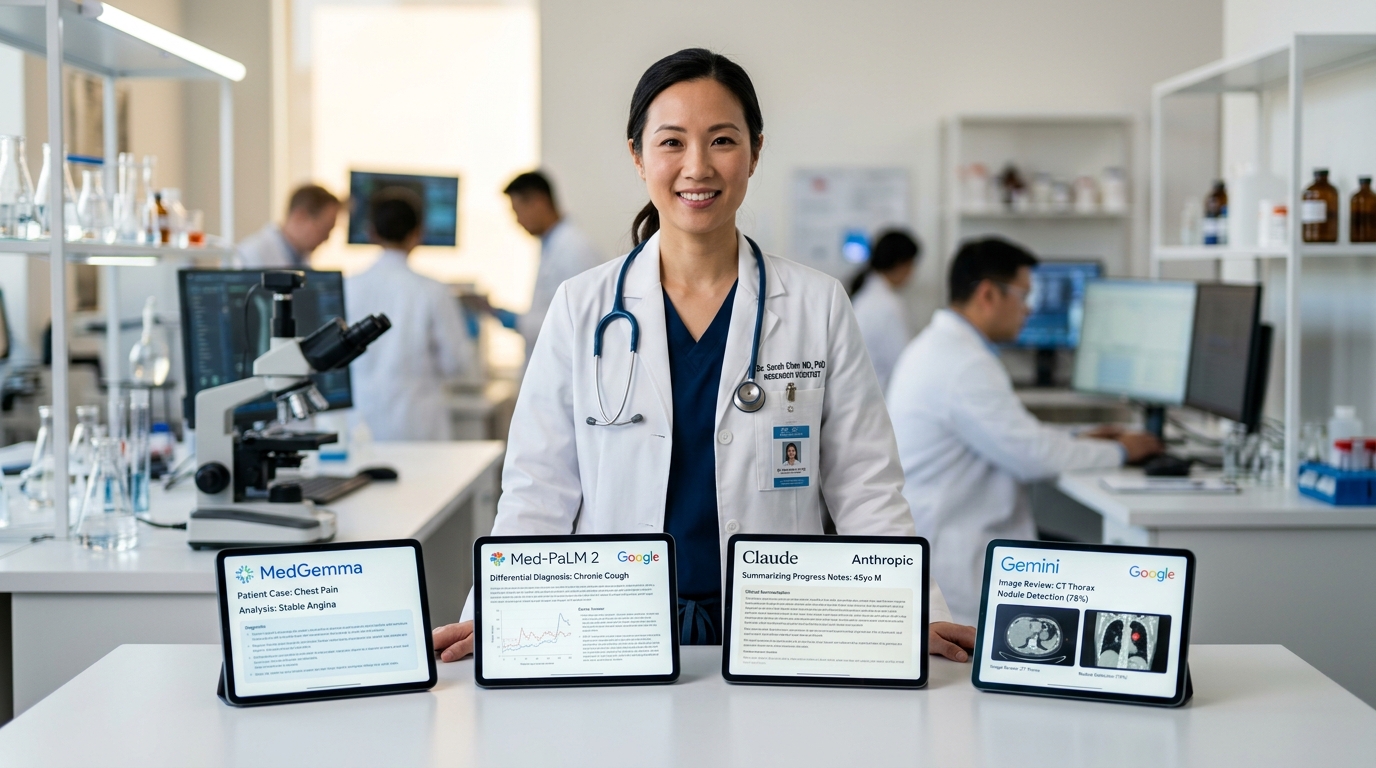
The question everyone is asking in 2026: can an AI symptom checker replace your doctor? The science-based answer is no for diagnosis, yes for triage, and it depends for health literacy. AI triage tools reach 77% correct urgency on structured cases with complete inputs (BMJ 2024), but they cannot examine you, measure your vital signs, or read your facial expression. What they can do is save you from two expensive mistakes: going to the ER for a cold ($1,500) and staying home with appendicitis ($1,000+ delayed treatment). [Premedice](/) is designed for this sweet spot — not a replacement for your doctor, but a way to understand your health before you see one.
?? Core Insights
- AI triage accuracy: 77% correct urgency with complete inputs (BMJ 2024) — better than Web search (32%) but not a diagnosis.
- AI cannot examine you, measure vitals, or read context — diagnosis requires exam + labs + judgment.
- AI is best at: translation (what does this lab mean?), triage (should I go to ER or watch?), and research (what are my options?).
- AI saves two errors: going to ER for a cold ($1,500) and staying home with appendicitis ($1,000+ delay).
- The sweet spot: use AI to prepare for your visit, understand your labs, and check symptoms at 2 AM — then see your doctor for the decision.
Try it yourself — free
Experience the medical AI that powers this article. Ask questions, check symptoms, or analyze lab results.
Want to know what a tool does with a panel like yours? See how the lab interpreter reads a blood panel.
Related Lab Tests
What AI Can Actually Do (With Evidence)
AI triage tools can do three things well: explain health data in plain language, rank possible causes by probability, and estimate urgency. On structured vignettes with complete inputs, top tools reach 77% correct urgency (BMJ 2024) versus 32% for Web search. AI also excels at breadth — it can consider 7,000+ conditions simultaneously, while a primary-care doctor holds a few hundred illness scripts in active memory.
The key limitation is input quality. When inputs are incomplete — missing vitals, missing onset, missing medications — accuracy drops 20-30 points. A one-line prompt ('headache') maps to 200+ conditions; a structured prompt with onset, character, associated symptoms, and meds narrows to 3-5. AI is only as good as what you tell it. Premedice's follow-up questions (asking onset, character, radiation, associated symptoms) are designed to fill the gaps that cause the 20-30 point accuracy drop.
What AI Cannot Do (The Physical Exam Gap)
AI cannot press your abdomen and feel for rebound tenderness, listen to your lungs and hear crackles, look at your throat and see erythema, test your strength on one side, or measure your blood pressure. These exam findings change urgency in 30-40% of cases — a fever plus a stiff neck changes the differential from viral URI to possible meningitis. AI without exam data must assume, and assumptions are where errors happen.
AI also cannot know what you did not tell it. If you are on a new medication, recently traveled, or have a family history that changes the risk, the AI cannot infer that from a symptom list. That is why the best AI tools ask for context — medications, travel, family history, prior labs — and show what information would most change the ranking. Premedice does this with its 'what would change this' section, so you know which fact to add next.
The Sweet Spot: When AI Saves You Money and When You Still Need a Human
AI saves you money when it correctly routes you away from unnecessary ER visits. A 2023 JAMA study found 41% of low-acuity ER visits could have been primary care with better triage — each of those costs $1,000-$3,000. An AI that says 'primary care this week, not ER today' saves you that bill. AI also saves you money when it explains a lab result correctly, avoiding the $150-$300 follow-up visit you would have needed just for a definition.
You still need a human when: you have red flags (chest pain, one-sided weakness, difficulty breathing), when you need a physical exam, when the AI is uncertain, or when a decision requires clinical judgment about risk-benefit. The sweet spot is using AI to prepare for the visit ('I uploaded my labs, here is what I understand, here are my 3 questions') so the doctor can focus on the decision, not the definition. That is the workflow Premedice is designed for.
Ready to try Premedice?
Get instant, AI-powered explanations of your lab results and symptoms — powered by 300+ medical databases.
Continue Reading

Most Popular
Best AI Medical Models in 2026: MedQA Scores Compared
ResearchMedGemma: Open-Source Medical AI That Runs on Your Hardware
TechnologyMed-PaLM 2: 86.5% MedQA Score, Zero Doctors Using It (2026)
ResearchAI Symptom Checker Architecture: How Premedice Cuts Hallucinations 3.8x
TechnologyMedical AI Privacy: AES-256 + Zero-Knowledge Architecture
SecurityDr. Elena Rostova, MD, PhD
Dr. Rostova is a clinical informatics specialist with expertise in AI triage validation and physician-AI collaboration.
Expert Takeaway
AI is a powerful health literacy tool that improves triage accuracy by 2x over Web search, but it cannot replace the physical exam, clinical judgment, or the relationship with your doctor. Use it to prepare, not to decide.
Browse by Topic
QFrequently Asked Questions
Q1Can AI diagnose me?
No. AI can rank possible causes and estimate urgency, but diagnosis requires exam, labs, and clinical judgment. AI is a triage and education tool, not a diagnostic tool.
Q2Is AI better than Googling my symptoms?
Yes. AI triage reaches 77% correct urgency versus 32% for Web search (BMJ 2024). The difference is structured input and clinical grounding versus one symptom at a time.
Q3When should I use AI instead of seeing a doctor?
For explanation (what does this lab mean?), triage (ER vs watch?), and research (what are my options?). For diagnosis, treatment, and physical exam — see a doctor.
Q4Can AI replace my doctor entirely?
Not in 2026 and likely not ever for full care. AI handles translation and triage; doctors handle exam, judgment, and the relationship. The best outcome is AI + doctor working together.
Q5Is Premedice a replacement for a doctor?
No. Premedice is designed to help you understand your health before you see a doctor, check symptoms at 2 AM, and prepare for visits. It is not a substitute for clinical care.
Verified References & Literature
Get a structured second read in seconds
Upload lab results, describe symptoms, or ask about a diagnosis — Premedice gives you medically-grounded answers backed by 30+ clinical databases.