Thyroid Panel Explained: TSH, Free T4, and T3
Summary & Key Takeaway
Thyroid tests confuse almost everyone because the main screening test, TSH, moves in the opposite direction to the hormones it controls. A high TSH usually means an underactive thyroid; a low TSH usually means an overactive one. This guide explains what each thyroid test measures, how to read the common patterns, and when antibodies or an endocrinology referral are worth discussing.
?? Core Insights
- TSH is the screening test; free T4 and free T3 show how much hormone is actually available.
- A high TSH with a normal free T4 is subclinical hypothyroidism and is often monitored rather than treated immediately.
- A low TSH suggests an overactive thyroid or too much thyroid medication.
- TPO and TgAb antibodies suggest autoimmune thyroid disease but do not measure how the thyroid is functioning today.
- Reference ranges are lab-specific, and pregnancy, illness, and biotin supplements can distort results.
Try it yourself — free
Experience the medical AI that powers this article. Ask questions, check symptoms, or analyze lab results.
Want to know what a tool does with a panel like yours? See how the lab interpreter reads a blood panel.
Related Lab Tests
What the thyroid panel measures
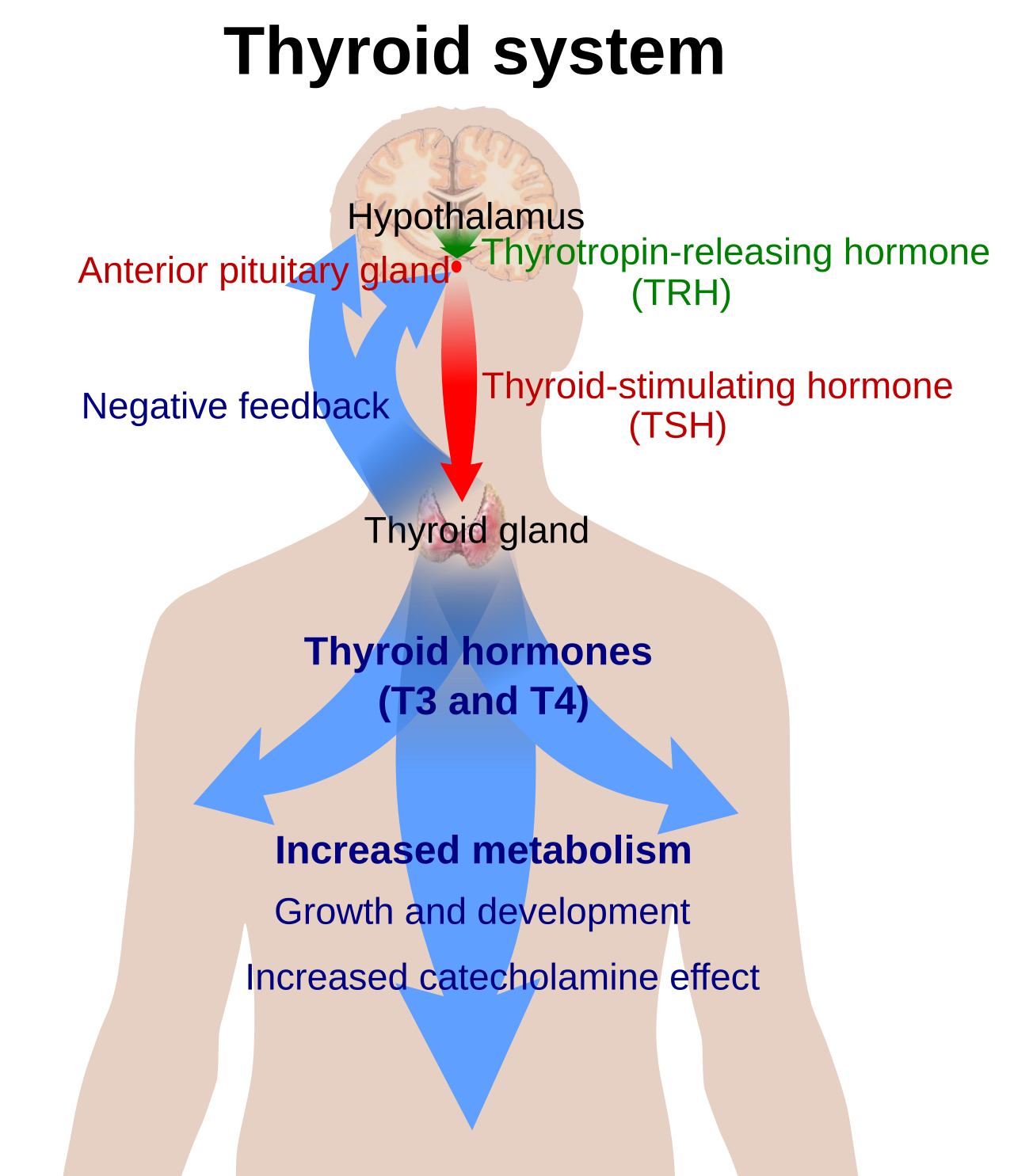
The thyroid produces two main hormones, T4 and T3, which regulate metabolism, heart rate, temperature, and energy. The pituitary gland releases thyroid-stimulating hormone, TSH, to tell the thyroid how much to produce. Because the system works by negative feedback, TSH rises when thyroid hormone is low and falls when thyroid hormone is high. That inverse relationship is the key to reading the panel.
A basic panel usually includes TSH and free T4. Free T4 is the unbound fraction of thyroxine available to tissues, which makes it a better measure of hormone status than total T4. Free T3 is sometimes added when hyperthyroidism is suspected or when symptoms persist despite a normal TSH. Total T4 and total T3 are influenced by binding proteins and are less useful in many situations.
Antibody tests, TPO and thyroglobulin antibodies, are not hormone tests. They indicate that the immune system is targeting the thyroid, which is common in Hashimoto's thyroiditis and Graves' disease. Antibodies can be positive for years before hormone levels change, and they do not tell you whether the thyroid is currently overactive or underactive.
TSH first: the screening signal
TSH is the most sensitive screening test for primary thyroid disease because the pituitary responds to small changes in thyroid hormone. A TSH within the reference range usually means the thyroid axis is working, even if free T4 sits at the lower end. A TSH above the range suggests an underactive thyroid; a TSH below the range suggests an overactive thyroid or excessive thyroid medication.
Reference ranges are laboratory-specific, but many labs use roughly 0.4-4.0 mIU/L for adults. Some clinicians treat a TSH between 4 and 10 with a normal free T4 as subclinical hypothyroidism and repeat it in 6-12 weeks, especially if antibodies are positive or symptoms are suggestive. A TSH above 10 is more often treated, particularly in pregnancy or with symptoms.
TSH can be temporarily abnormal during illness, after surgery, in early pregnancy, and with some medications. Biotin supplements can interfere with immunoassays and produce falsely low TSH or falsely high free T4. If a result does not fit the clinical picture, the first step is usually to repeat the test and review supplements and medications.
Free T4 and free T3: the hormone levels
Free T4 reflects the amount of thyroxine available to tissues. In primary hypothyroidism, free T4 falls as TSH rises. In subclinical hypothyroidism, free T4 remains normal while TSH rises. In hyperthyroidism, free T4 rises as TSH falls. A normal free T4 with a low TSH can occur in subclinical hyperthyroidism or with excessive thyroid hormone replacement.
Free T3 is the active hormone, but it is not always part of the initial panel. It is most useful when hyperthyroidism is suspected, when a patient has symptoms of overactivity with a normal free T4, or when monitoring certain treatments. T3 can be normal in central hypothyroidism, where the problem is in the pituitary rather than the thyroid, so a normal T3 does not exclude thyroid disease.
Total T4 and total T3 are affected by pregnancy, liver disease, and binding-protein abnormalities. That is why free hormone measurements are preferred in most modern panels. If your report shows only total T4, ask whether a free T4 would be more informative for your situation.
Antibodies: TPO, TgAb, and what they add
Thyroid peroxidase antibodies are the most common marker of autoimmune thyroid disease. They are positive in most people with Hashimoto's thyroiditis and in a proportion of people with Graves' disease. A positive TPO test does not by itself mean you need treatment; it means your thyroid is more likely to become underactive over time and is worth monitoring.
Thyroglobulin antibodies are less specific but can also indicate autoimmune thyroid disease. They can interfere with thyroglobulin measurements used in thyroid cancer follow-up, which is why laboratories often report them together. In routine thyroid evaluation, the main value of antibodies is risk stratification and explaining why TSH is drifting.
Antibody levels do not need to be repeated frequently. Once positive, they tend to stay positive, and the level does not reliably track symptoms or hormone status. The decision to treat is based on TSH, free T4, symptoms, pregnancy plans, and cardiovascular risk, not on the antibody titre alone. The thyroid antibody guide explains TPO and TgAb in more detail.
Common patterns and next steps
The most common pattern is a high TSH with a low free T4, which indicates primary hypothyroidism. The next most common is a high TSH with a normal free T4, or subclinical hypothyroidism. A low TSH with a high free T4 suggests hyperthyroidism or excessive replacement; a low TSH with a normal free T4 suggests subclinical hyperthyroidism. A low or normal TSH with a low free T4 suggests central hypothyroidism and needs specialist review.
Symptoms matter but are not specific. Fatigue, weight gain, cold intolerance, constipation, and dry skin can accompany hypothyroidism, but they also occur in many other conditions. Conversely, some people with abnormal TSH feel well. The decision to treat should combine the numbers, the symptoms, your age, pregnancy plans, and cardiovascular risk.
Repeat testing is usually the first step for a mild abnormality. If TSH is persistently abnormal, free T4 is low, antibodies are positive, or you are pregnant or planning pregnancy, discuss referral to an endocrinologist. An AI interpreter can help you understand the terms and prepare questions; it cannot decide whether you need medication. The thyroid antibodies deep dive and the 12 lab numbers guide are useful next reads.
Pregnancy, age, and medications
Thyroid reference ranges shift in pregnancy. The pituitary responds to placental hCG, and the developing fetus depends on maternal thyroid hormone in the first trimester. A TSH that is normal outside pregnancy can be too high in the first trimester, so pregnancy-specific ranges and early review matter.
Age changes the picture too. Older adults often have slightly higher TSH without symptoms, and treating a mildly raised TSH in someone over 80 can do more harm than good. At the other end, a low TSH in an older adult with atrial fibrillation deserves attention even if free T4 is only mildly raised.
Medications and supplements can distort results. Biotin, lithium, amiodarone, interferon, and thyroid hormone itself all affect the panel. Tell your clinician about everything you take, and do not stop a prescribed medicine without advice. The metabolic panel guide explains the electrolyte and kidney values that often accompany thyroid testing.
Thyroid medication is monitored differently from a diagnostic panel. If you take levothyroxine, the dose is adjusted against TSH, usually checked 6-8 weeks after a change. If you take liothyronine or a combination product, free T4 and free T3 may be monitored as well. Do not change your dose based on a single result without speaking to the prescriber.
Ready to try Premedice?
Get instant, AI-powered explanations of your lab results and symptoms — powered by 300+ medical databases.
Continue Reading
Most Popular
Best AI Medical Models in 2026: MedQA Scores Compared
ResearchMedGemma: Open-Source Medical AI That Runs on Your Hardware
TechnologyMed-PaLM 2: 86.5% MedQA Score, Zero Doctors Using It (2026)
ResearchAI Symptom Checker Architecture: How Premedice Cuts Hallucinations 3.8x
TechnologyMedical AI Privacy: AES-256 + Zero-Knowledge Architecture
SecurityDr. Elena Rostova, MD, PhD
Dr. Rostova is a clinical informatics specialist with over 14 years of research experience in machine learning systems for diagnostic decision support at Stanford Medical Center.
Expert Takeaway
Read TSH and free T4 together before drawing conclusions. A single abnormal TSH is a reason to repeat and contextualise, not a diagnosis, especially if you feel well or have a temporary illness.
Browse by Topic
QFrequently Asked Questions
Q1What is a normal TSH level?
Many laboratories use roughly 0.4-4.0 mIU/L for adults, but ranges vary with age, pregnancy, and the assay. A value slightly outside the range is often repeated before any treatment decision.
Q2What does high TSH with normal free T4 mean?
This is usually subclinical hypothyroidism. It is often monitored with a repeat test in 6-12 weeks, especially if you feel well. Treatment is more likely if TSH is above 10, antibodies are positive, you are pregnant, or you have symptoms.
Q3Do I need thyroid antibodies tested?
Antibodies are useful when TSH is abnormal, when autoimmune thyroid disease is suspected, or when planning pregnancy. They do not need to be repeated often once positive, and they do not measure how the thyroid is working today.
Q4Can biotin affect thyroid test results?
Yes. High-dose biotin can interfere with immunoassays and produce falsely low TSH or falsely high free T4. Stop biotin for a few days before testing if your doctor agrees, and tell the laboratory you take it.
Q5Can AI read my thyroid panel?
AI can explain TSH, free T4, T3, and antibodies and flag values outside your report's ranges. It cannot decide whether you need treatment, because that depends on symptoms, pregnancy plans, age, and cardiovascular risk.
Verified References & Literature
Get a structured second read in seconds
Upload lab results, describe symptoms, or ask about a diagnosis — Premedice gives you medically-grounded answers backed by 30+ clinical databases.