
AI vs Doctor Cost: 2026 Price Comparison (Real Numbers)
Summary & Key Takeaway
Calling 911 and asking whether you can afford the ambulance is a real thought for millions of Americans, while typing the same symptom into a free AI application is routine. Between those two moments sits the actual economic question: how much does each tier of healthcare cost, and where does AI genuinely substitute for a doctor versus merely complement them? For a person without insurance, a single specialist visit can consume a week of income, an ER visit a month, and a grounded medical AI subscription less than a fast-food meal per week. This article runs the real numbers per common health problem and gives you an honest rule for when AI is cheaper, when it is not, and why the cheapest answer is usually a stack of both.
?? Core Insights
- Uninsured doctor visits cost $150-300+ for a new patient, specialists $250-500+, while grounded medical AI runs $0-6 per month; the per-question cost gap is 50-100x.
- ER visits without insurance average over $1,000, and avoidable ER use is the single most expensive cost of skipping primary care.
- Lab panels cost $10-50 direct-to-consumer versus $200-350 at a hospital, so pairing AI interpretation with cheap labs reproduces a workup for a fraction of a visit.
- AI cannot examine, prescribe with legal authority, or weigh your full history, so it substitutes for explanation and triage, not for the physical-medicine parts of a visit.
- The cheapest correct decision is AI to interpret and prepare, a clinic for the hands-on part, and coupons for the prescription; no tool alone beats that stack.
- Official cost data shows the reason people skip care is exactly the sticker price, which is the gap quality free AI fills best of all.
Try it yourself — free
Experience the medical AI that powers this article. Ask questions, check symptoms, or analyze lab results.
Want to know what a tool does with a panel like yours? See how the lab interpreter reads a blood panel.
Related Lab Tests
The Price Tag of Each Healthcare Tier
Set the market down before comparing it. A new-patient primary care visit without insurance commonly runs $150-300, a specialist $250-500, and a same-day urgent care visit $100-250. An ER visit averages over $1,000, with facility fees, screening tests, and imaging stacking on top. Laboratory panels at a hospital can hit $200-350 for what a direct-to-consumer lab sells for $10-50. Prescriptions are the only tier where coupons routinely pull prices below $20.
Against those numbers, a grounded medical AI consultation costs $0 in most cases, with premium tiers like Premedice's Advanced plan at $20/month (billed annually) and Pro at $5.99/month monthly or $5.69/month billed yearly. Even the most expensive AI tier, $228 a year, pays for itself the moment it prevents one unnecessary or delayed ER visit. The honest framing is not that AI is free and doctors cost money; it is that information, triage, and explanation now cost essentially nothing, which changes what you spend the money on.
Per-Problem Cost Comparison: AI vs Doctor
Take the three most common reasons people open a medical AI. Problem one: I have new symptoms and want to know what to do. AI: $0-6, structurally better than guessing, worse than a clinician who can examine you. Doctor: $150-300, definitive but expensive, and if the problem is minor the visit feels wasted. Problem two: I got lab results and want plain-English interpretation. AI with grounded citations does this exceptionally well for $0 (see [free AI blood test interpretation](https://premedice.com/news/ai-blood-test-results-how-to-read/)), and a doctor's visit for the same task costs a co-visit for a task that is fundamentally about explanation.
Problem three: I need treatment or a prescription. Here the cost math inverts: AI cannot prescribe, so the cheapest path is a $20-50 [clinic or FQHC visit](https://premedice.com/news/cant-afford-doctor-what-to-do/) or free telemedicine, plus a couponed prescription. The repeatable pattern is that AI wins every problem where the value is information and loses every problem where the value is an intervention only a clinician can provide. That split, not the sticker price, is the real answer to whether AI is cheaper.
The Hidden Cost of Skipping the Doctor Entirely
The reason 'AI instead of a doctor' can be an expensive mistake is that delays compound. The Federal Reserve found people skip care due to cost, and providers repeatedly report that many patients arrive with advanced disease that was simpler and cheaper to treat months earlier. KFF data shows uninsured adults are far more likely to delay or skip needed care, and hospital charity-care reports routinely note that avoidable ER visits are the most expensive care a system delivers.
The economic model of medical AI therefore has to be stated honestly: AI prevents waste (unnecessary visits, panic, missed questions), but it cannot substitute for timely physical care. A patient who uses AI to decide everything is fine without a clinician has replaced a $150 copay with a potentially $15,000 complication. The safe framing is that AI makes your money go further, not that it makes clinicians unnecessary. The [why medical AI avoids direct medical advice](https://premedice.com/news/why-medical-ai-avoids-direct-medical-advice) explainer digs into exactly why the responsible systems refuse to overreach.
Where AI Actually Saves You Money
Three documented savings. First, avoided unnecessary visits: a symptom checker or grounded AI that correctly identifies a viral illness you can manage at home keeps you out of an urgent care line that costs $150 and adds nothing. Second, cheaper interpretation: the task most people actually needed was understanding a report, not a physical exam, and AI does that for $0 in minutes versus a referral, a co-pay, and a two-week wait. Third, better-prepared visits: patients who arrive with a symptom history and question list get more done in one appointment, reducing the repeat-visit cycle that doubles costs.
Add lab cost arbitrage and the savings expand. Buying your own [blood work for $10-50](https://premedice.com/news/cheap-lab-tests-without-insurance) and interpreting it with grounded AI reproduces a substantial portion of a screening workup for under $100, versus $300+ at a hospital and another visit to discuss it. None of this is exotic; it is using the free layer for exactly the tasks where it is measurably strong, and keeping the clinician dollars for the parts that need a human.
Where AI Cannot Substitute, Priced Honestly
Physical examination is the obvious non-negotiable: a clinician listening to your lungs, palpating an abdomen, or reading a skin lesion in person is performing a diagnostic act AI cannot approximate because it cannot touch you. Prescribing and controlled-medication decisions require a licensed human by law. Imaging interpretation, pathology, and procedures all require credentialed clinicians. And chronic disease management, the highest-value care in medicine, depends on a longitudinal relationship that no app can hold.
The honest price of those items is what a clinic charges, and the affordable route exists: [FQHC visits at $20-50](https://premedice.com/news/cant-afford-doctor-what-to-do/), charity care, free telemedicine for prescriptions. The mistake is to assume that because AI can explain things well, it can also substitute for the parts a clinician performs. The most dangerous and most expensive path in American healthcare is not the visit; it is the unexamined patient who believed an app was a doctor.
The Real Numbers on Second Opinions
One overlooked place AI saves serious money is the second-opinion decision. Our [second-opinion cost guide](https://premedice.com/news/how-much-does-a-second-opinion-cost) shows expert reviews commonly run several hundred dollars, and many patients skip them entirely because of price, accepting a diagnosis they are unsure about. Grounded AI cannot replace an independent clinician's review, but it can decode the first opinion, list the evidence, and tell you whether a second opinion is warranted before you spend the money.
That pre-screen is often the difference between spending $400 on a second expert review and spending $0 on the realization that your current plan is well-supported. Premedice's [AI medical second opinion](https://premedice.com/news/ai-medical-second-opinion) workflow exists precisely for this: it structures evidence before you commit to paying for an expert. AI does not replace the expert; it prevents paying experts for questions you could answer for free.
What a Year of AI-Driven Care Costs, Total
Cost out a realistic year. Pro-grade grounded medical AI: $68-72 annually. Three basic clinic or FQHC visits for routine concerns: $60-150. One set of direct-to-consumer screening labs: $30-100. Couponed maintenance prescriptions: $50-200. Total: roughly $200-550 per year, versus a single specialist appointment and its cascade at a hospital. For a person without insurance, moving the routine care stack from fee-for-service hospital pricing to the free-and-clinic layer is the difference between healthcare being affordable and healthcare being a crisis.
The same money spent as a monthly AI subscription becomes something doctors call cheap insurance: it keeps small questions from becoming big visits and it keeps you in the habit of checking things early. That is the actual economic case for medical AI, not that it replaces anyone, but that it is the cheapest possible on-ramp to a system that is expensive for the unprepared and reasonable for the prepared.
Myths About AI Versus Doctor Pricing
Myth one: AI must be cheaper because it is free. Free AI can still be expensive if its confident wrongness delays care; the cost metric that matters is your decision quality, not the checkout total. Myth two: a doctor visit is always unnecessary if AI sounds reasonable. AI cannot examine you, and the unexamined symptom is the classic missed diagnosis. Myth three: premium AI is a rip-off when free tier exists. The premium plan buys higher model quality and deeper evidence access, and for people who use it weekly that is the best value in healthcare, but free tier legitimately covers most explanatory needs.
Myth four: AI and doctors compete for the same dollar. They do not; AI competes with Dr. Google, with avoidance, and with the panic purchase, while clinicians compete with nobody for the physical exam. Drop these four and the real question becomes what each dollar you spend is purchasing: information, examination, treatment, or insurance against the cascade. Price the purchase, not the noun, and the cheap answer becomes obvious.
Ready to try Premedice?
Get instant, AI-powered explanations of your lab results and symptoms — powered by 300+ medical databases.
Continue Reading
Most Popular
Best AI Medical Models in 2026: MedQA Scores Compared
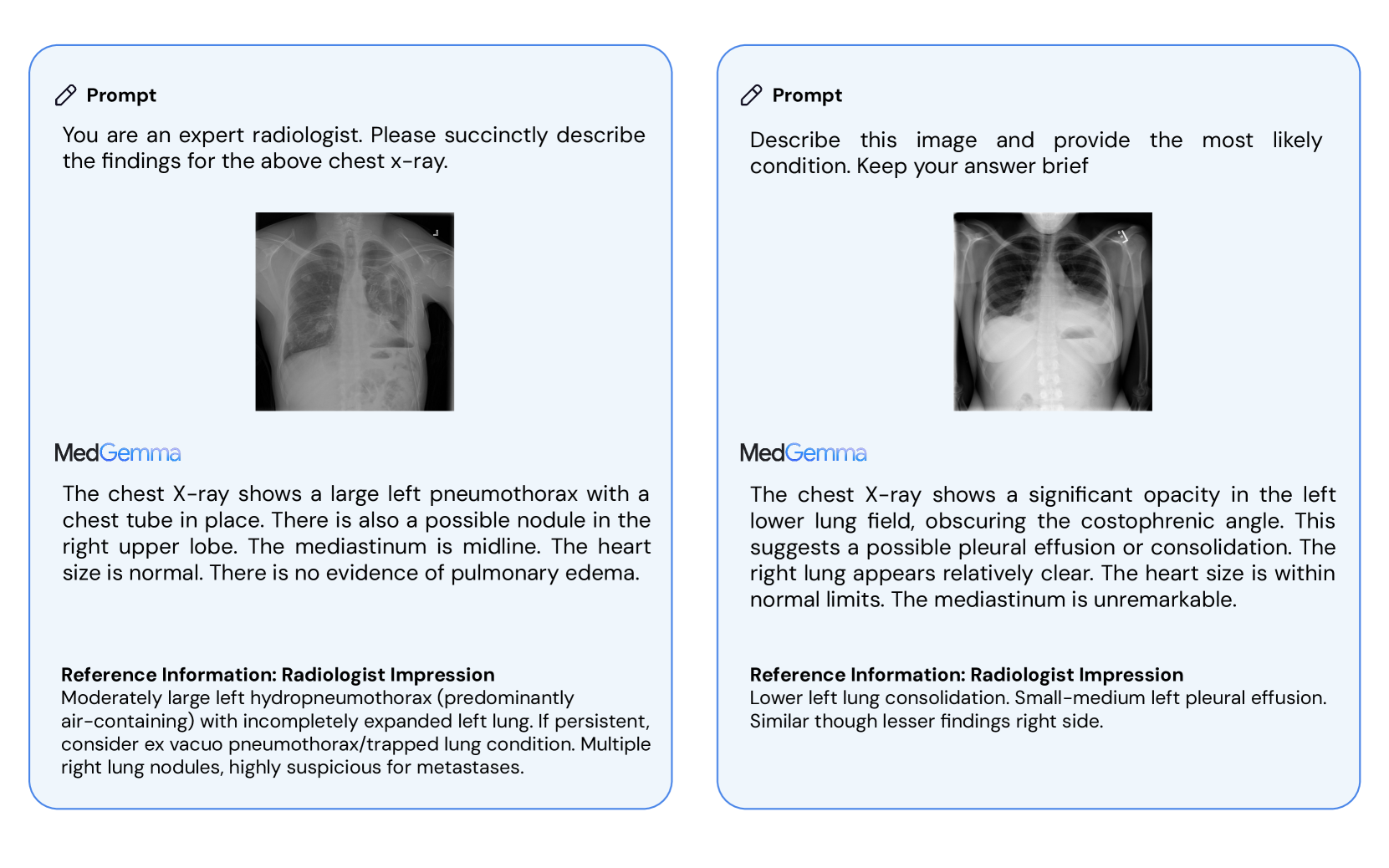
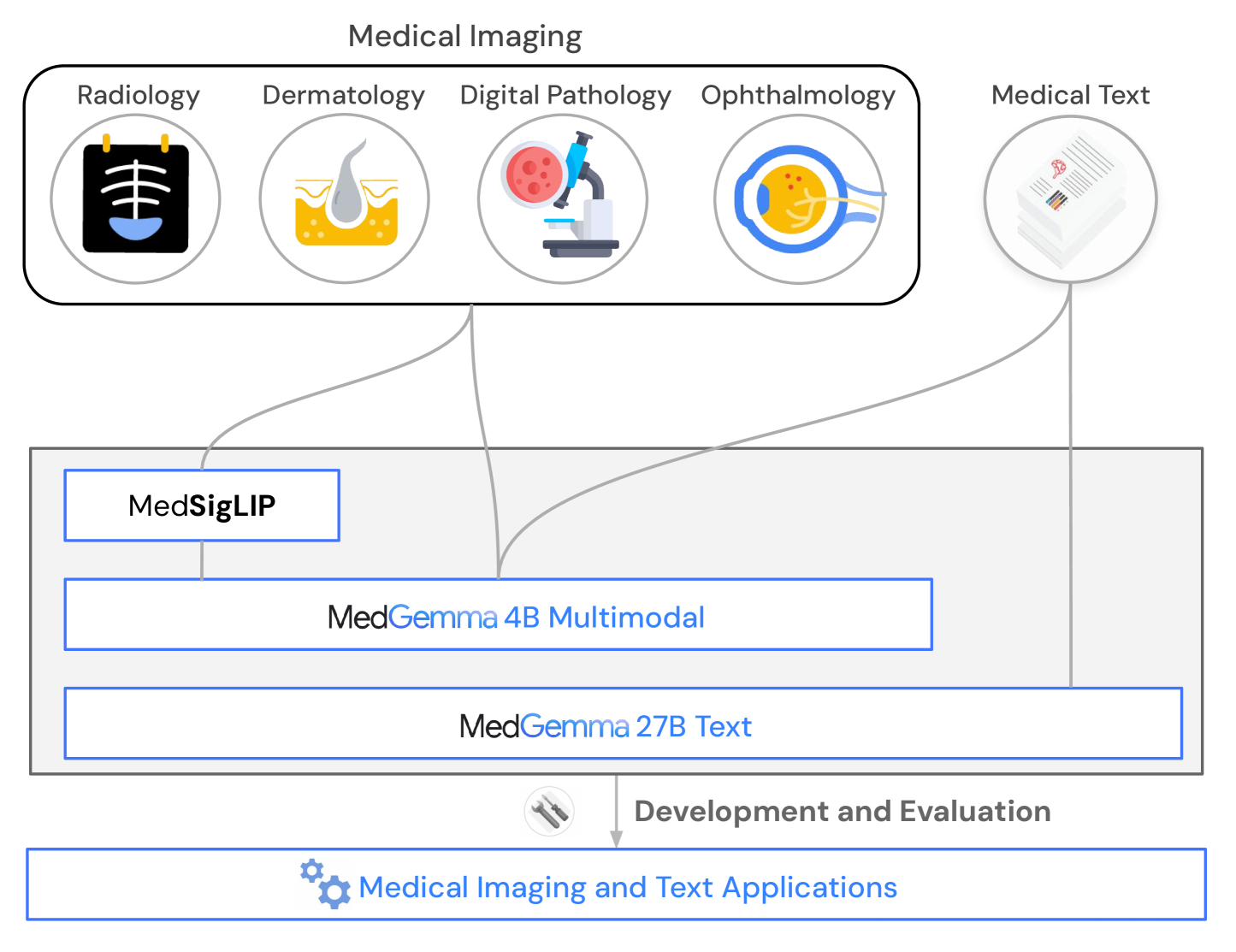
ResearchMedGemma: Open-Source Medical AI That Runs on Your Hardware
TechnologyMed-PaLM 2: 86.5% MedQA Score, Zero Doctors Using It (2026)
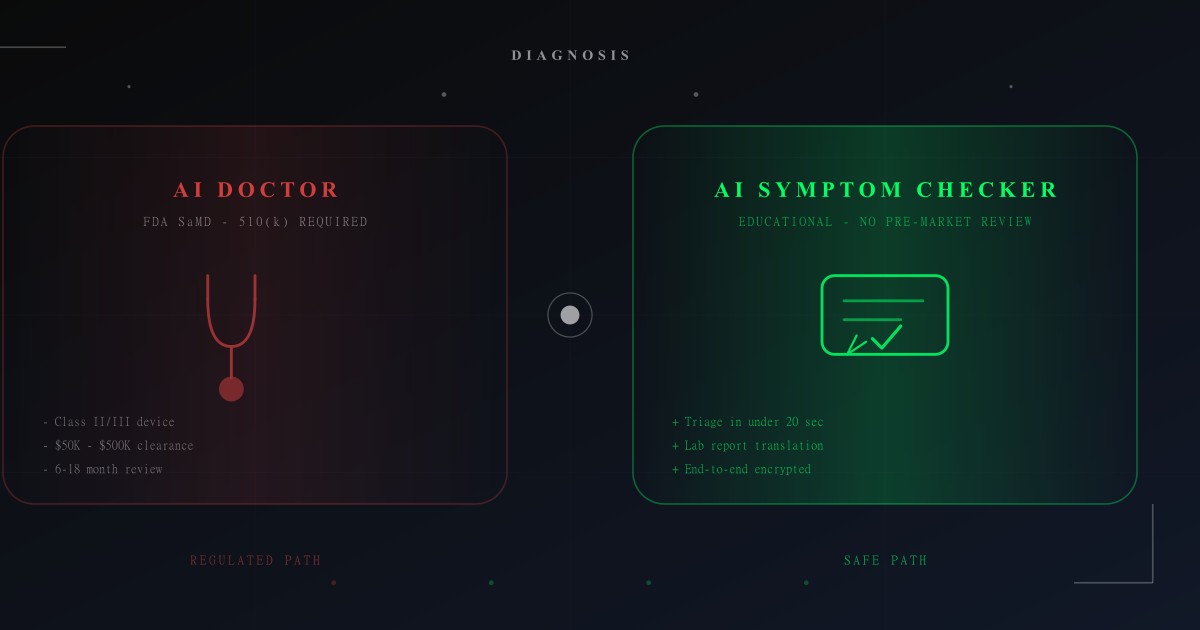
ResearchAI Symptom Checker Architecture: How Premedice Cuts Hallucinations 3.8x
TechnologyMedical AI Privacy: AES-256 + Zero-Knowledge Architecture
SecurityDr. Elena Rostova, MD, PhD
Dr. Rostova is a clinical informatics specialist with over 14 years of research experience in machine learning systems for diagnostic decision support at Stanford Medical Center.
Expert Takeaway
From a clinical-economics standpoint, AI does not replace the doctor; it replaces the price tag between you and appropriate care. The patients who save the most money are those who use AI to arrive at the right clinic with the right questions and the right prescriptions, because the expensive failure is not the visit, it is the cascade that follows skipped or delayed care. If you can get a clinician involved for under $50 and use AI to make that visit count, you have beaten both the $300 visit and the $3,000 complication.
Browse by Topic
QFrequently Asked Questions
Q1Is AI actually cheaper than seeing a doctor?
For information, triage, and lab interpretation, yes: grounded medical AI is $0-6 per month versus $150-300+ for an uninsured visit, a 50-100x per-question gap, and peer-reviewed comparisons rate AI answers equal to or better than physicians' on written questions. For anything requiring examination, prescription, or hands-on judgment, AI cannot substitute, and the cheap route is a $20-50 clinic or free telemedicine. So AI is cheaper for exactly the questions it can genuinely answer.
Q2Can medical AI replace a doctor's appointment?
No. AI cannot perform physical examination, cannot prescribe with legal authority, and cannot manage chronic disease over time. It can, however, remove the need for many appointments by answering explanatory questions, triaging urgency, and preparing you to get more out of each visit. The safe rule: AI for information, a human for decisions.
Q3How much does medical AI cost per month in 2026?
Free tiers cover basic medical Q&A and report interpretation at $0. Premium tiers typically run about $5.99/month monthly, $5.69/month billed annually, with advanced plans around $20/month. Compared to a single $150-300 uninsured visit, a full year of premium AI costs less than one appointment.
Q4Does using AI mean I will spend less on healthcare overall?
Evidence and cost-structure suggest yes for routine care: AI prevents unnecessary visits, cheaper lab interpretation replaces referral-based reading, and prepared patients need fewer repeat visits. But the biggest savings come from pairing AI with the low-cost clinic layer (FQHC $20-50 visits, direct-to-consumer labs, prescriptions coupons), not from using AI alone. Skipped or delayed care remains the most expensive option of all.
Q5When should I always see a doctor regardless of cost?
Always route possible emergencies to a local emergency number or ER first. Beyond that, see a clinician for new or worsening symptoms that persist beyond a week or two, anything you can feel on your body (lumps, swelling, pain), pregnancy concerns, mental-health changes, and any condition requiring ongoing management. Use AI to prepare for those visits, not to decide they are unnecessary.
Verified References & Literature
Report on the Economic Well-Being of U.S. Households in 2025
Board of Governors of the Federal Reserve System, 2026
View SourceComparing Physician and AI Chatbot Responses to Patient Questions
JAMA Internal Medicine, 2023
View SourceAmericans' Challenges with Health Care Costs
Kaiser Family Foundation (KFF) Health Tracking Poll, 2026
View SourceEmergency Medical Treatment & Labor Act (EMTALA) Overview
Centers for Medicare & Medicaid Services (CMS), 2025
View SourceGet a structured second read in seconds
Upload lab results, describe symptoms, or ask about a diagnosis — Premedice gives you medically-grounded answers backed by 30+ clinical databases.